

When I agreed to take part in this project I was chosen to complete the FIRE quilt. A daunting task without a doubt, but I decided to wait and see what everyone else created before I made my plans.
The rows arrived a few weeks before I started work on them, I wanted to do something different to the others and felt it had to represent fire to tie in the other rows – the other makers have used the fabrics rather than the patterns to depict FIRE.
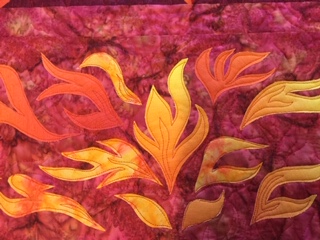
I decided flames were going to feature in my row and selected three fabrics from my stash, the background is a red Batik and the fabrics chosen for the flames included a yellow and red batik and the other was an ombré fabric, This fabric changed from purple through red into orange and yellow. I didn’t use the purple section in the end as it didn’t quite suit, but I’ll find another use for it I am sure.
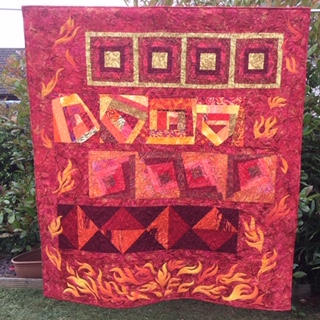
Before I started my row I planned the layout of the quilt, adding a rectangle of fabric at one side of each row with a view to offsetting the rows, I also added a sashing strip between each row using the same fabric I was going to use for my row background. The other rows were all slightly different in size, as often happens so doing it this way solved that issue. With a community made quilt these matters have to be thought about very carefully.
I cut my background fabric and drew lots of flames onto Bondaweb fusing them to the back of my flame fabric and was ready to start. The pieces were placed and replaced several times till my ‘eye’ said it was happy with them and I removed the release paper to fuse them in position. Normally I would use a tiny zigzag stitch to attach the bonded shapes, but this time decided to do a straight stitch around each piece as part of the quilting.
I layered up the quilt and then was ready to start the quilting. I chose Glide thread by Fil-Tec for the quilting and used it both on top and in the bobbin. I Used a ballpoint needle for the stitching which was to be done on my Sweet Sixteen sit down longarm machine – one of my favourite machines.
A ballpoint needle may seem like a strange choice, but this was something I learned from Kelly Kline at the Handi Quilter Longarm Academy, it separates the fibers in the fabric rather than piercing them, and, if you need to unpick no holes are left behind.
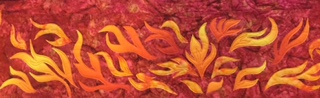
Unusually for me I started quilting at the bottom of the quilt and worked upward, I stitched a flame design and outline stitched each appliqué flame as I reached it. The flames began to flicker up the design.
Once the quilting was completed I stitched the binding, hanging sleeve and label in place ready for shipping to Helen who arranged for it to be hung at the British Patchwork and Quilting stand at the 2018 Festival of Quilts. It was hung alongside ICE and they both looked wonderful!
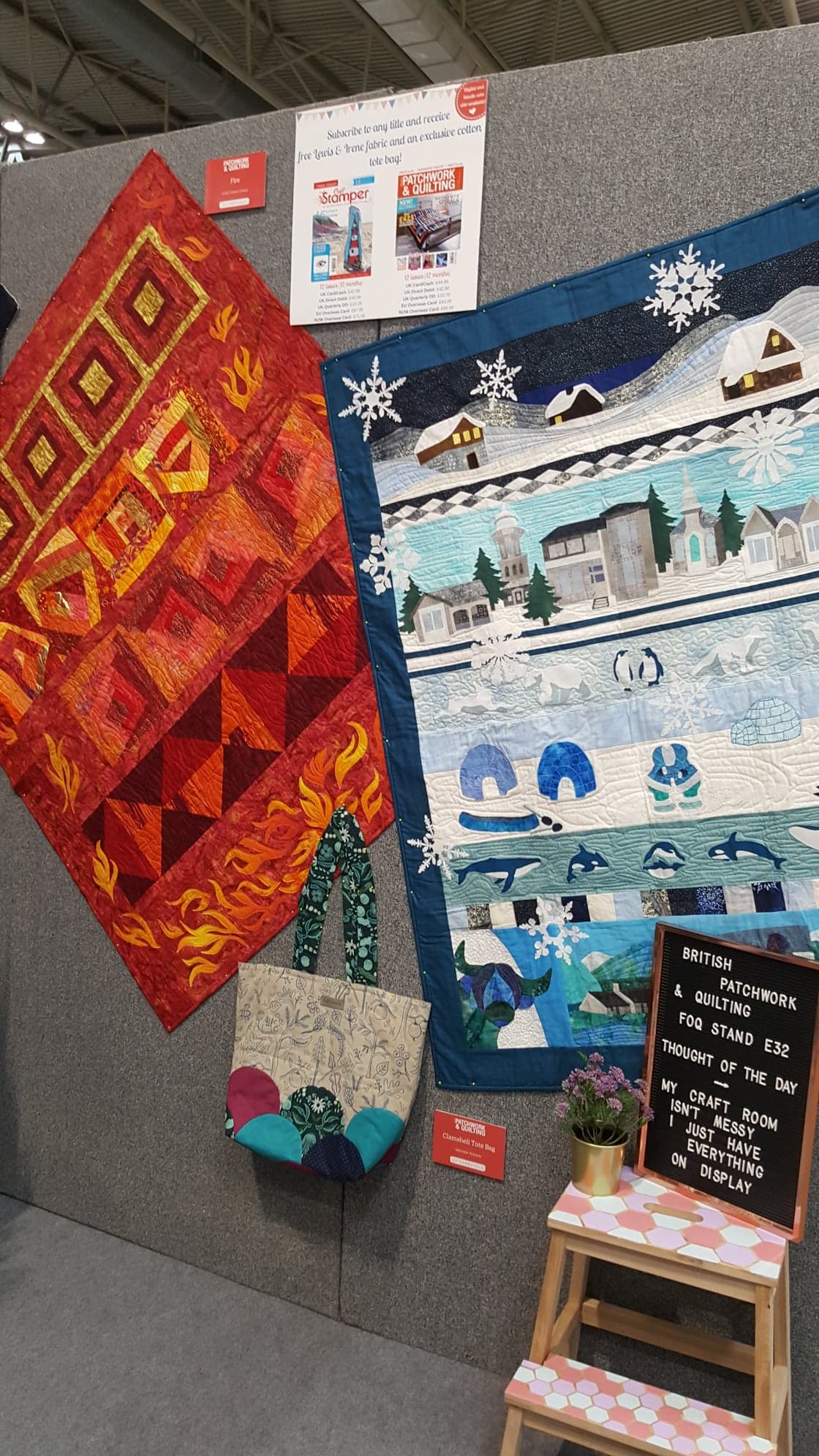
The two quilts have been seen around and about, and its hoped they will be travelling with the UKQU website exhibition with Grosvenor Shows in the Autumn of 2019. Following that they will both be donated to charity. Its been a great project ot be part of and I hope to be seeing everyone interpretation of both designs in the future.
Responses