

When I started doing this blog I said I would address some of the myths around longarm quilting, so I am going to look at one that I hear a lot whilst walking around quilting shows and exhibitions, and one that a friend of mine recently found herself addressing with a couple of ladies.
“Longarm machines do everything for you, you just press a button and it does it”
This is a comment I hear a lot whilst walking around exhibitions and listening to people who are viewing intricately quilted pieces. It is also the biggest myth surrounding Longarm machines and quilters. If a quilter states on the description that it is freehand or freemotion, that quilter has spent hours and most likely days moving that machine, by hand, across the surface of the quilt, just like drawing with a pencil. This takes lots and lots of practice. Months and months of it. Anyone who has tried to do freemotion quilting on a domestic will understand that it is not easy to do, and it is no easier on a longarm.
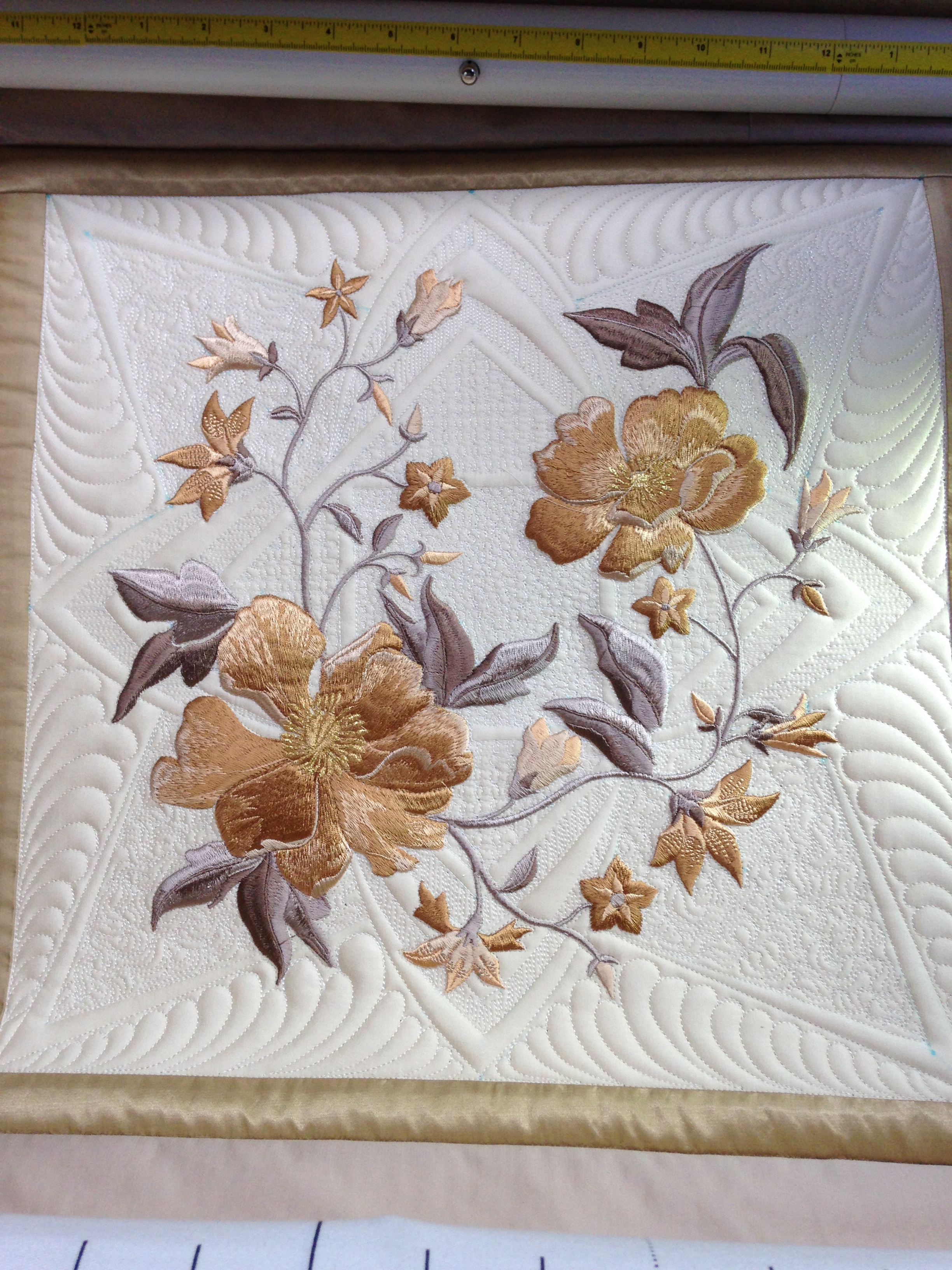
Firstly the quilter has to learn how to use the machine, what the features are, how to get good tension, how to use lots of different threads both top and bottom. How to load the machine with the backing, wadding and quilt top, ensuring it is square and even.
Oh and by the way, not all longarms have a computer system on them, they are expensive and a lot of people prefer to do it all themselves. Freehand 
Then you can start to learn how to do all the different designs, stipple, swirl, hearts, paisley, feathers, must not forget the feathers, ruler work, template work, and many many more. These have to be stitched upright, upside down, to the left, to the right and every other angle in-between. We cannot spin the machine like you can a quilt under a domestic needle. Its like learning to write your name upside down, have you ever tried it? Give it a go, it is not easy.
“But you can get computerised longarms” I hear some of you cry.
Yes you can, but that is not as simple to use as many think either. Once you have learnt the ins and outs of the machine itself then you can start to learn the intricacies of the computer attached to the machine. Normally it has a number of designs pre-loaded in them and you also receive the software to produce your own designs in. (yet another package to be learnt and mastered).
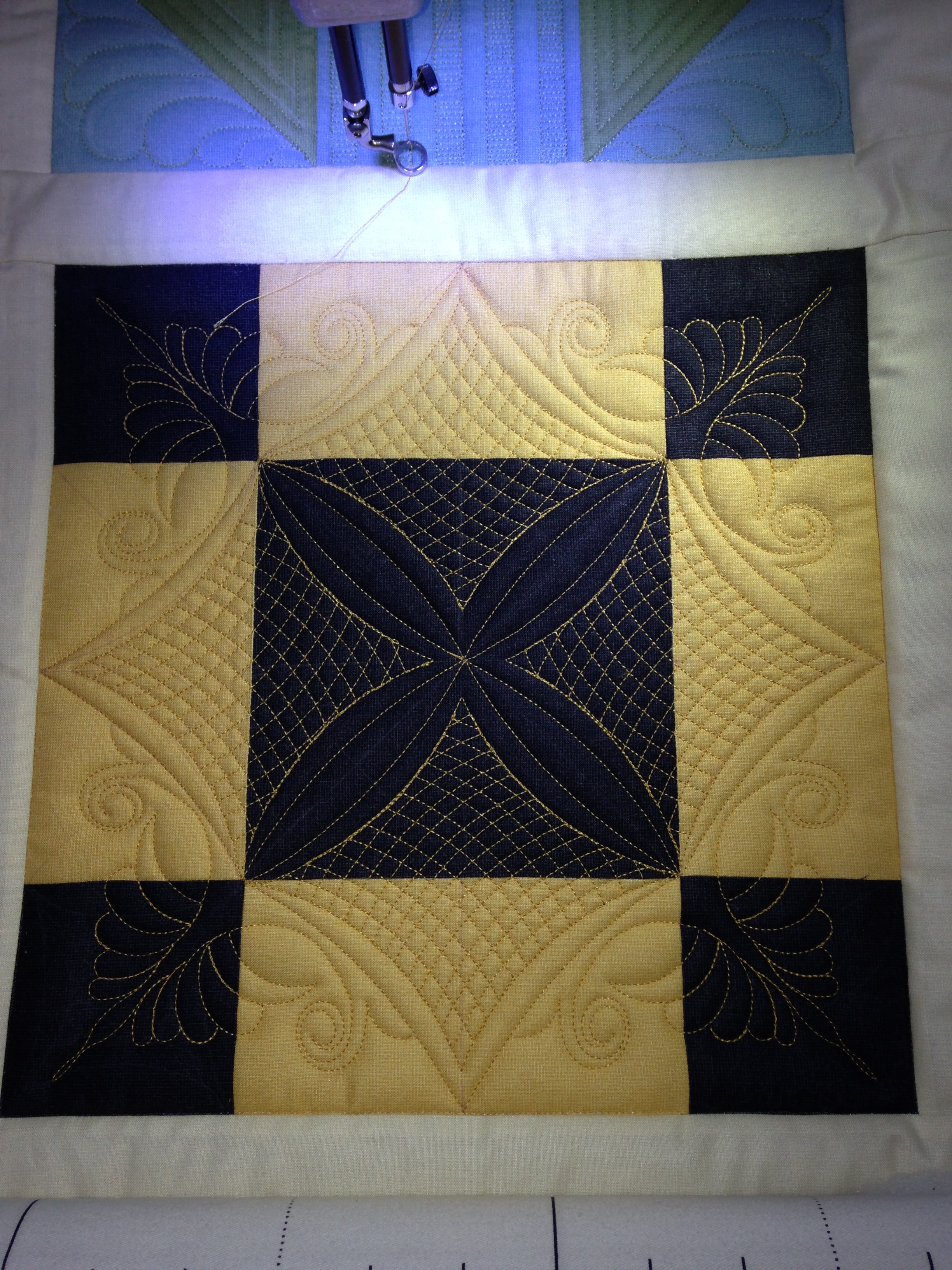
Once you have selected the design you like you have to know how to ensure it is the right size for the area you are looking to stitch it in, marking out the area so the machine knows too. If the design is square but the area is not quite, how to ensure that it will fit and look right. How to make the design bigger, smaller, repeat it, chop some of it off so that it only stitches part of it (on duck instead of three for example) and lots lots more. That is all before you put needle to thread. There is also so much more that has to be learnt with the computer systems and I will go through some of that in a future post so that you understand a little more. You never know, you may find that it is actually just what you are looking for.
For now, I have done a quick video for you which shows some of the work I am currently doing on a new competition quilt. If you have any questions afterwards, feel free to comment and I will answer them. The areas being stitched are small (the hopping foot is only 1/2″ diameter to give you an idea) and the machine is set to 15 stitches per inch, just like you domestic machine has a choice of stitch length.
So next time you see a beautiful quilt and the description says it is done freemotion/freehand on a longarm, please give the creator the credit they deserve for all the hours and months and sometimes years it has taken them to be able to create those works of art for you to enjoy. And if you hear the same comment, you can now let explain some of it to them.
You can also look at my previous blog Silver Linings which shows the process of that quilt and the work that went into it.
In my next post I will show you some of the work that goes into ‘pressing that button’ and the work that is behind the designs held within the computer. Until then, take care, and keep on quilting. 🙂

Responses