

Back in March the sampler quilt / technique of the month students looked at Quarter-square triangles (or QST for short). We explored the different ways of making them and some of the blocks they are used in. You can find a free downloadable tutorial to make these units here. Have a look at You Tube for other tutorials or search for step-by-step tutorials on other blogs – different people have their own preferred method for doing things and the right one is the one that works for you.
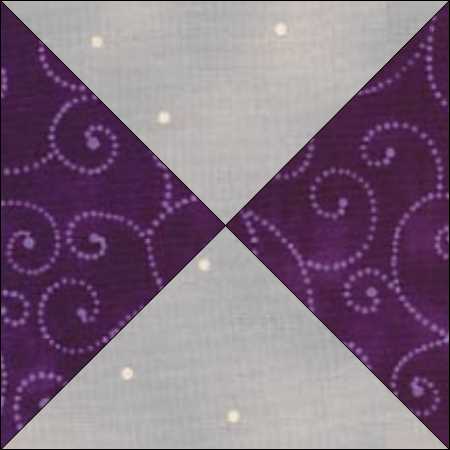
Why quarter-square triangles? Because they are made from a square cut into four quarters, diagonally. This means that the longer side is on the straight grain and the shorter sides are on the bias, unlike the Half-square triangles (HST) where the longer side is on the bias. This becomes important when you sew triangles into a block where you need the straight grain to run along the edges of the block so it hangs straight and doesn’t stretch.
Cutting a square into four rather than two also means you need to start with a larger square to get the correct finished size – you have two seams to stitch not one – so QST units are cut from squares that are 1¼ inches bigger that the finished size of the unit. You can find the table of sizes and some more information in the Hints & Tips here.
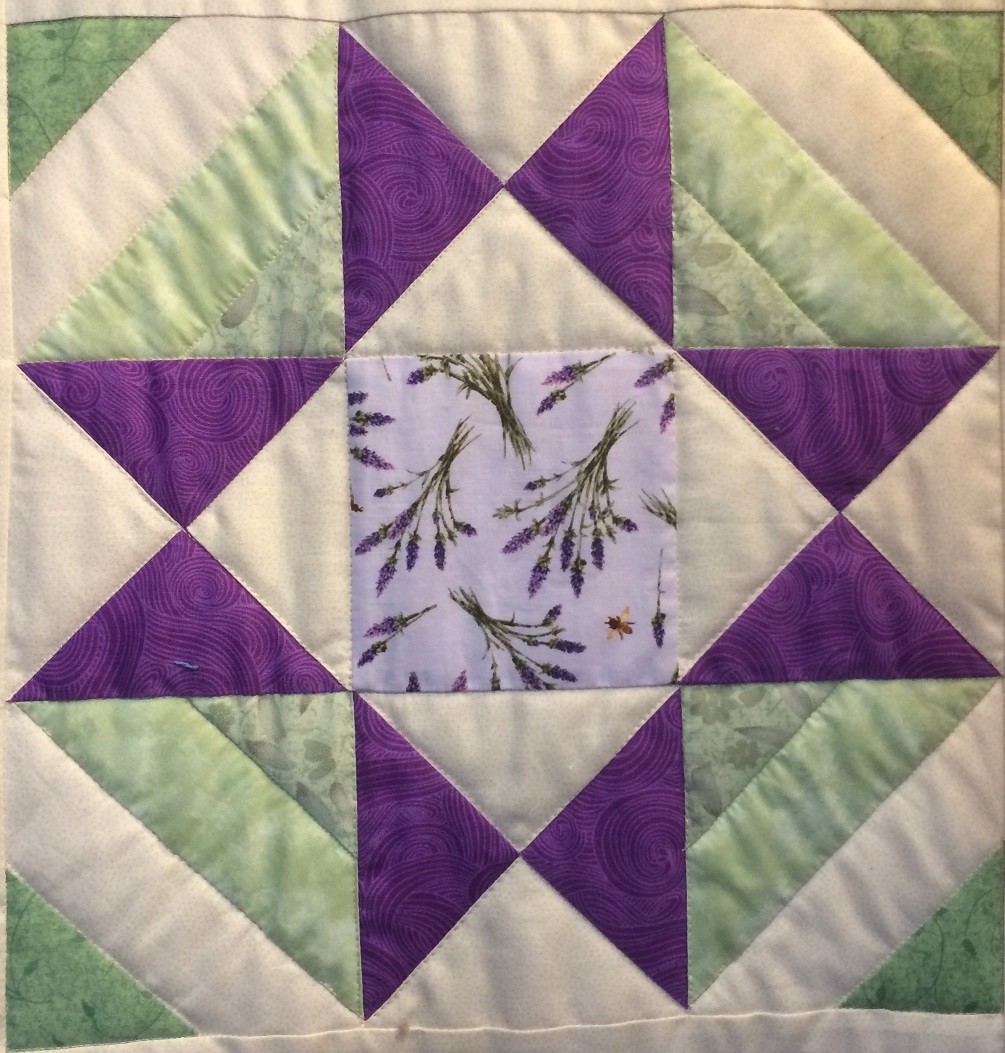
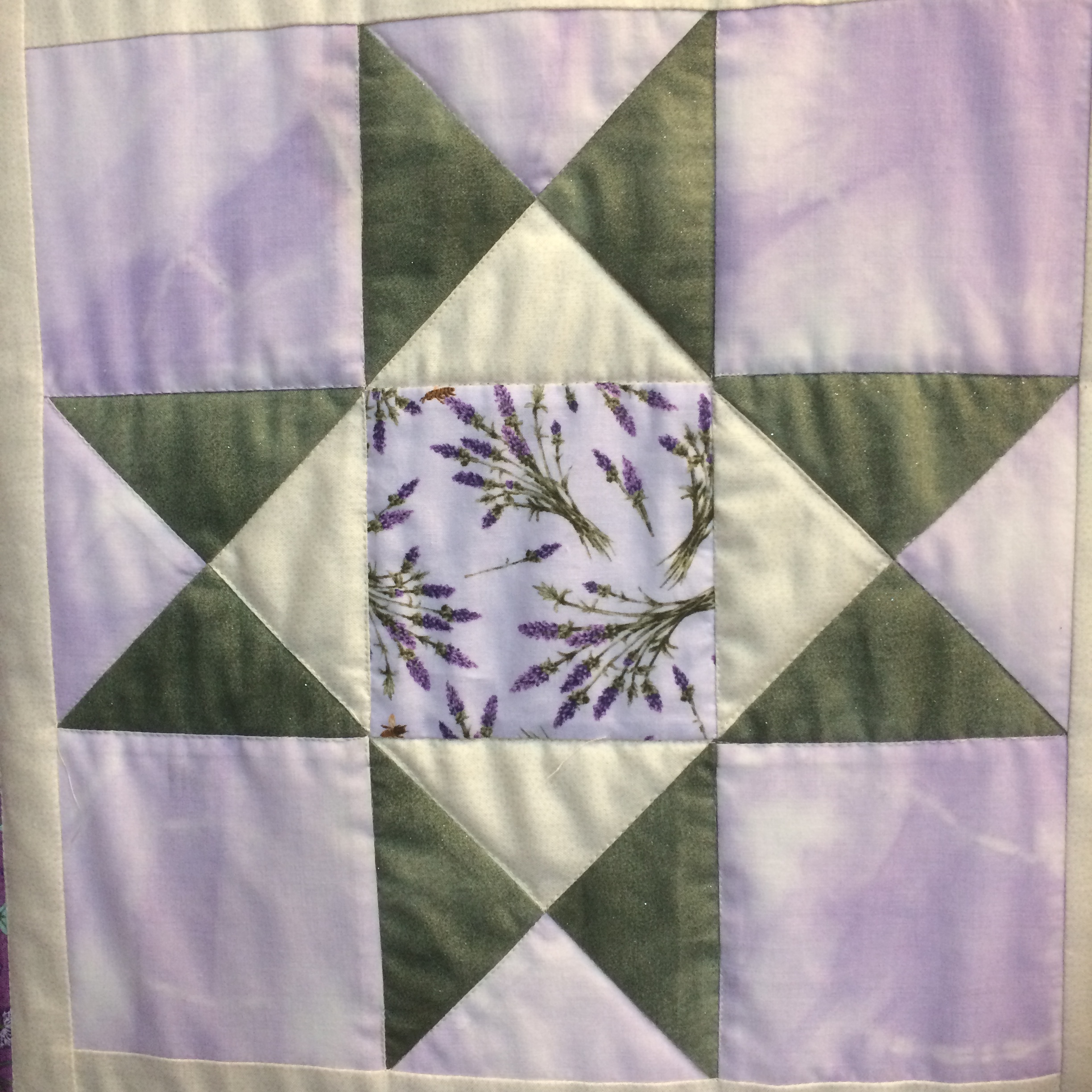
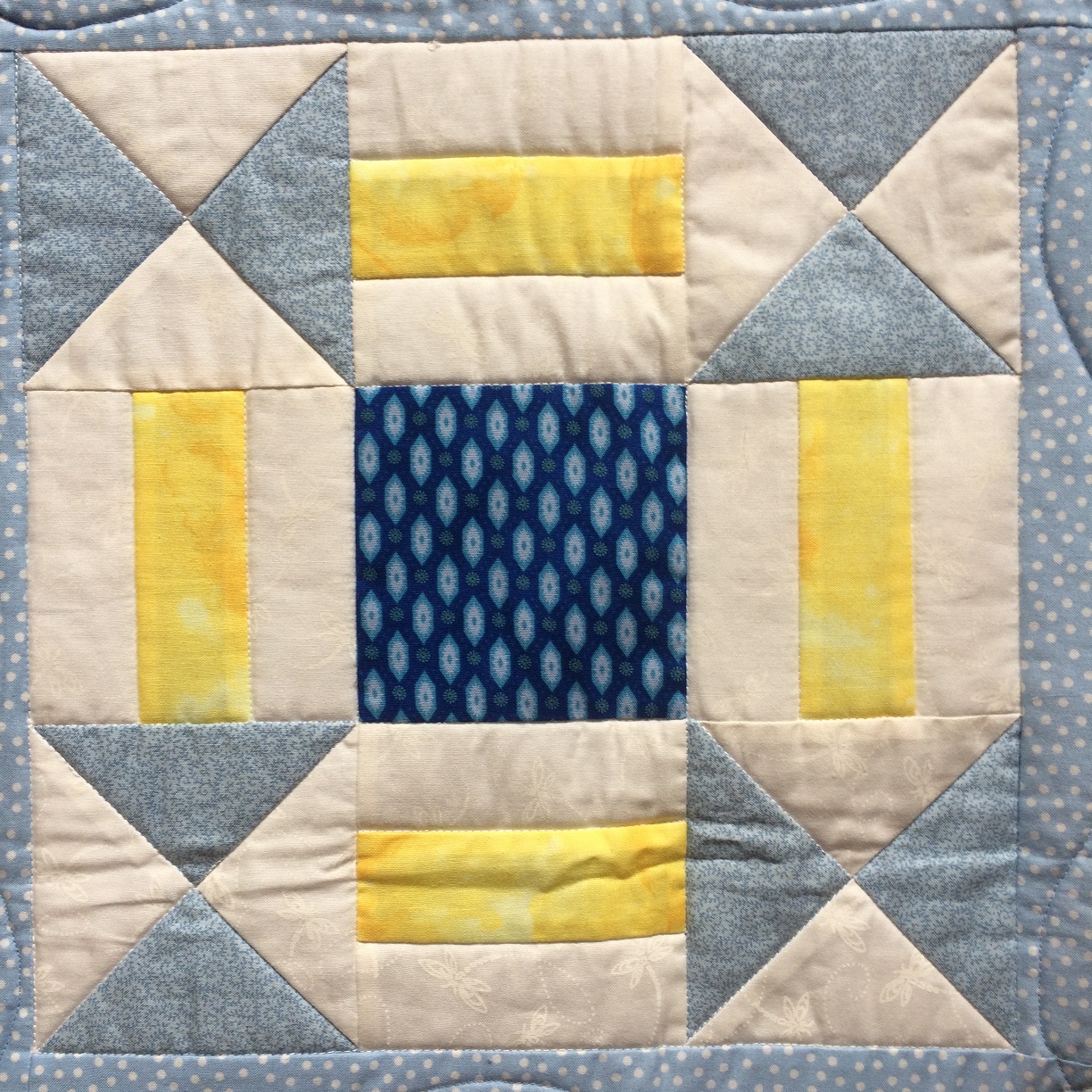
Where and how do we use them? There are several blocks using these units, although not many 4-patch blocks, they are mostly 9-patch. The most common one you are likely to come across is the Ohio Star block which may also be called Variable Star or Aunt Eliza’s Star among other names, depending on how it is coloured in. Variations of this block are Swamp Angel (with HST units in the four corners) and Night and Noon (shown here) which has diagonal strips in the four corners.
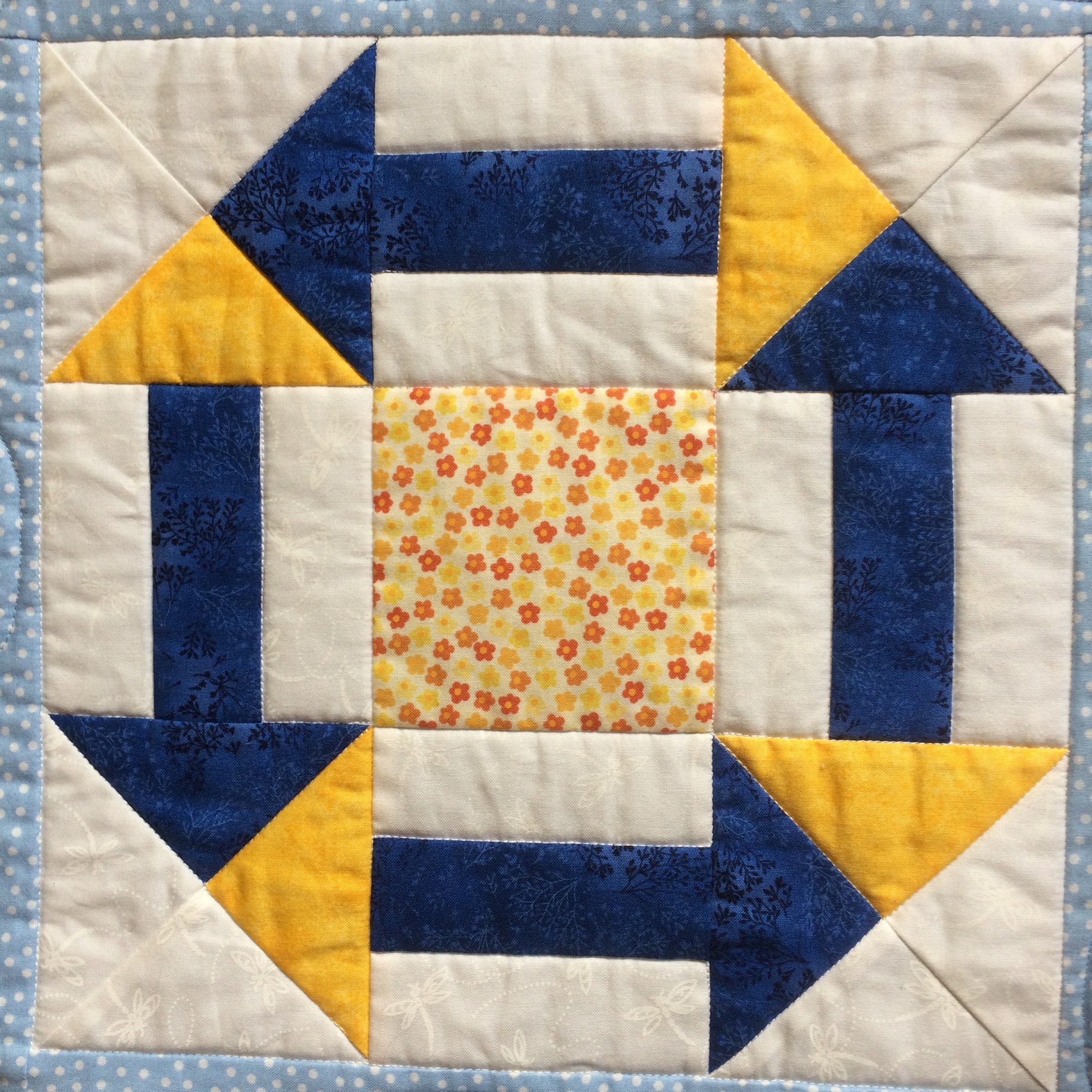
London Roads is another block using QST units, this time in the corners. Different placement of lights and darks can make the block look quite different – these two are from a Puzzle Quilt.
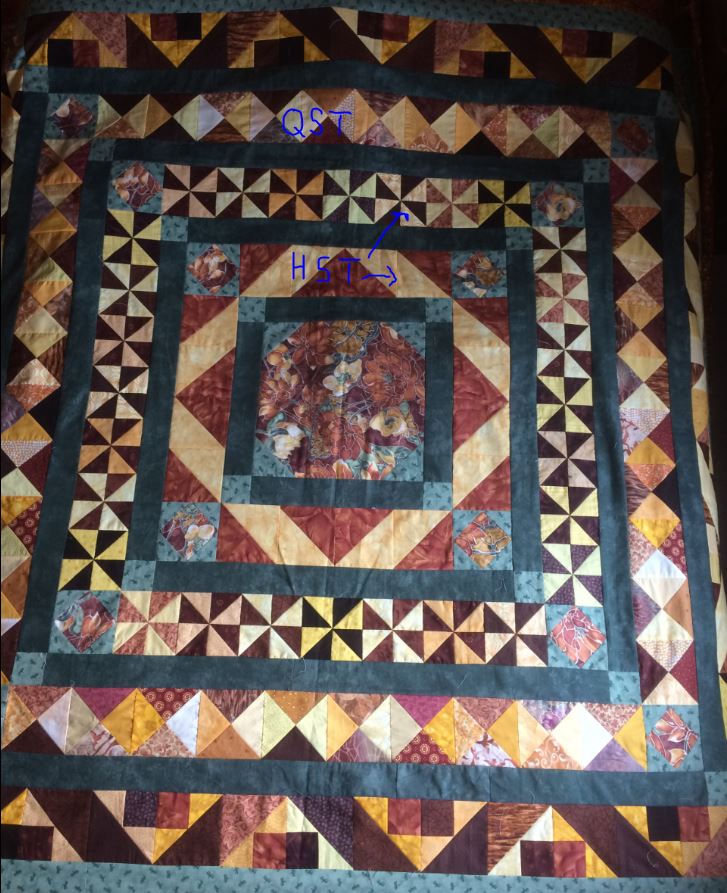
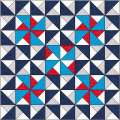
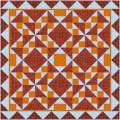
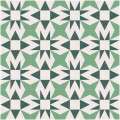
QST units are useful little things for borders, especially for frame (or medallion) quilts. Once more the way they are coloured and then put together in a strip can make quite different patterns –
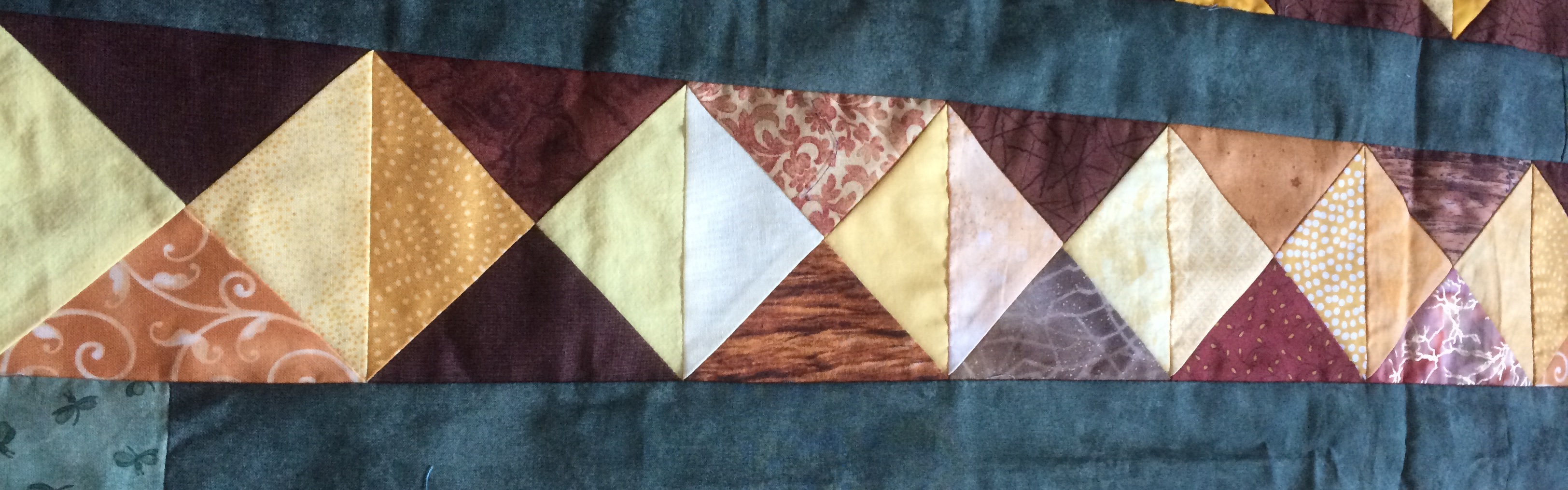

as you can see from these two examples and the quilt below.

Responses