

The Square in a Square (or sometimes Diamond in a Square) unit is found in a wide variety of blocks usually as corner units or as the centre. It is incredibly useful as a ‘spacer’ block between busier blocks with lots of pieces and as a border unit – either as ‘cornerstones’, where a plain square doesn’t quite work, or to make a pieced border. It is just as its name suggests – a square (turned on point – hence ‘diamond’) inside a larger square. You can find a downloadable free step-by-step tutorial on making these units here.
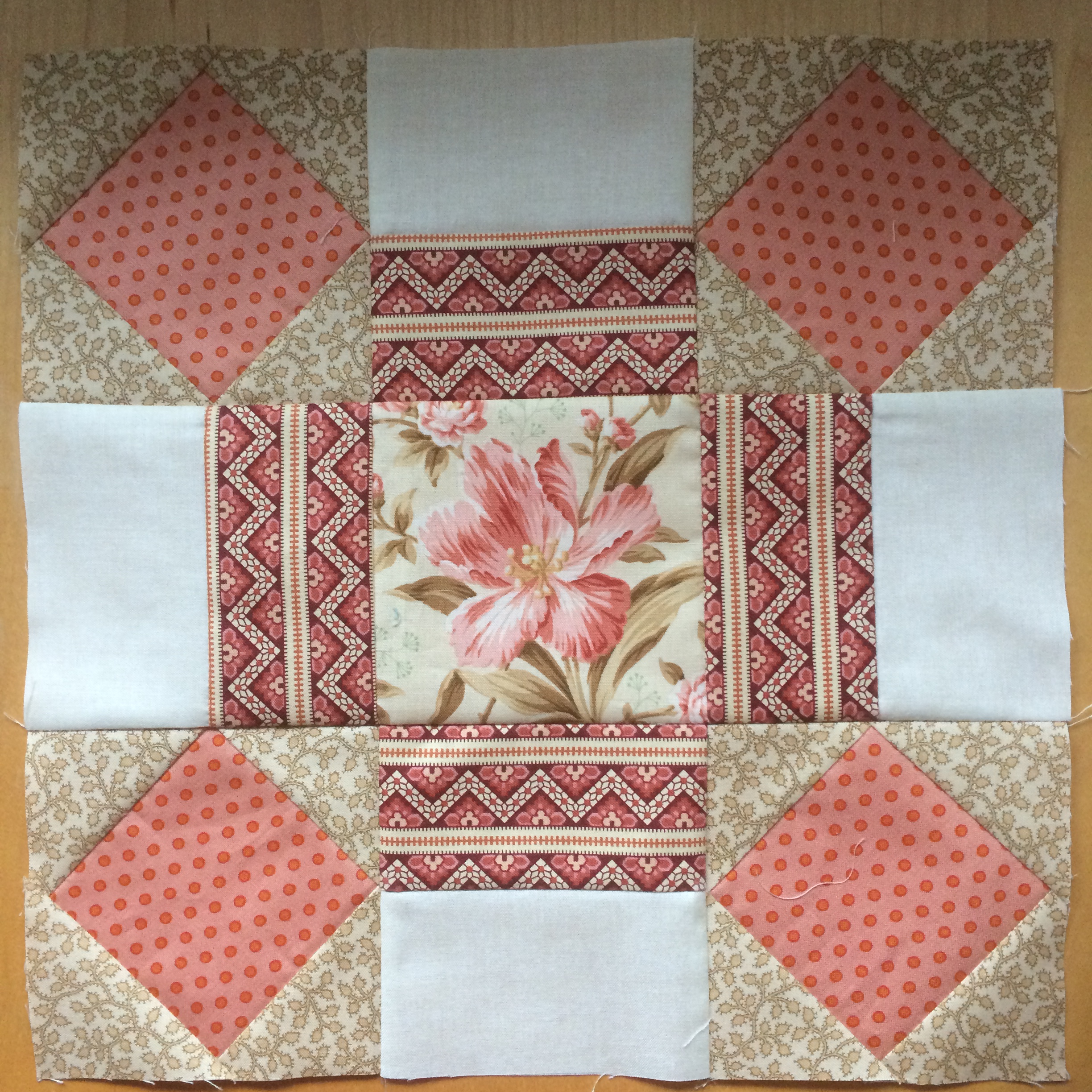
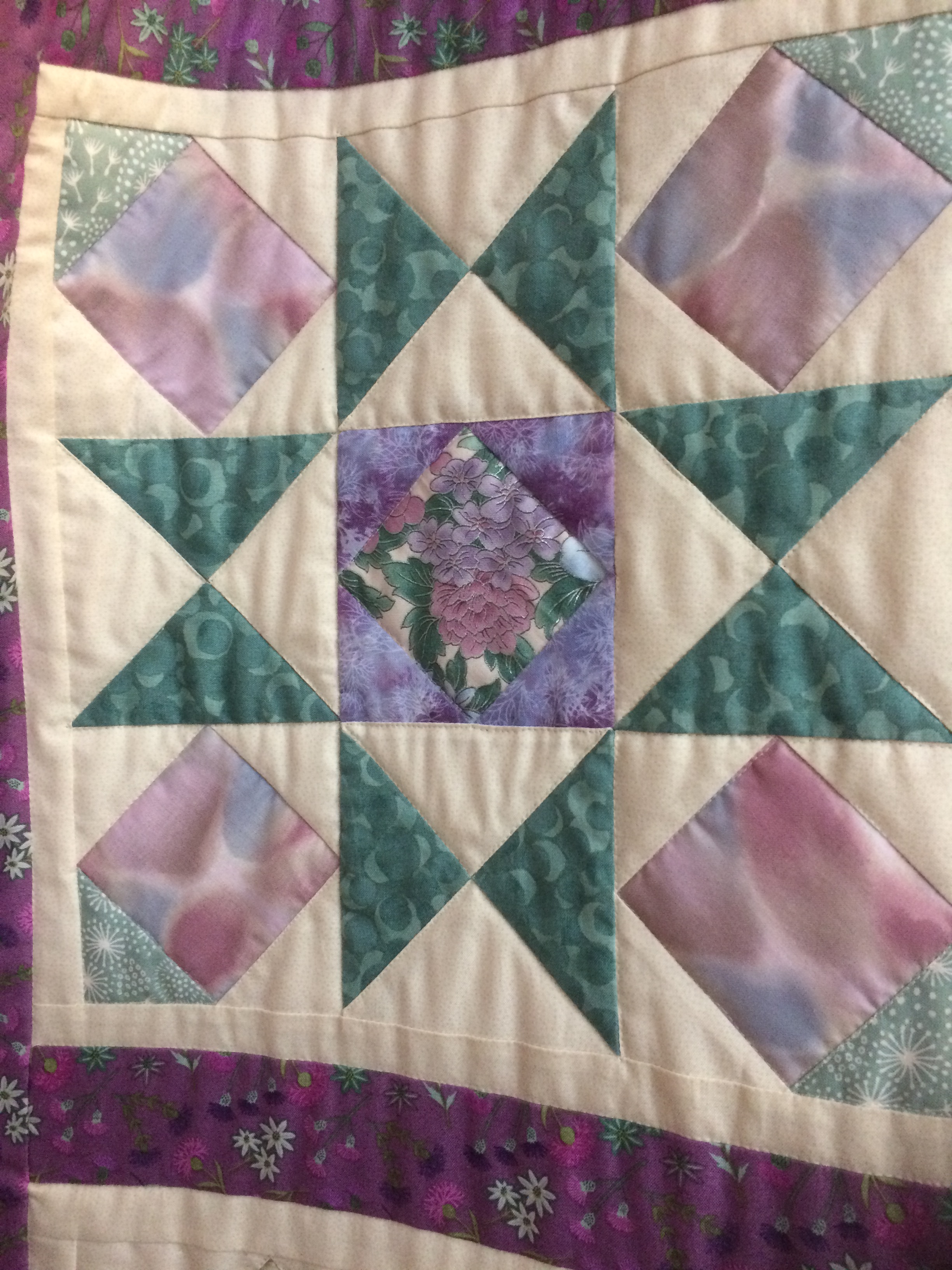
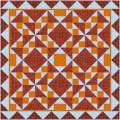
This month our students have been making blocks containing these units – Rolling Stone (or Broken Wheel) and Blocks and Stars (or Ornate Star). Once more we have had a lot of fun playing with different ways to colour the blocks and then put them into quilts (on the computer – the blocks we are making will go into a sampler quilt by the end of the year).
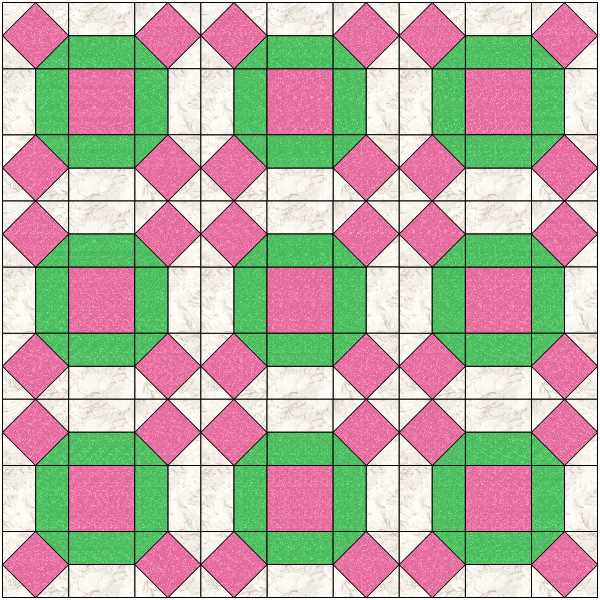
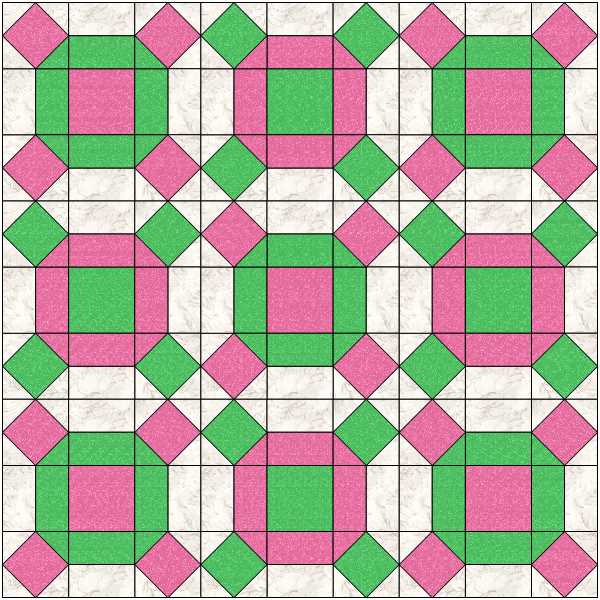
Because the units are in the corners they make quite a statement where the blocks meet so we found it looked better if we swapped the colours around in alternate blocks.
But then we started to play around with other ideas.
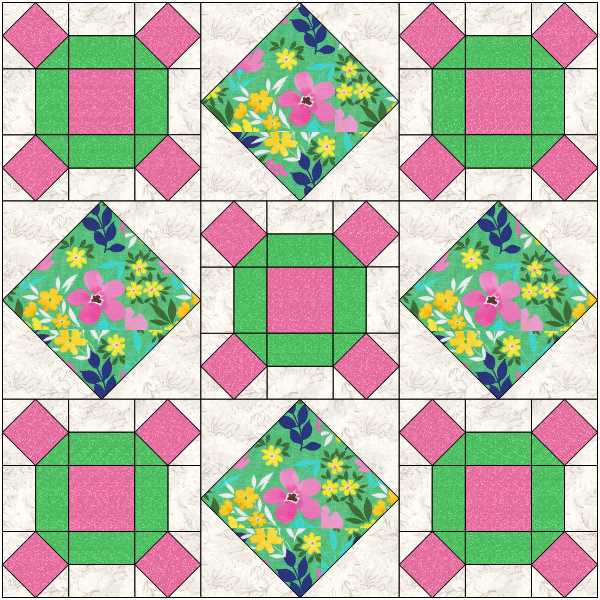
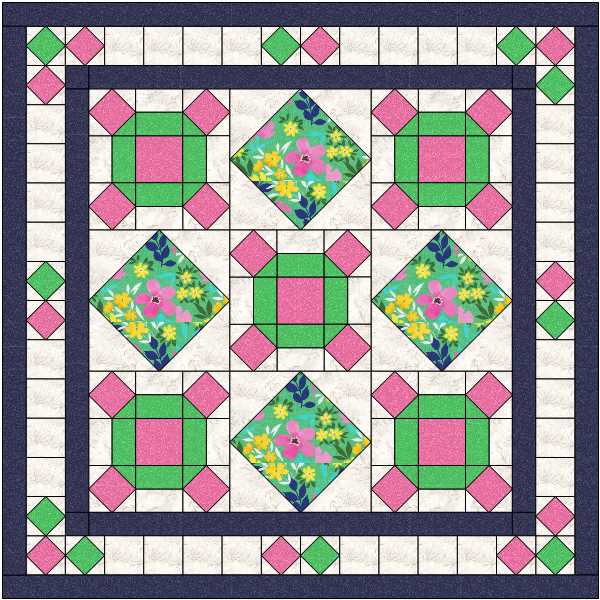
Look at the difference using a big Square in a Square block alternating with the Rolling Stone block. This time, because of the large square in the centre we have been able to use a floral print and fussy cut it so all the squares are the same. Adding borders and using the units in the centre border add an extra zing too – it looked too heavy with units all the way around, but these few added just enough interest.
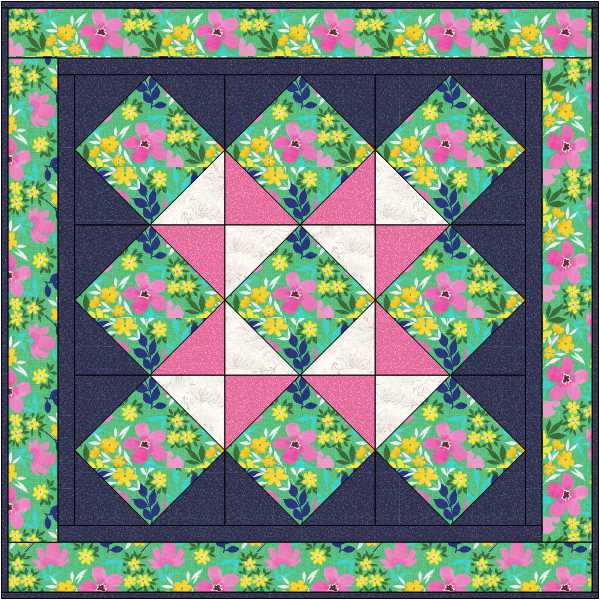

What happens if we use just the units on their own as blocks? Again we can have fun with colouring – if you add different coloured triangles around the square you can make all sorts of secondary patterns appear where the blocks meet.
Instead of using a print for your centre square you could add some applique or embroidery, as in the ‘crocus’ quilt shown here where the applique blocks are alternated with a simple ‘chain’ block.
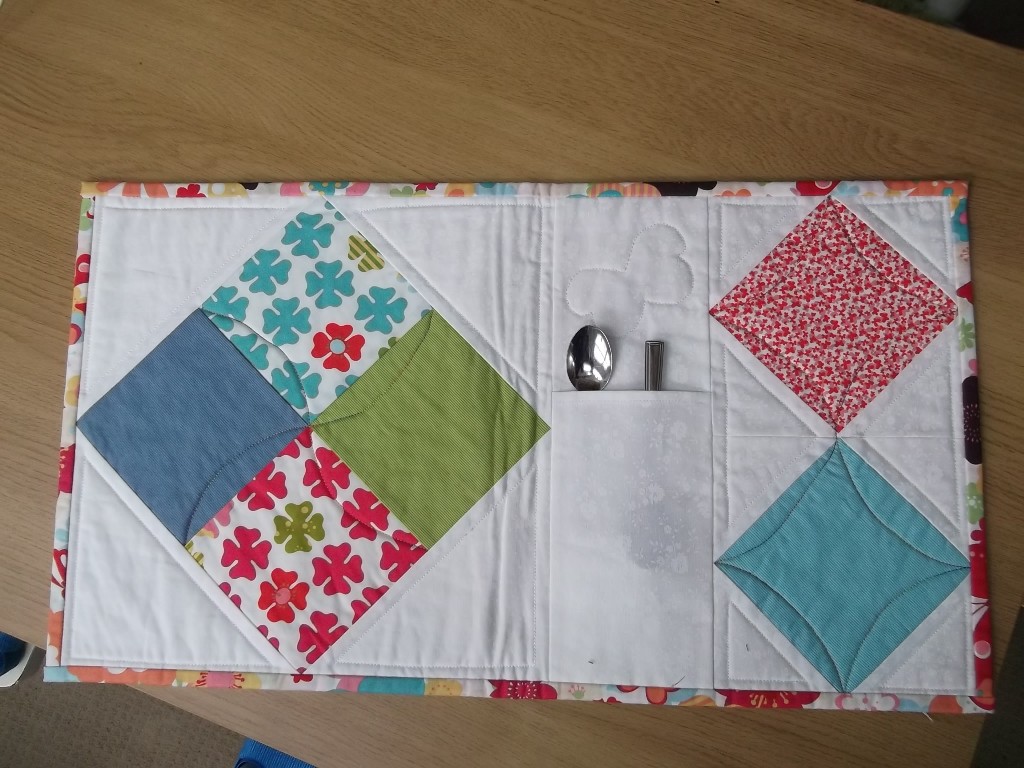
Or a smaller block – a 9-patch or 4-patch for instance can be used as the centre square as shown in this charm square table mat. The possibilities are endless and there are some more examples here. You can find a table of sizes to cut the triangles to go around different sized squares here and a brief article in Hints and Tips here.
And for more colour ideas here are a few of the students’ blocks –
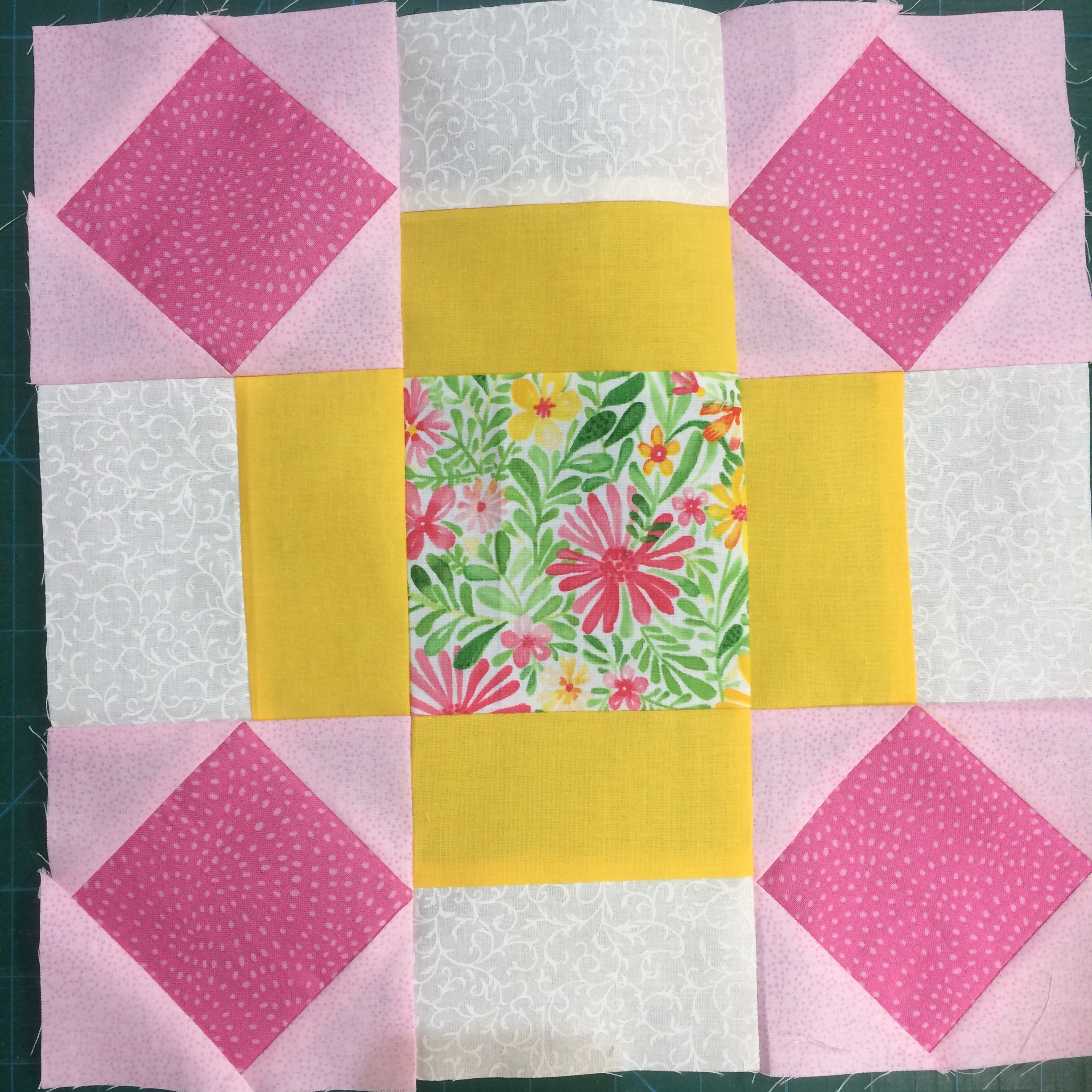
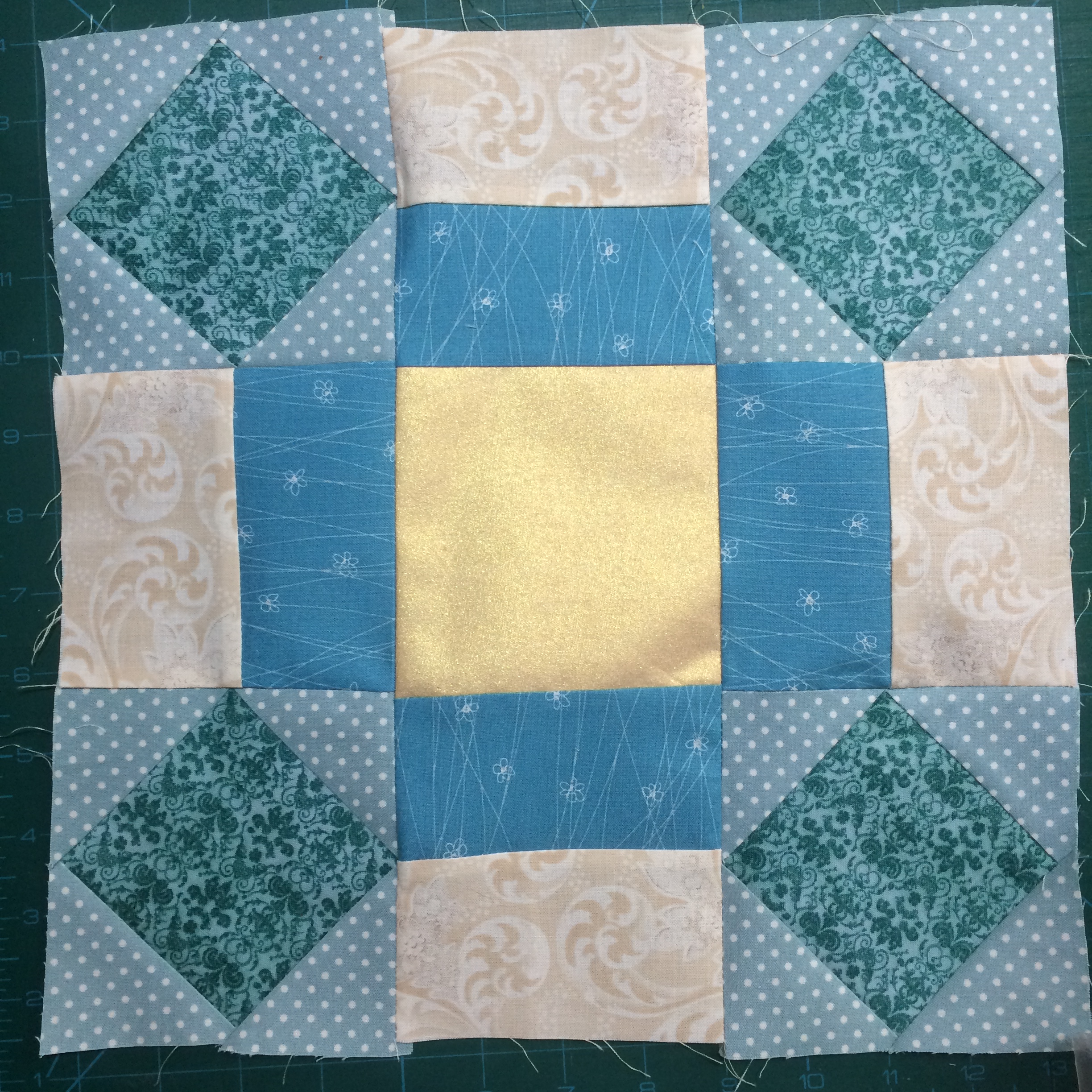
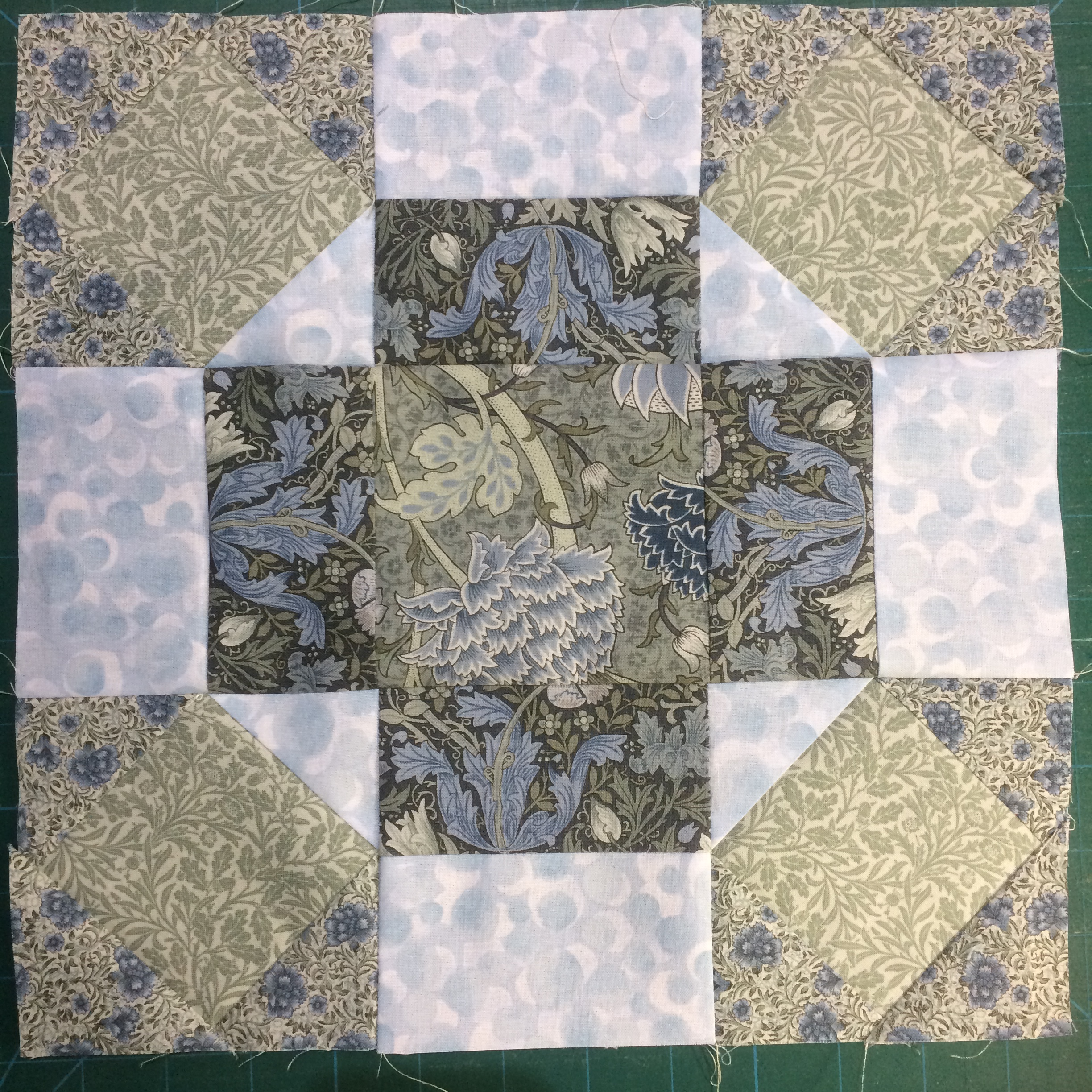
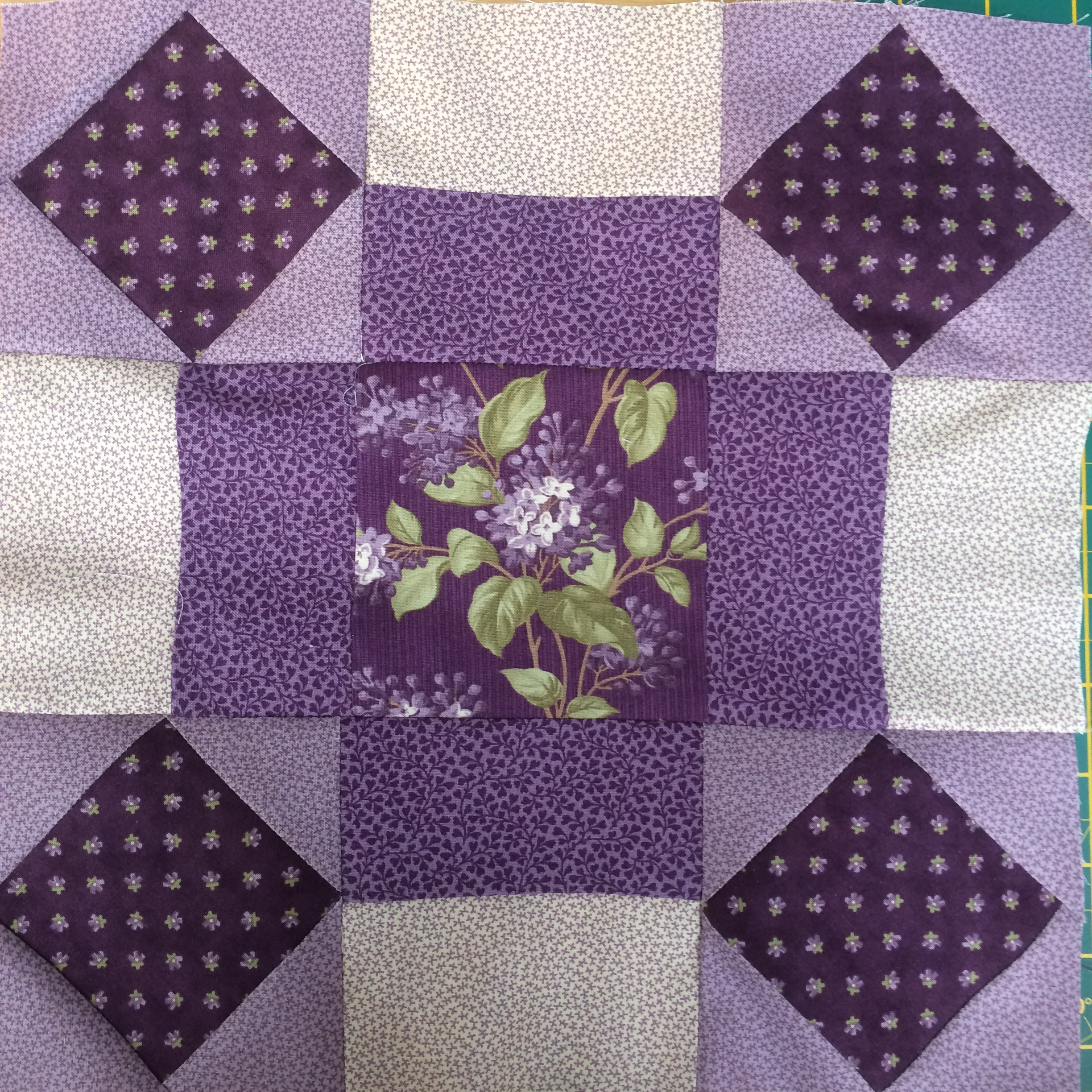
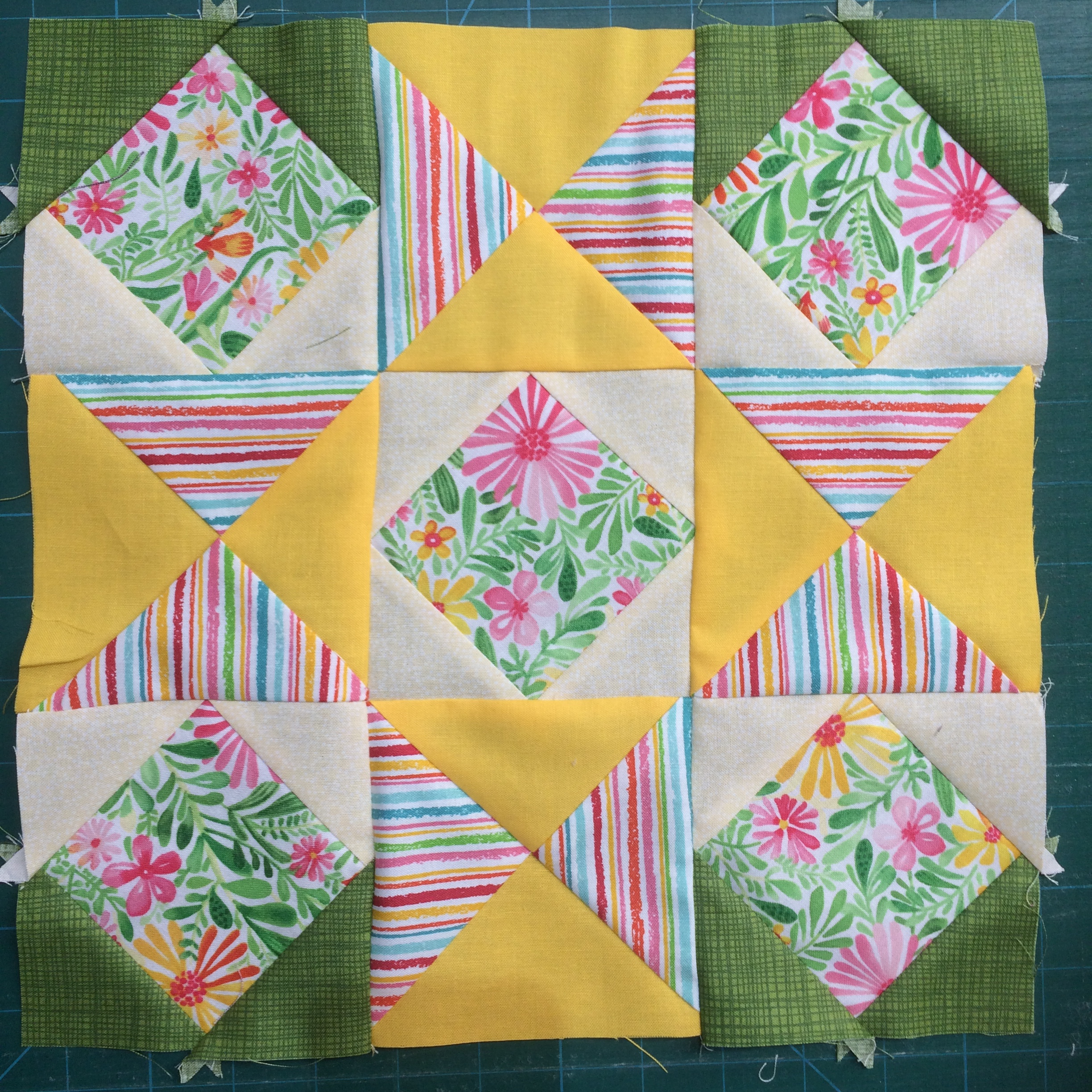
Note how changing the colour of the triangles around the corner units can change the effect and focus of the block, the four Rolling Stone blocks look quite different and the Ornate Star has lost its star but become far more interesting with the introduction of the stripe and the placement of the dark green.

Responses