

This is the beginning of a story about how old quilts can inspire very contemporary interpretations. It is only the beginning, because the contemporary quilt is still a whole lot of ideas floating around in my head, just starting to form and take shape thanks to the inspiration from an unexpected source.
I’ve wanted to make a quilt that provided a snapshot of my life and my heritage, but I couldn’t find a way to express my rather vague ideas. Then, yesterday, I attended the Quilters Guild of the British Isles 40th birthday tea party at Guild Headquarters in York. On show was the Red Manor House Coverlet, that has inspired their new block of the month project designed by Jenni Smith and Kay Walsh for the Quilters’ Guild.
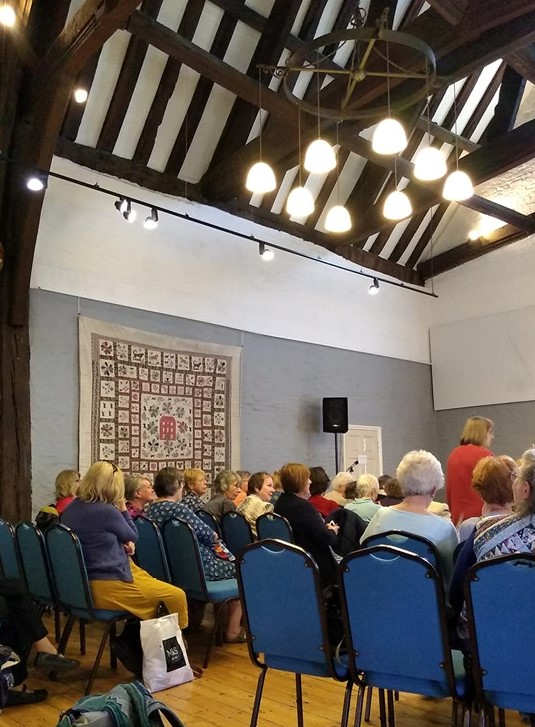
Initially (as someone who enjoys hand sewing) I was intrigued by collection curator Heather Audin’s description of the herringbone stitch used on most of the applique, as this is not a stitch that is, or was, commonly used for applique. A closer look had me absolutely enthralled and wanting to try it out on a raw edge applique project myself.
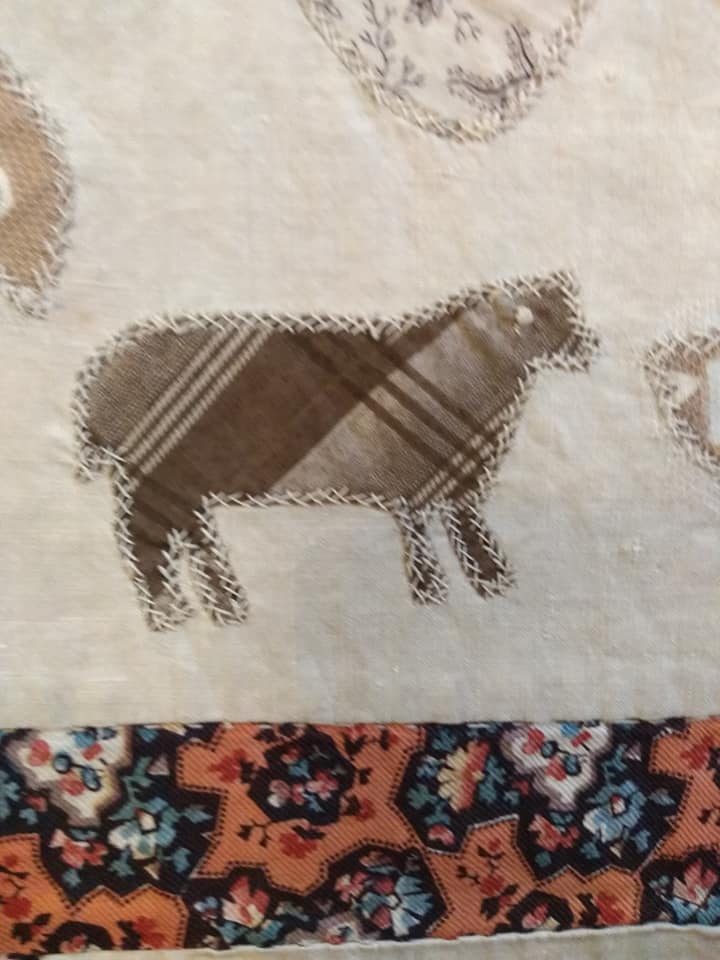
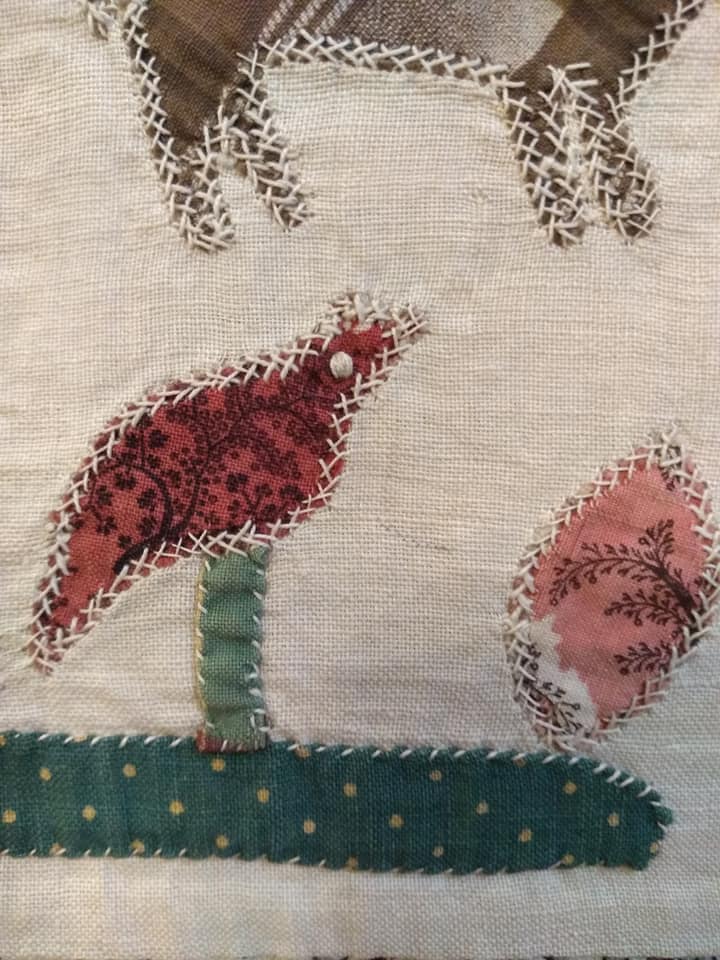
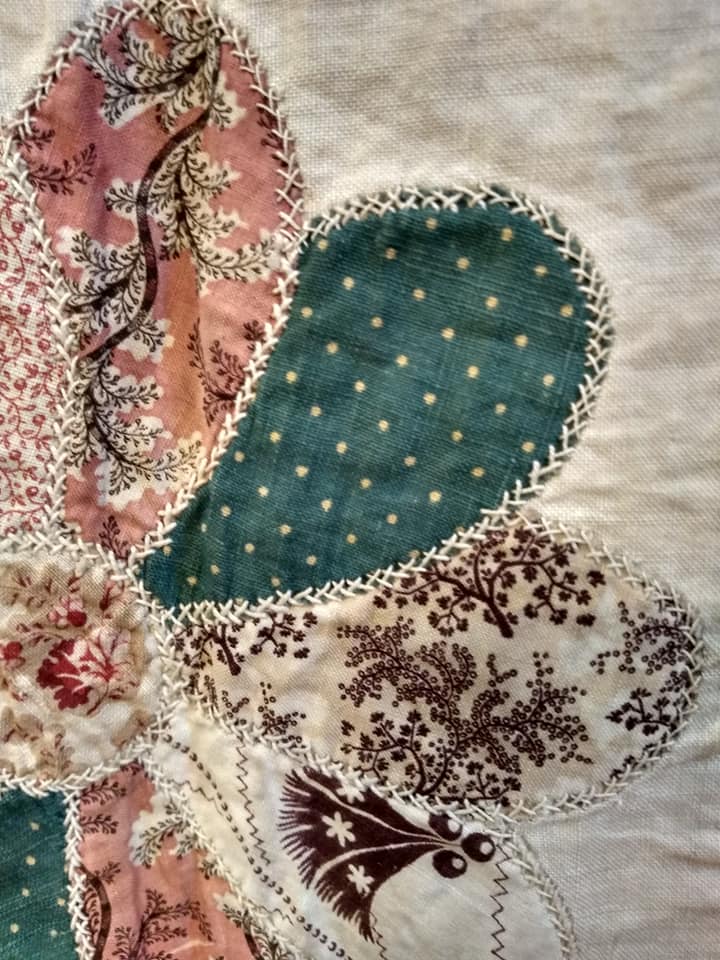
It wasn’t just the stitching though – as I looked more at this quilt, and in talking to a couple of other quilters who were also admiring it (apologies now if one of them was you, and I bored you silly with my raving!), I began to get more and more inspired by everything about this quilt.
It wasn’t perfect. Blocks were sometimes a little wonky or of varying sizes, the sashing was variable widths, and sashing fabric mismatched in places. A few “rogue” blocks that on close inspection were quite out of place with the fabrics and styles of the others were also included. There was inconsistency in the orientation of blocks.

But, it spoke to me, in ways that other quilts hadn’t. I liked how varying sizes of pictorial blocks could be arranged. The ordinariness of the subject matter, given much greater significance by its inclusion in a slow-stitched project. That lovely herringbone stitching on the applique pieces, that both enclosed raw edges far better than blanket stitch, and also gave a lovely blurry softness to the edges. The use of mismatched patterned fabrics for the sashing (what were they left over from?). The inclusion of those rather different blocks near the bottom edge – were they left overs from another project? Were they the first blocks stitched, before deciding to go off in a different direction? Could they have been blocks made by someone else and included for sentimental reasons?
Looking closer at an old example of quilting has been very liberating. I am immensely grateful that the Quilters Guild of the British Isles continue in their roles of collecting, preserving, educating, and sharing these treasures. You can read more about their 40 years of collecting in their new publication “Forty; the evolution of a collection”
My own project is now forming and I am about to start, with little idea of how the finished piece is going to look. I know I will take time to hand stitch small blocks in several different sizes, with appliqued images of things that are significant memories, but if I need to machine sew some, I will do that too. I imagine that at some point, I will know what I want as my larger centre panel. I’m not going to be restrictive about the fabrics I use, especially for the applique (after all, if they start disintegrating in 50 years or more, there might just be a conservator out there who thinks it is good enough to preserve and carefully anchors those sections with net fabric). The borders and sashing fabrics can be thought about much later. I’m not going to worry if a block or two seems a bit out of place in style or colour or size. This quilt is going to reflect me and my life.



Responses