

13th August was International Left Handers Day, so I thought a bit of a blog about it would be good. As I have said before, I am left-handed. My mum learned to knit left handed in an attempt to teach me to knit – I was about 5 years old at the time – I remember Angels being on television around the same time, and Triangle. We got into a right muddle between us, the piece I knitted started straight, but increased in stitches at either end, and was only small. A little later, I learned to knit right handed, and so now I knit right handed. This is fine, and all is good, but I still get a bit confused with some of the patterns – especially when it says to join something from the right; I immediately think that because I am left-handed I have to join it from the left, forgetting that I knit right-handed. I crochet as well – and again, it was my mum who taught me. I was around 14 or 15 at the time, and there was no way that I was going to be able to copy what she was doing exactly. I needed to sit in front of her, and mirror what she was doing, rather than try to do it right-handed. There are some things that come naturally – lace-making – I can accept that you manipulate the bobbins in that way the whole time, as you are using both hands, and the same thing goes for playing the piano and the flute – that there is one way to do it, both hands are working at the same time.
Left-handed people have had a bad press for quite a long time. The word ‘sinister’ comes from the Latin word ‘sinestra’ meaing ‘left’ – so left-handers have been considered sinister, whereas right-handers are ‘dextrous’. This continues into French as well – ‘gauche’ meaning ‘left’ in French is considered as being a bit uncultured, or clumsy, whereas ‘right’ in French is ‘droit’ – from which we get the word ‘adroit’ – being good at something. We have surely all heard of the stories of people being forced to right with their right hand, even when they are left-handed, and it still happens today – although not in schools. Left handed women were considered to be from a magical other world, – witches in fact, and during the time of the Salem Witch Trials, using the left hand could lead to being burnt at the stake.
In recent times, I have seen discussion about how best to help young left-handed people to sew, and to use quilting tools, and being left-handed I have very strong views on this. I think – and firmly believe, that we need to teach people in the way that is most comfortable to them. Should we be trying to make people learn to do things right handed, because it is easier for right-handed people to teach them? No, we shouldn’t. There have been some circumstances where left-handed people have been injured (sometimes seriously) from using implements or tools designed for right-handed people. Should we try to make them right-handed? No, of course we shouldn’t – that would be as crass as trying to make everyone speak English, or making everyone exactly like you are. We should not assume that left-handers will be thankful that they were taught how to do things right-handed, because that is not necessarily the case.
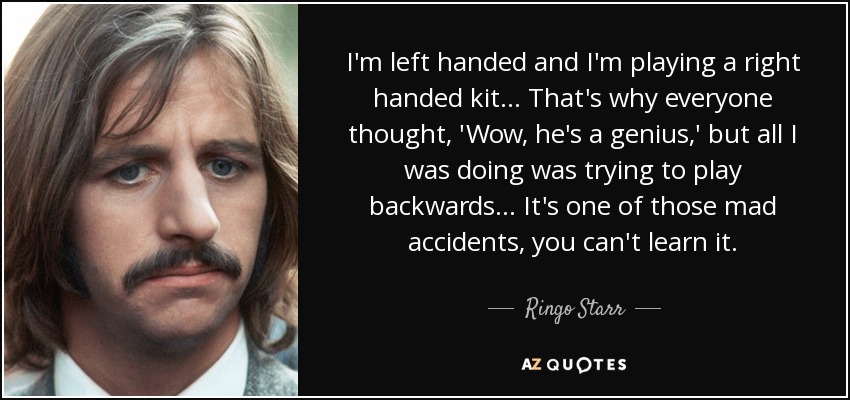
So, how can we make things fair, equal and easier for us lefties? Firstly – see if the young person has a preference for which hand they hold things in. Secondly – don’t force them to do things right handed, because it may seem really unnatural to them, and may end up putting them off – and don’t think that they will be thankful for being taught right-handed. Thirdly – remember the ‘mirror image’ – mirror imaging the actions rather than copying may be the better way to go – if they can’t work out themselves that they need to mirror image what you are doing, and are struggling, stand in front of them, and teach them being in front, rather than being side to side. Fourthly – and perhaps this should have come first – provide them with the tools that will help them best – e.g. rulers that are suitable for both right and left-handed people, rotary cutters that are either immediately suitable for left- and right-handed people, or those where the blade can go on either side, so they are easily adaptable. Fifthly – and maybe most important – accept that we can’t always do things right handed, the same way as right-handed people, that our brains are wired slightly differently, and that does not make us wrong.
Personally, I have found that Creative Grids rulers have been ideal for me. Currently I have several of their squares – the 2 ½”, 6 ½”, 12 ½” and 20 ½” too. Also – the 12 ½” x 2 ½” ruler too – this is very useful for cutting strips (although not quite as left handed friendly as the squares). You see, unless you are left handed, and so use the rotary cutter with your left hand, you will not know the problems we have with trying to use other rulers. The Creative Grid rulers have the numbers labelled in both directions, making it easy for us lefties to use, and get the right measurements. Standard 6” x 12” rulers are numbered in one direction, and it requires quite a bit of brain power and manipulation to work out where you need to be cutting.
Us lefties are a very versatile bunch – we have already had to work out a way to do things, having seen a right-handed person doing things. Then, we’ve had to read the numbers backwards, or upside down, or work out where 2 ½” is from 6” – as the numbers don’t go in the right direction for us. However, we do need some understanding and some adaptations for us as well; whilst we can work out where to place our rulers, it is easier to have one that helps us lefties; the rotary cutter that can be adapted to us is more useful than one that we have to make do with – and safer too. Most rotary cutters have this feature – my Fiskars rotary cutter has a groove on both sides of the handle, so the blade can be placed on the left or on the right. Others are even more hand friendly – they can instantly be used by anyone, as the handle is such that it doesn’t favour a particular hand or a right way up, and so anyone can pick it up and use it. Personally – I like having a left-handed rotary cutter – that way I know it is mine! There are quite a lot of left-handed scissors available now, and these are an important piece of equipment for left-handers. Handles on scissors are often moulded to fit the hand they are being used with, and when it is obvious which is the top blade and which is the bottom blade, trying to use right handed scissors with the left hand is a very uncomfortable experience. Therefore, it is important for us lefties to have the correct scissors. For some jobs, we can manage with right-handed scissors – embroidery scissors and snips are examples of this.
I’d like to think that sewing machines are non-handed, or left-handed already – because we use our dominant hand to guide and manipulate the fabric, the hand which has great control over our fine motor skills! We need to make sure that we set up pressing stations which are suitable for left-handers – so that we can easily press our work, without risking burning through the cable or burning ourselves. It would also be helpful to have greater area to the left of the sewing machine, so that we can have our notes and notebooks somewhere to hand, without them being knocked off the sewing area.

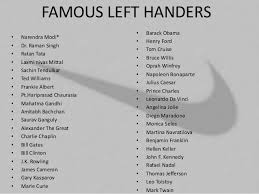
It has been claimed that left-handed people are more creative, – citing examples such as Leonardo da Vinci, Toulouse-Lautrec, MC Escher, Holbein, Rubens, Douglas Adams, Albert Einstein, Alan Turing, Marie Curie – being just a few. I have noticed that when I start a new craft, I will start it doing my own thing, rather than follow instructions or a pattern, and then I will go to a pattern later, once I have practised different stitches / strokes / movements. Last year, I started to crochet properly (and by properly, I mean more than just granny squares) – and I bought a bookazine after I had started to get some information about different stitches. I didn’t know how to join in yarn, or how to create holes – so I used the method “what will happen if I do this?” – and created something very original!
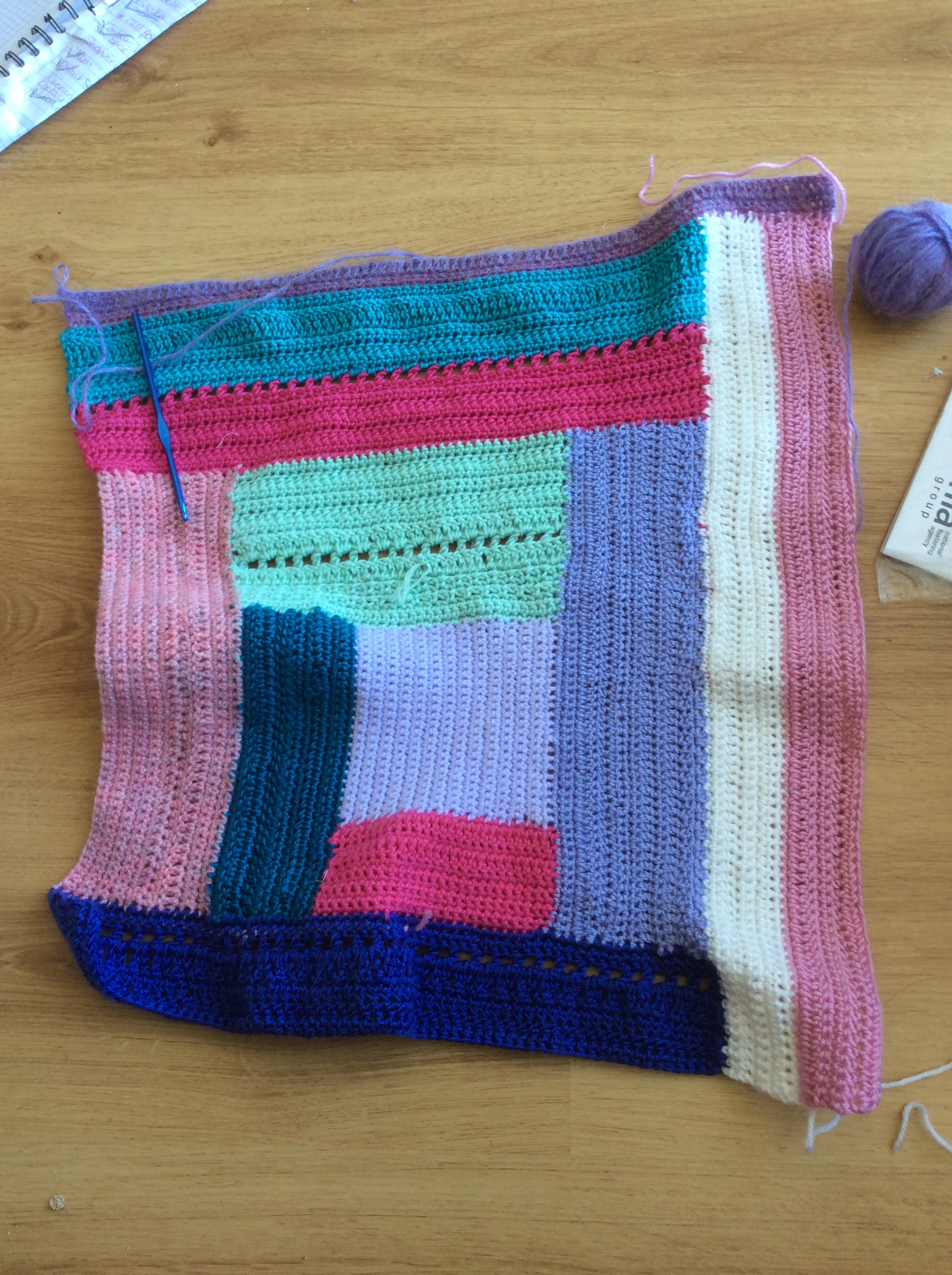
There have been claims about left-handed people being more creative, more adaptable. They have had to become adaptable, as there has been no other way to learn. However – we are now living in more enlightened times, and I believe that we should be teaching in a way that is most comfortable to the person that is learning.
As a final parting thought: I am currently in Spain, and have decided that I really need to get used to driving out here. This may come easily to some people, but I remember driving in America (I particularly remember driving to a quilt shop in Dunedin!) – I had to cope with driving on the right, a left-hand drive car, and an automatic – all of which was new. You see, to my way of thinking, everything is the other way round – it is like a mirror image…except it isn’t. I’ve got used to thinking of a right hand turn in Spain being like a left hand turn in the UK, so I end up getting my left and right mixed up over here, much to the annoyance of my husband. I will be trying to drive over here, and will hopefully cope with it – and get used to it fairly quickly, despite the whole process not being a mirror image. By the time you read this, I may have achieved this – wish me luck regardless!
P.S. I have since managed to go for a short drive – and it wasn’t as bad as I had fear it to be! I only drove around some roads in our estate, but I did both right and left hand turns, and also tried reversing. The only thing I didn’t do was go round a roundabout. I would have driven to a nearby quilt shop, except that having researched it, I discovered that it is closed for the summer…oh well, maybe that was for the best!



Responses