

There is something very special about putting a lot of time and creativity into making a quilt and then passing the finished quilt on to its new owner. When we make for family or friends, we want out quilts to be the best they can be, within our level of skill. Is it any different if we make for charity projects?
Charities will appreciate anything, right? Well, maybe not. A donated quilt has to be fit for purpose – it has to be “good enough to give”. A charity quilt project will almost always have the intention that each of their quilts will be a very special gift. Some will turn down quilts if they aren’t an appropriate size, but quality is also very important.
It’s a big job checking and sorting charity quilts, and the small but significant number of ones that don’t match up to standards can cause organisers a lot more work – from additional quilting, to unpicking and repairing badly sewn binding, or putting applique patches over frayed seams, right down to the rare occasions of having to make the awful decision that a donated quilt is so bad it can’t be used.
So, what makes a quilt “good enough to give”?
1. Is it something you are proud of and would be happy to give to family or friends?
– Charity quilt drives are not the place to dump your second rate or disaster quilts. That doesn’t mean you can’t give away your disasters – it just means they need to go somewhere they can be pulled apart, re-made, or otherwise salvaged. There are plenty of quilters around who enjoy doing this, but just don’t expect that your badly sewn, seams-coming-apart quilt will be acceptable as is.
2. Does it look, feel and smell nice?
– Using clean, fresh and not-previously used fabrics for quilts is important. Save those old clothes and used sheets for your own sentimental or upcycling projects, where you are absolutely sure your recipient appreciates recycled gifts.
– Keep everything allergy-friendly – If you can’t keep your pets away from quilts, then wash the quilt before giving. Cigarette smells or perfumes are also a definite no-no, and that goes for strong smelling washing powders as well.
3. Has the quilt been made well enough?
Perfect points and absolutely matching seems aren’t the big issue here – functionality is. A quilt you are gifting needs to be made to last through normal, and maybe even heavier than normal use.
4. Check your stitching carefully:
– Machine tension issues (loose stitches), areas where you ended up with very narrow seam allowances because your blocks weren’t quite the same size, or sometimes even cheap loosely woven fabrics – these can all cause problems that could have your seams falling apart at the first wash, but can be fixed if you are aware of them.
5. Have you done enough quilting?
– Quilting is what holds those layers together and reduces stress on seams, making your item much longer lasting. If you really want that finished quilt to last, then all those little pieces in the top need to be anchored through the wadding to the backing – that will most often mean a lot more quilting lines than the maximum quilting distance recommended for your wadding. Remember too, the recipient of your quilt may not understand “gentle washing” in the same way you do. For gifted quilts, too much quilting is better than too little quilting.
6. Does your quilt lie flat and square?
– Lumps and bumps and distorted quilts are all warning signs of potential problems – stretched or stressed fabrics, poor stitching, uneven quilting. If you aren’t sure, get advice. Some things can be fixed, some ignored, while others will need a complete re-make. Don’t be guilty of giving a quilt that won’t survive its first wash, or is only suitable for lining the boot of your car.
7. Is the binding neat and tidy and doing its job of protecting the edges of the quilt from wear?
– I’m not talking perfectly pointed flat corners here (though do aim for this), I’m talking functionality – you can’t have loose flappy corners; puckered binding will wash badly and distort the quilt; bits where your stitching is too close to edges that will come undone and fray, or wobbly stitching lines in a contrasting thread colour.
8. Have you used a fleece backing?
– These are lovely, soft and huggable, but THEY STRETCH, and a stretchy backing will put a whole load more strain on your pieced top seams. That means you need to think carefully about which direction your quilting lines are going to go, and it also means that you are probably going to need to put more lines of quilting on this difficult fabric than you really want to. It definitely helps to choose a low-stretch fabric with quite a tight structure and not one of those really stretchy plushy ones.
Above all, remember that quilts are given to be used. Yes, they need to look good (from 5-10 feet away, not seams under a microscope), and they need to feel nice wrapped around you, but they need to be finished off well enough to survive use and washing.
There may not be any “Quilt Police”, but paying attention to your stitching and finishing means that your quilt will be “good enough to give” and a gift that really will last.
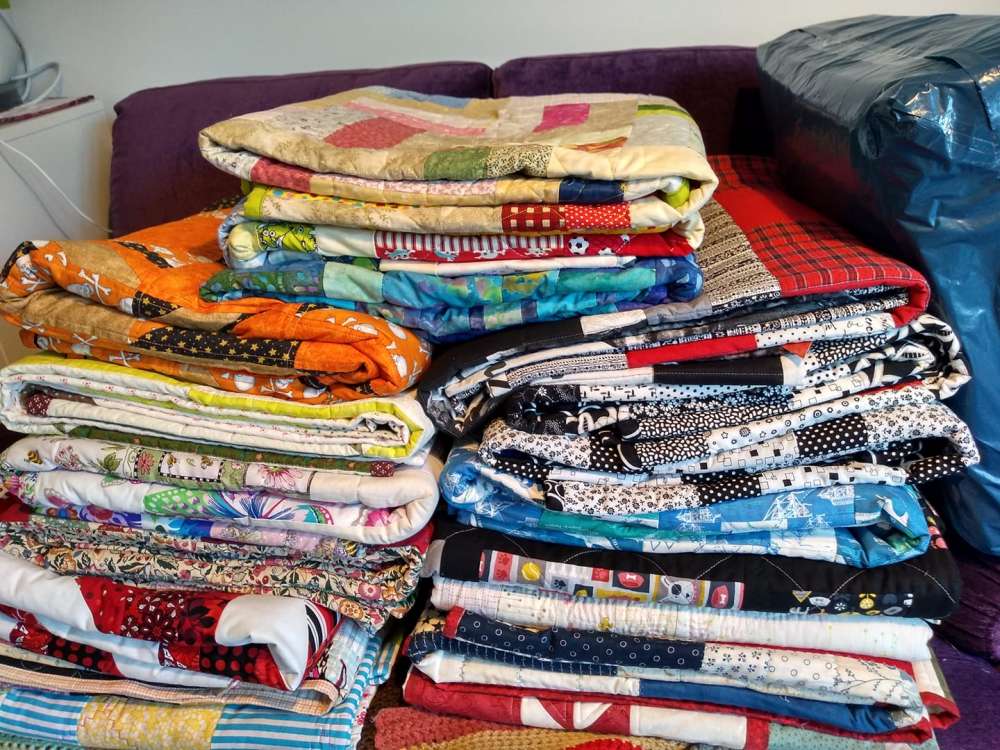
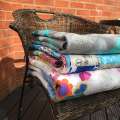
(photo is of quilts made for the Quilts for Care Leavers Project, this year providing quilts for 16 Care Leavers’ Christmas Dinners)

This is really thoughtful. I often see people say they don’t like it so they will pass it on. Excellent advice.