

This painting, the Entrance to the Port at Honfleur is the one I chose to be my inspiration for the wall hanging. (See Sewing meets Seurat – Part One).
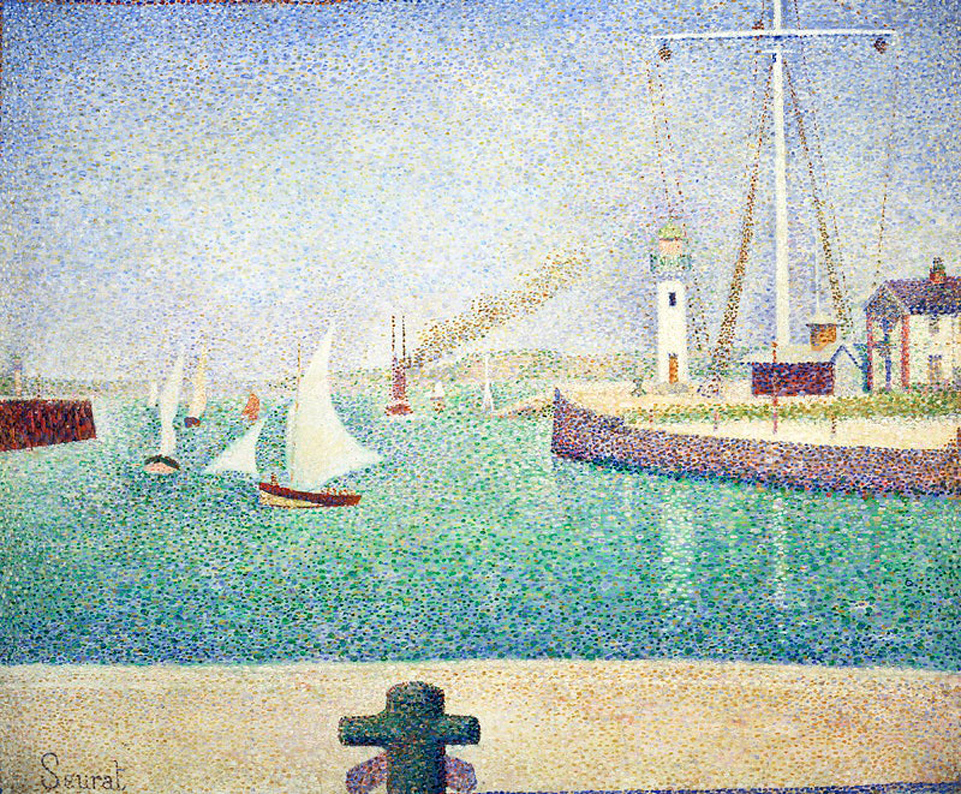
I worked out from my newspaper pattern the amount of fabric I needed to make the sky and sea pieces. I then had to decide how to create the spotty effect of the Seurat paintings. On the basis that it took him 2 years to create some of his works, I decided that I needed a different, maybe a more modern, approach.
Some of you may have heard of paint called Brusho, which is crystal colour. You can sprinkle this onto a surface (paper or fabric) then spray with water. It can create the most spectacular effects, so I thought this may be an approach. Brusho isn’t permanent if you need to wash the fabric, so is not suitable for quilts, but is fine for a wall hanging.
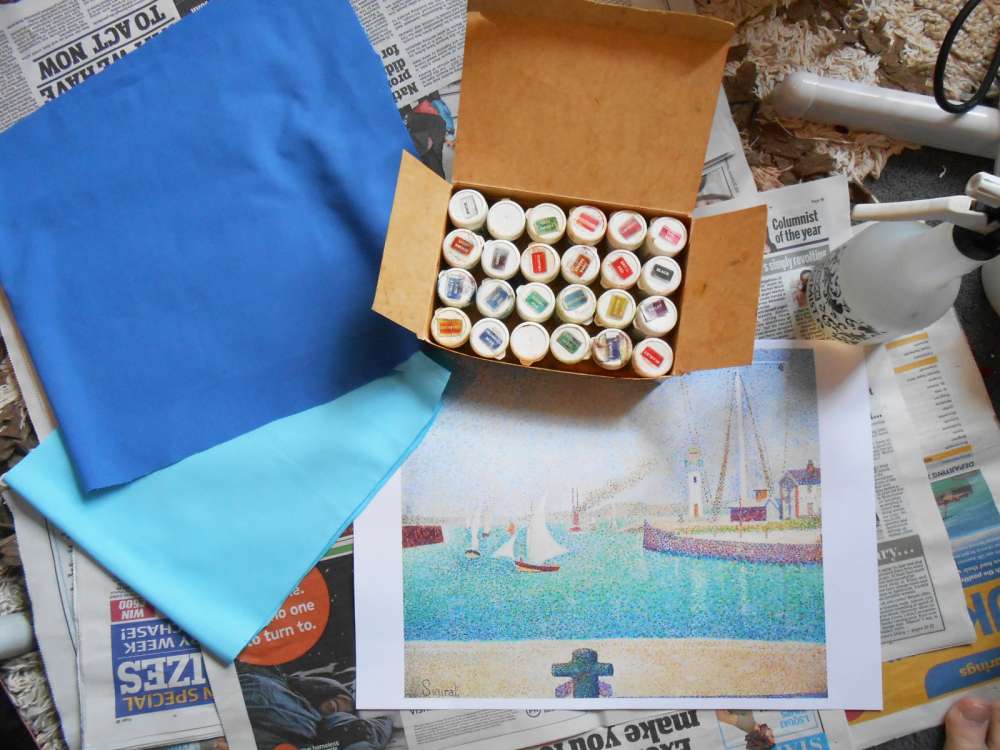
The blue in the first picture seemed much too dark, so after a comprehensive search, I found a much better pale blue lurking beneath a table.
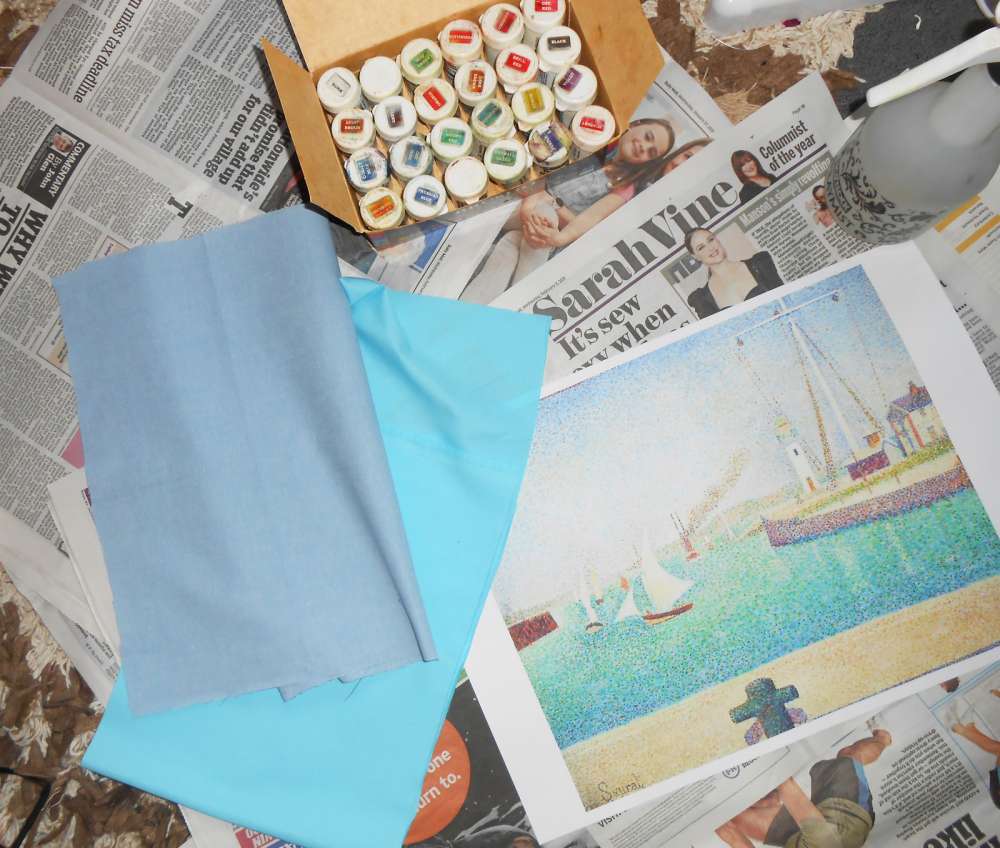
Here is a picture of the Brusho just sprinkled onto the fabric, this is a mixture of 3 blues.
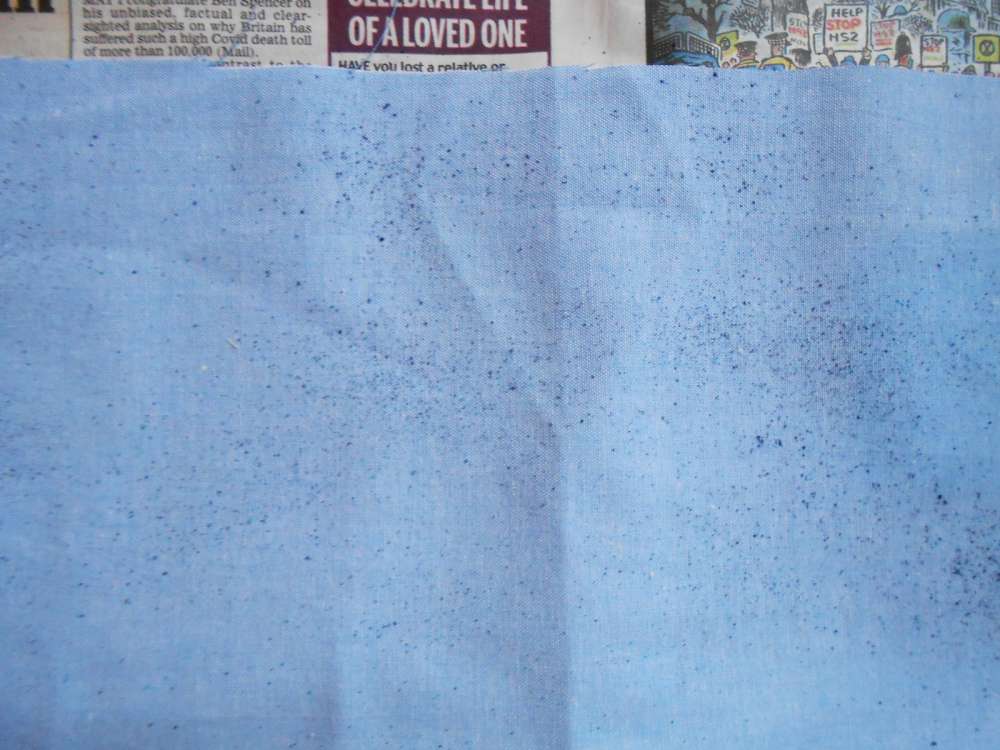
I also used some acrylic paint to paint spots onto the centre to lighten everything up once I had sprayed it with water and allowed it to dry.
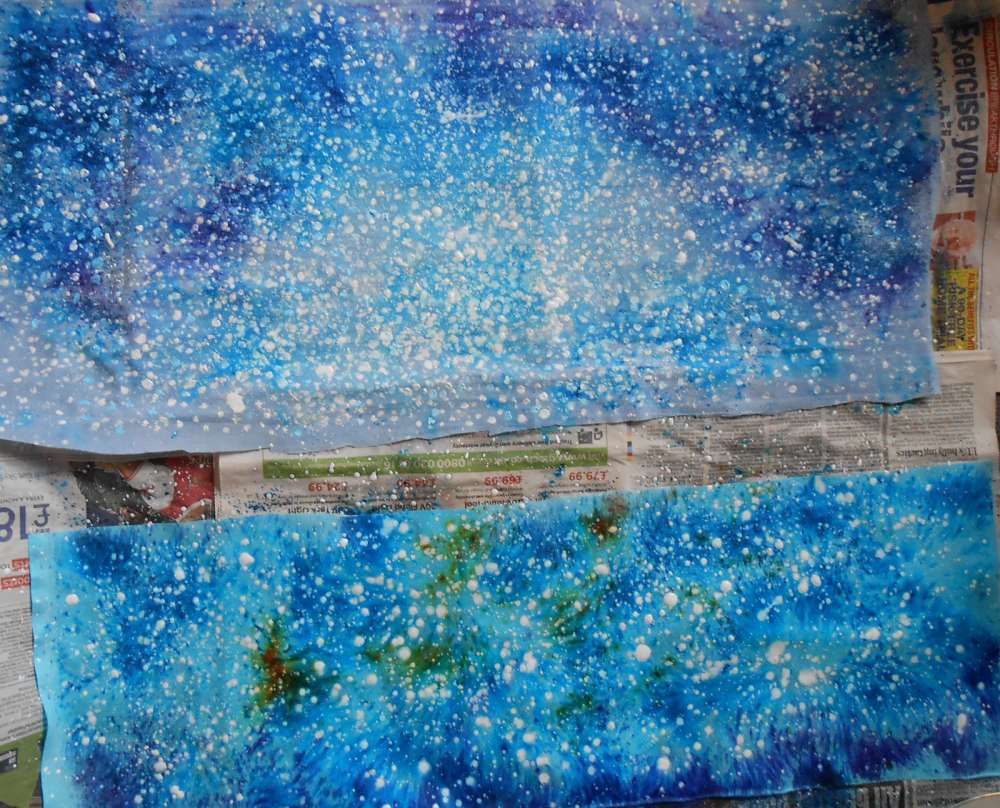
I love working with Brusho, it’s great fun and you never quite know what the result will be. One problem I have found is that “less is more” as it is very strong and goes very dark if you overdo it. I really like the end result of these panels. Is it a decent reflection of the light and space in the original painting? No, not at all.
I did play with using them anyway as I had created them. In the end I decided that they could get used for something else. I wanted to be pleased with the end result of the Seurat panel and feel I had done him some sort of justice. What appealed to me in the first place was the light and space in the painting and I had managed to lose that completely.
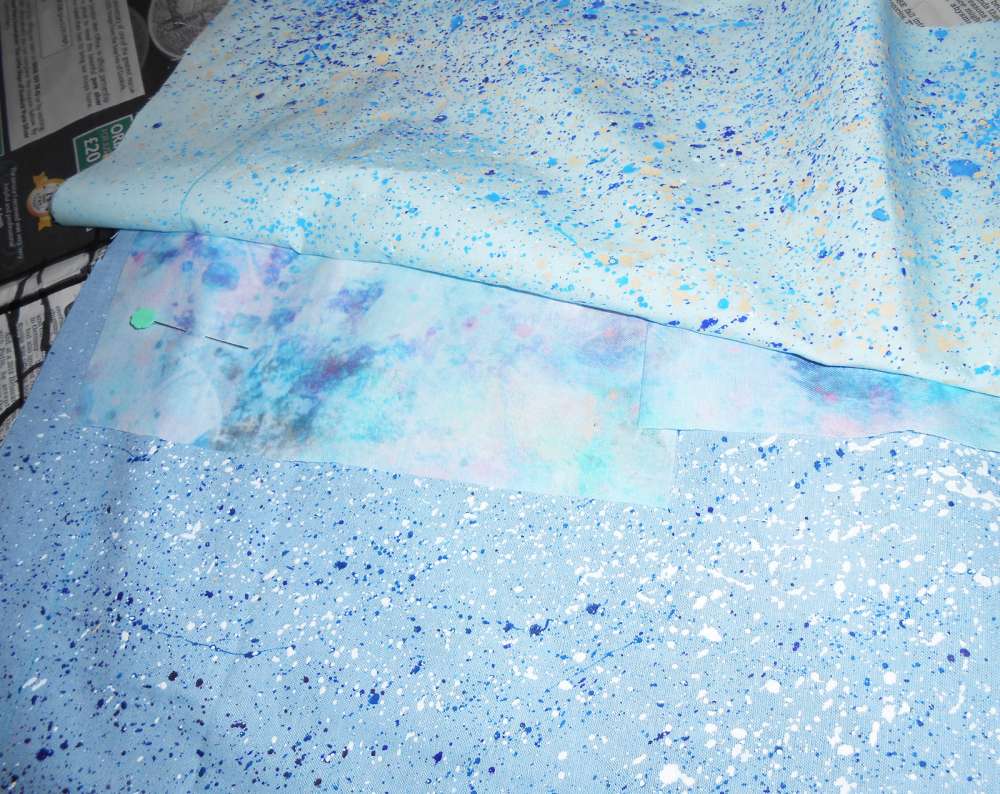
I have some Rowney System 3 acrylic paint, so cut two more panels and started again using a different technique. I knew I couldn’t paint all the spots as he had (lack of time and patience) so decided on the modern method of splashing (this is used widely in modern painting techniques). Literally, load a brush with thinned down paint and splash it onto the fabric.
Acrylic paint is thinned out with water but is waterproof once it has dried, so it can be washed and could be used for a quilt. It wouldn’t be suitable to cover the whole surface as it will make the fabric go hard, but used for a texture it would be fine.
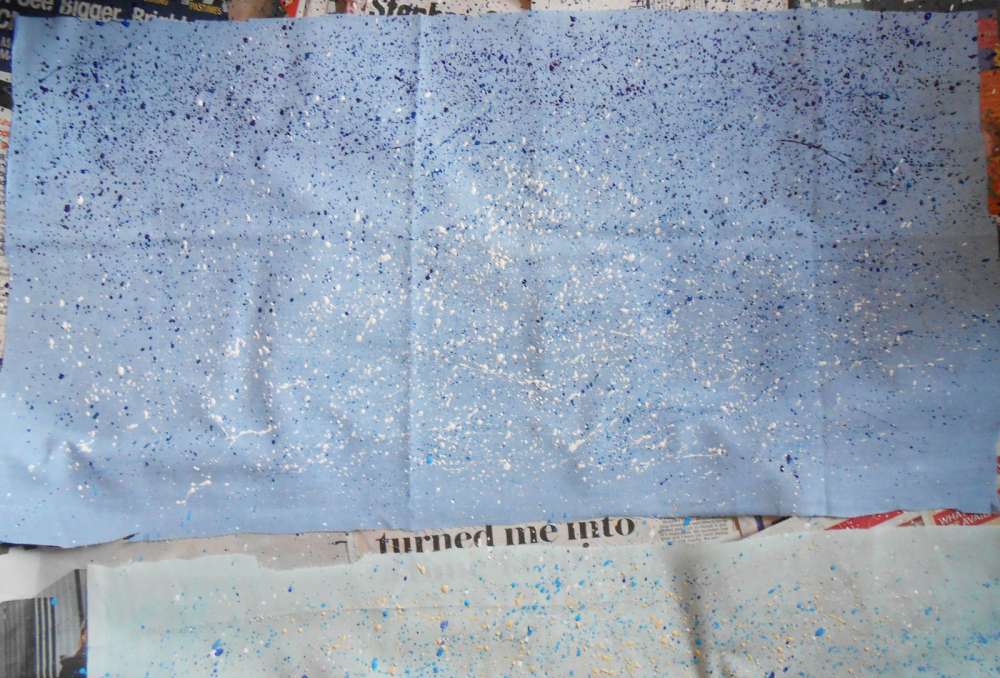
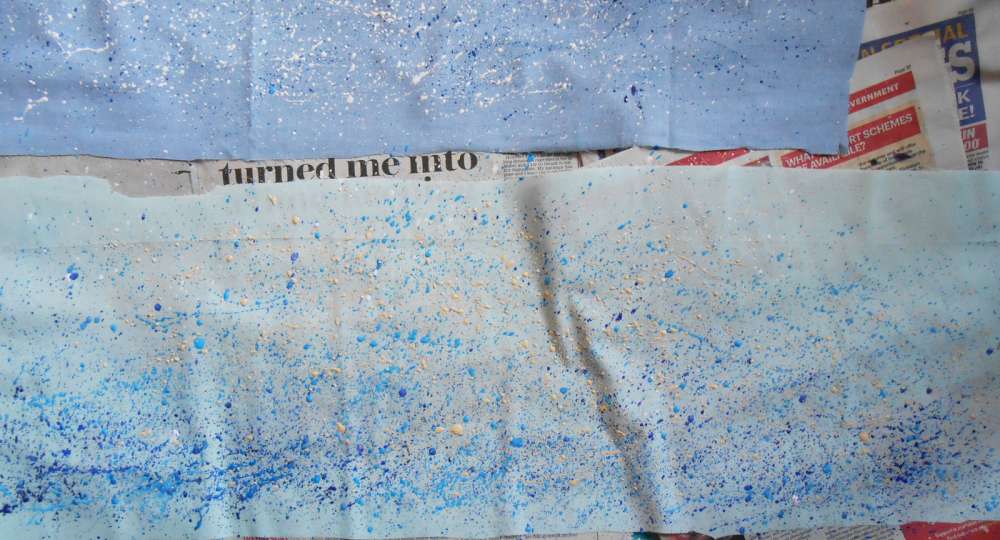
I am so much happier with these panels. Time to make a start on the sewing.
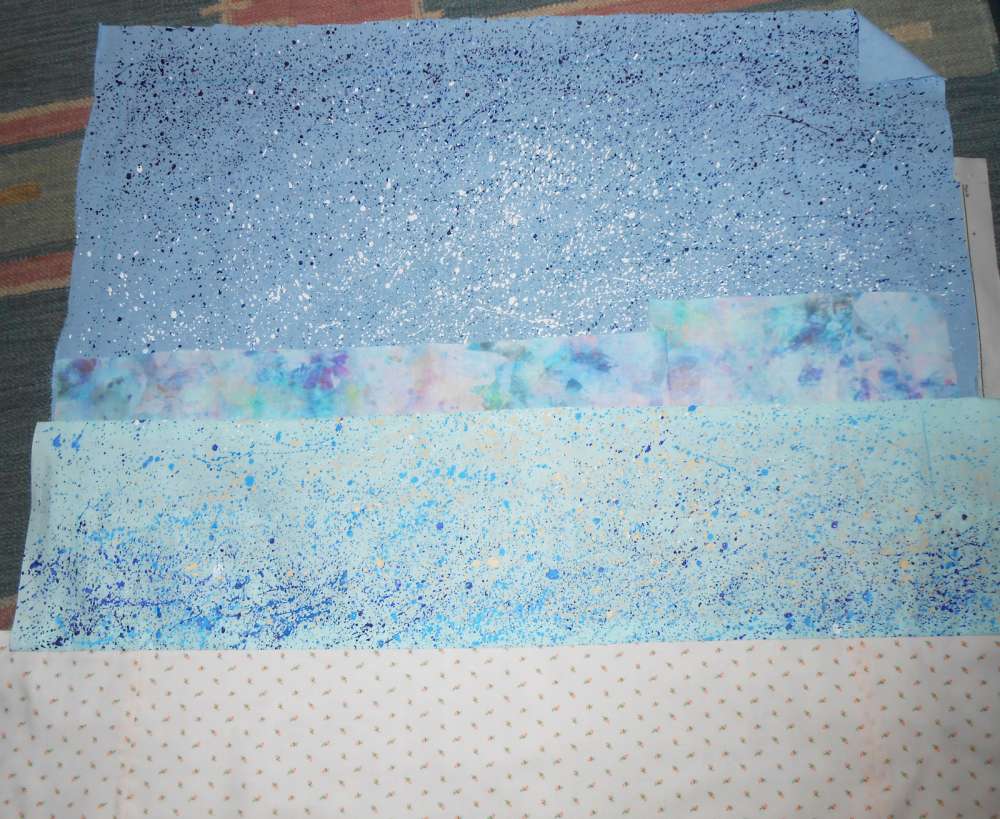
The first seam will be between the sea and sky, right sides together, pin along a straight line. I had a lovely piece of fabric to make the hills in the distance so pinned this in before sewing. I will need to put a seam down the hills fabric as it doesn’t quite fit. I didn’t cut the hills shape as I was nearly out of Bondaweb and didn’t want it to fray.
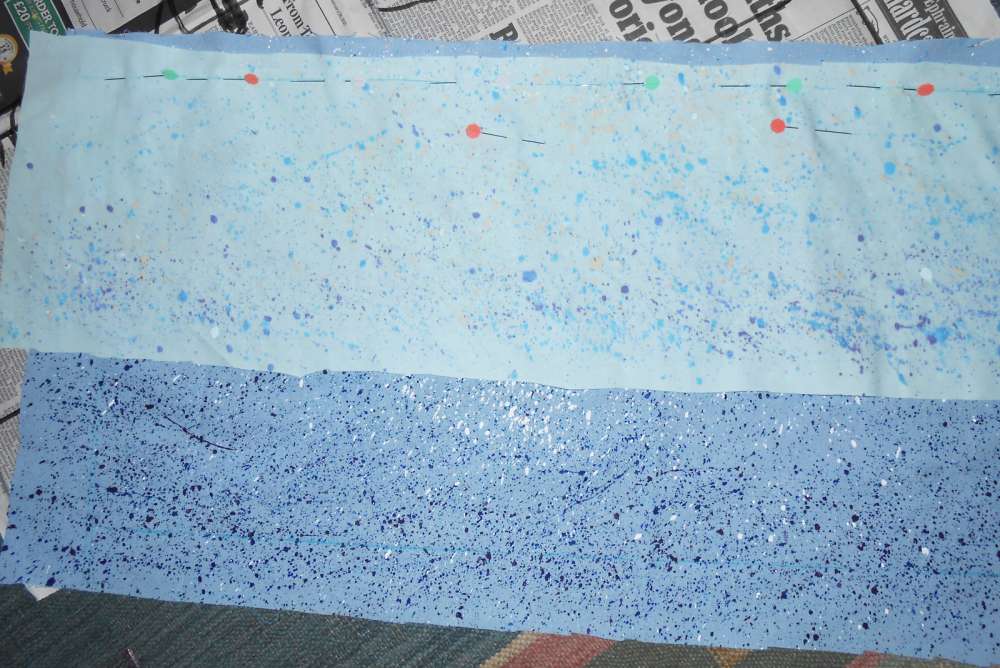
The only fawn/cream coloured fabric I had also had small flowers. I thought this was quite cute as this is a sewing project it brings it back to being about the textiles, they give an impression of spots and make a great quayside in the foreground.
The next instalment will be about creating the applique shapes.
That is amazing! When I started reading your first part I envisaged a confetti technique. This is so much better: I must try Brusho. We had an eminent quilter visit my group who suggested acrylic mixed with textile medium is the answer to any questions.
oooh, that’s interesting. I am very much learning about the quilting side, so textile medium is a new one on me, will need to find out more. Thanks Maggie