

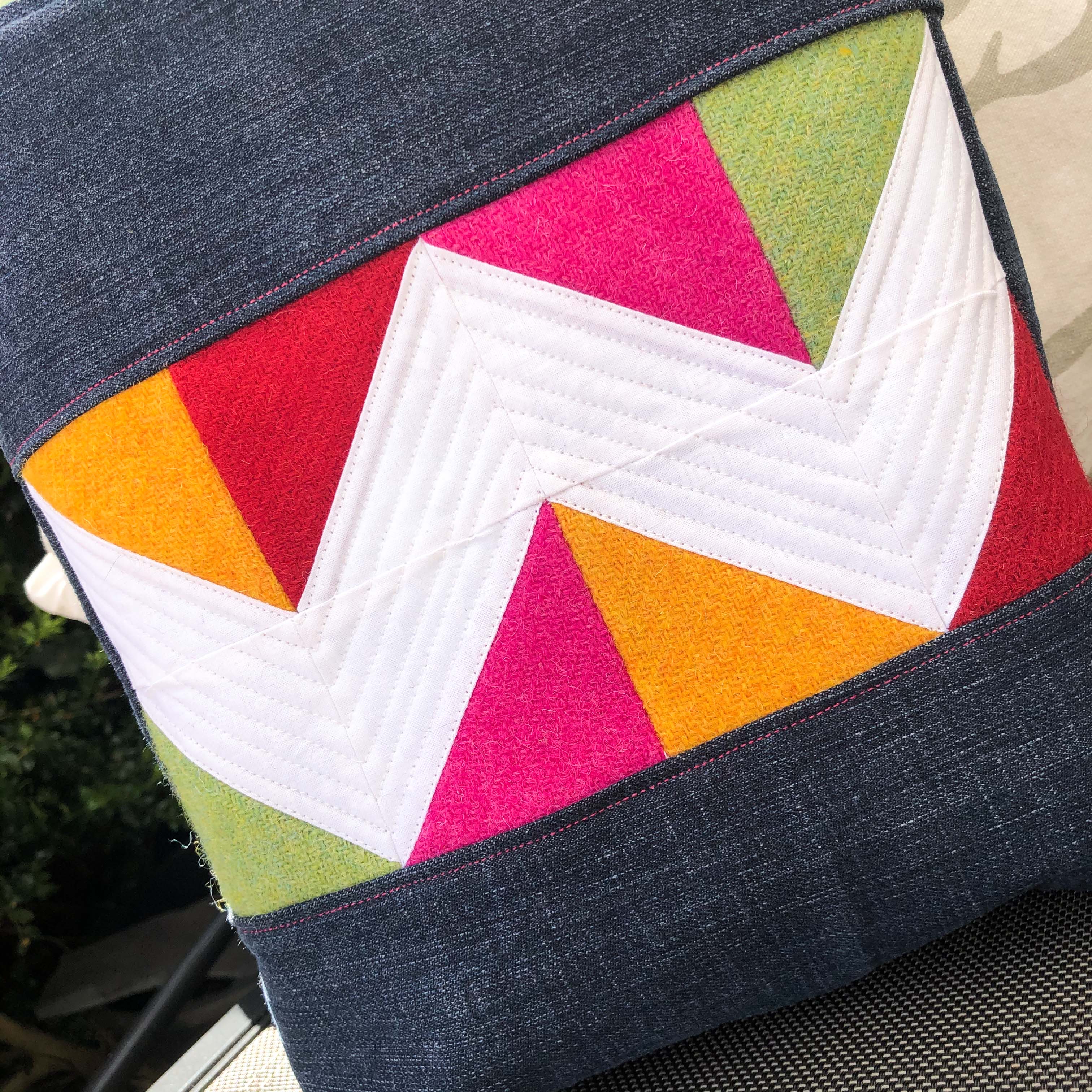
Hello everyone! Hope you’re well and raring to enjoy a little more freedom (& perhaps a little more quilty shopping too!). Something a little bit different for today- it’s all about Harris Tweed! For some of you, you might be really familiar with it- but also might be thinking, Grandad style flat caps, posh blokes in suits or old ladies in tweed style kilts. Does this really have anything to do with quilting?
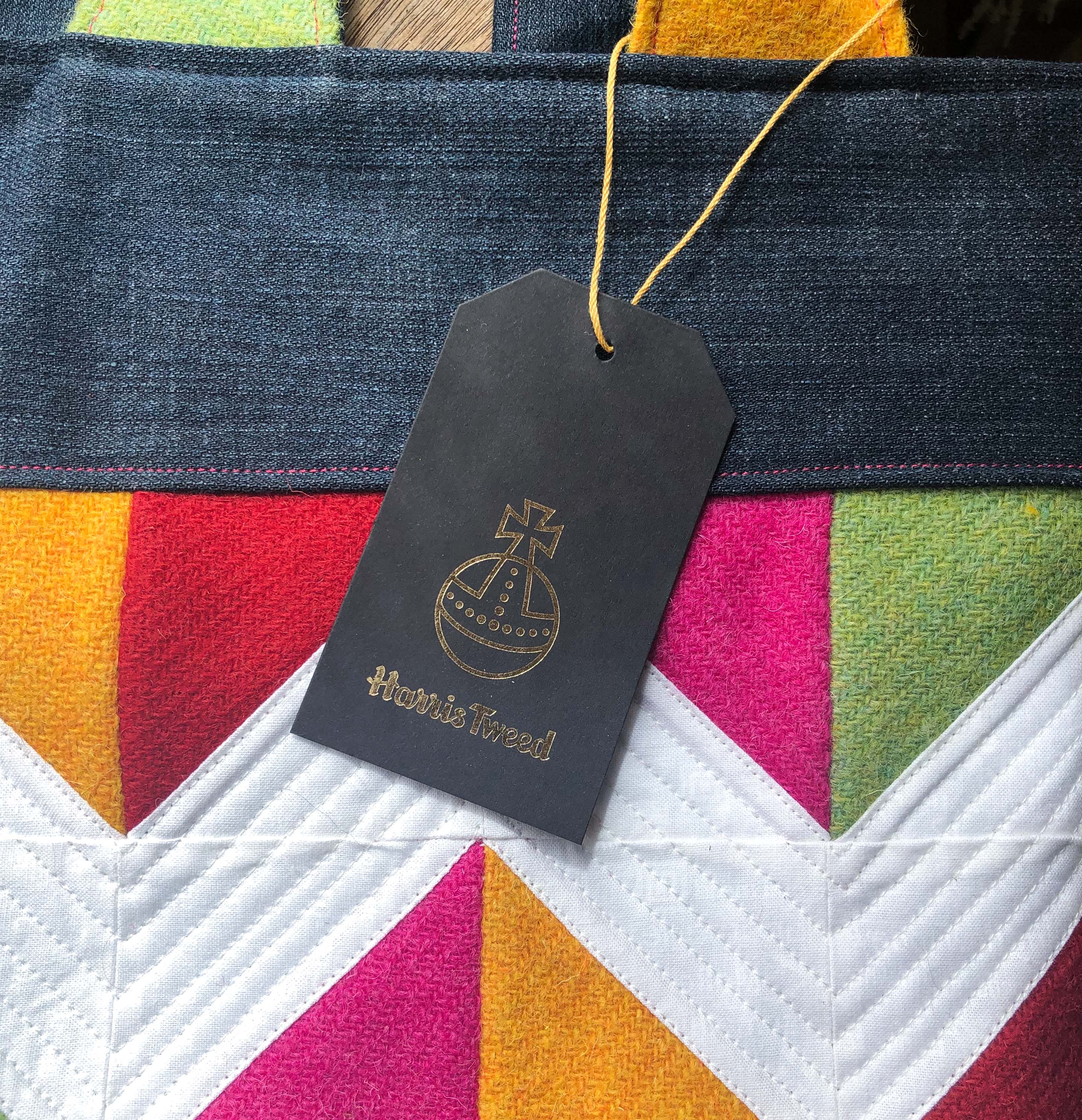
Harris Tweed fabric ; (which has an awesome history and even is protected by an Act of Parliament!) in order for it to be certified as official Harris Tweed and allowed to be accompanied by the Orb Mark has to be “hand-woven by the islanders at their home in the Outer Hebrides and made from pure virgin wool dyed and spun in the Outer Hebrides”. There are several processes before it goes to the Harris Tweed Authority Inspectors for testing and certifying with the Orb Mark
So- what do you do with Harris Tweed? It’s a luxury woven wool fabric- but forget the idea it’s scratchy-it’s actually pretty soft. It does need a little thought and a little care, and I’ve got some tips for creating with it and some smaller projects with a little quilting to add texture. Granted, they’re not quilts but I have seen some amazing quilts using tweed and apparently Sylvia Priest has made one too- so I’m going to have to bug her for photos! I’ve got some tips that I found useful below, but this is my first time using Harris Tweed, so there may be some great tips you could add.
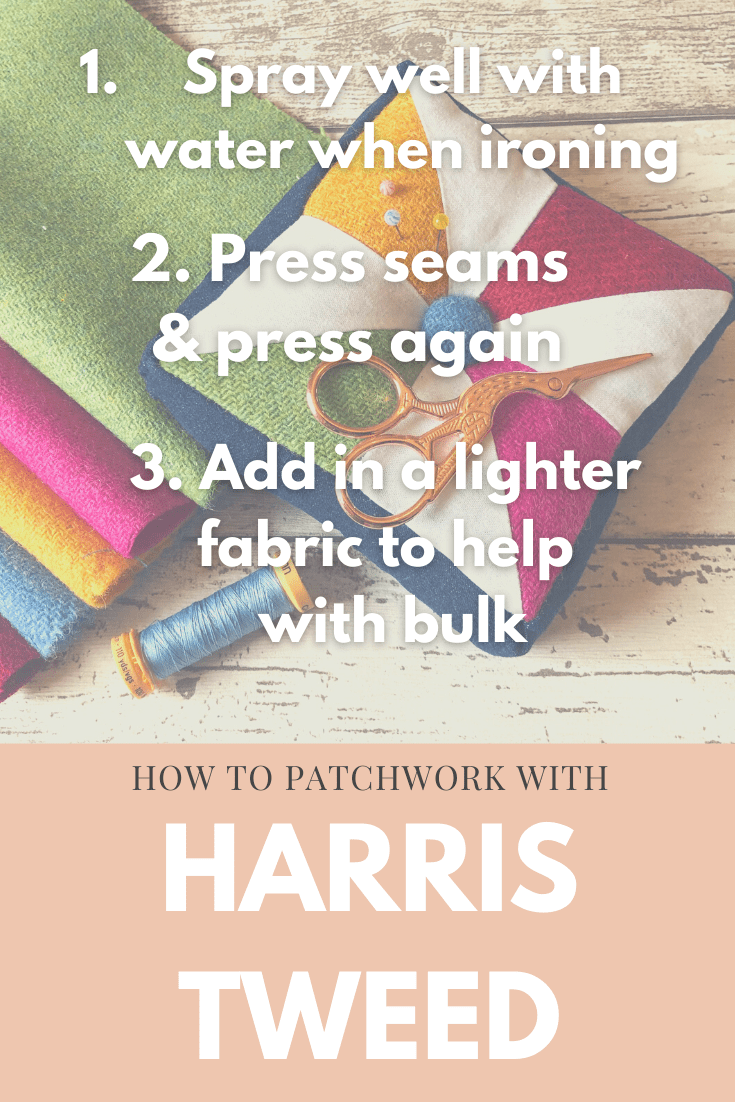
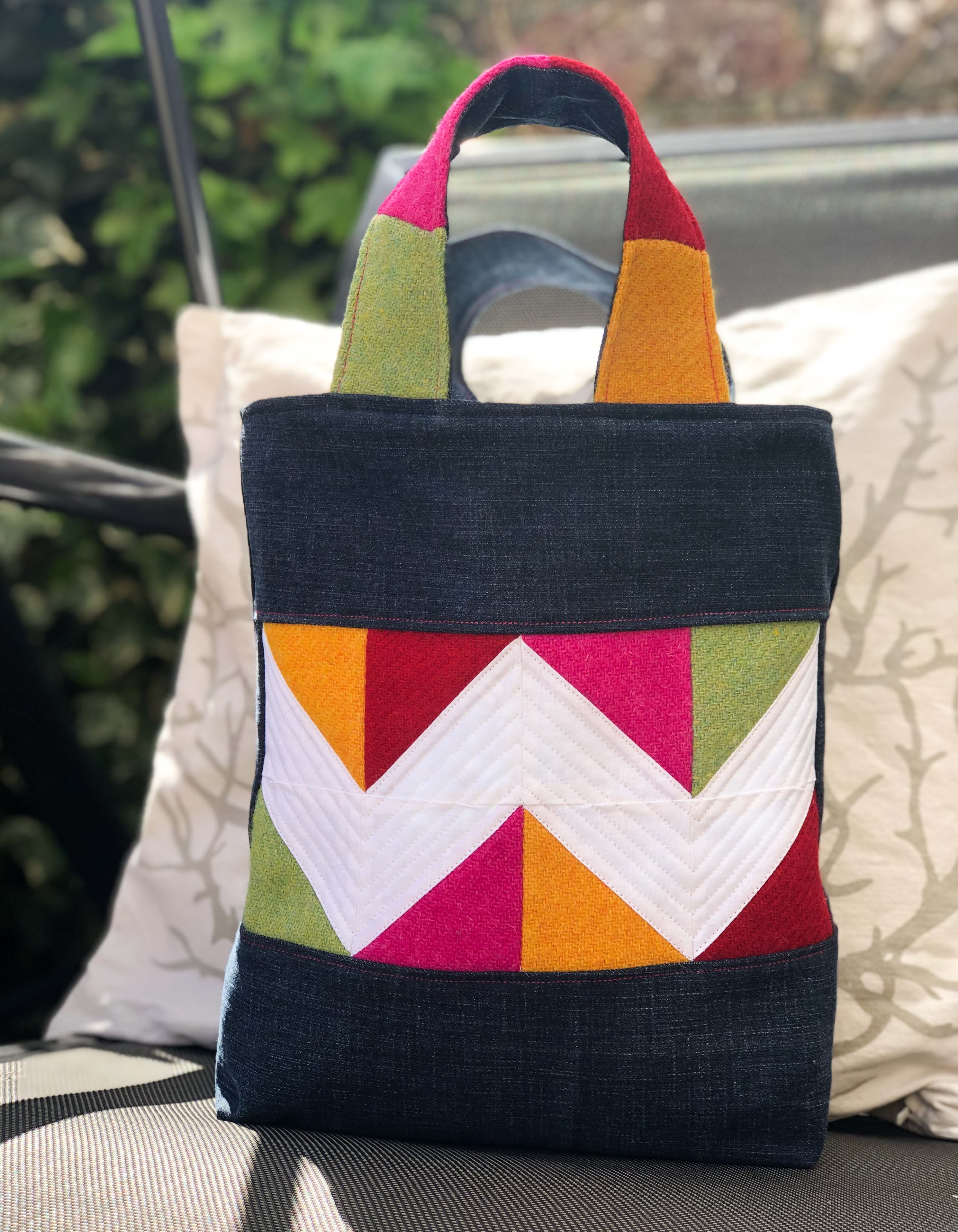
It’s not the sort of fabric people automatically think of when considering patchworking but it is beautifully tactile, hard wearing and totally unique! I love that it comes in fabulous bright colours like the ones I’ve chosen. I started off with a bag…so I cut squares of cotton, same sized squares of Harris Tweed, sewed 1/4″ either side of the diagonal centre line (as you would to create HST’s- Half Square Triangles), then cut down the centre line and you have half cotton and half Harris Tweed squares. The secret is keep them well pinned (I used clips) and when pressing, use plenty of water (either from the iron or a water spray) and press well.
I used a Tailor’s Clapper which if you clap it (or press hard) onto the seams straight after pressing, it traps the steam and helps give really crisp seams. Those eagle eyed amongst you will notice that I haven’t actually quilted in the areas of Harris Tweed- but that was a design choice rather than anything else. My next project will definitely be using Harris Tweed in the quilted parts too.
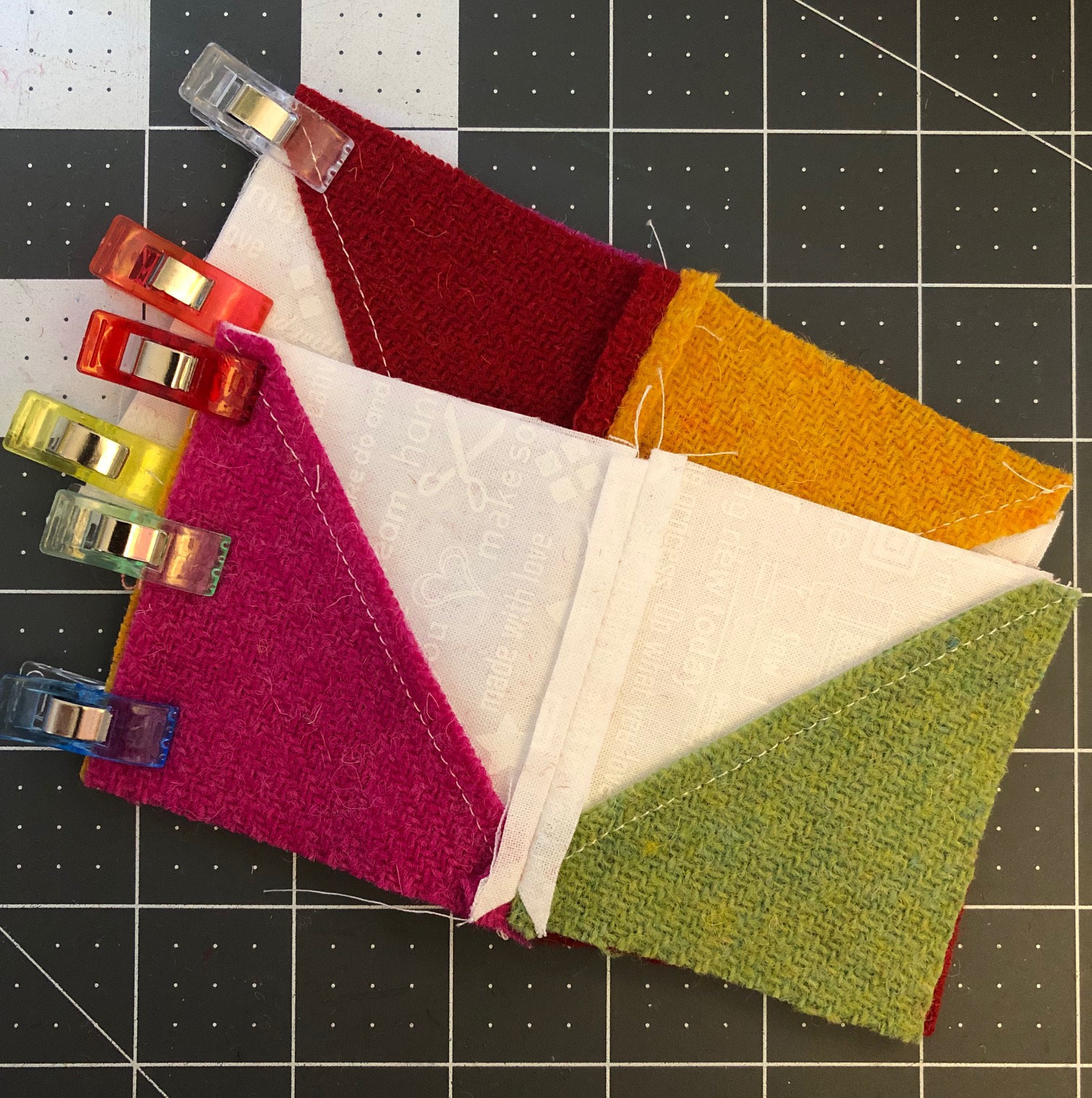
You may find that the seams will want to go their own way. With traditional piecing you would press the seams towards to the darker fabric and not press them open, but depending on how many seams are meeting, you may choose (like I did) to press open at some points and even towards the lighter fabric- because Harris Tweed will tell you which way it wants to be pressed!! Granted, I’m attempting something a little harder, but I wanted to see just how far I could push the fabric. I’m sure those of you more experienced in working with tweed could add some great pointers in the comments.
Because of the pressing restrictions, you’ll find that it’s not always going to look as precise- but I offset that with the quilting. I love a bit of upcycling so added in some old jean fabric and the denim just works so well with Harris Tweed.
I used some of the offcuts to create the handles. I did add denim to the reverse of the handles so it was more stable, but you could easily add some interfacing to give more structure to the handles.
I had some of the Half Square Triangles left over- so thought I’d make use of them with two more projects.
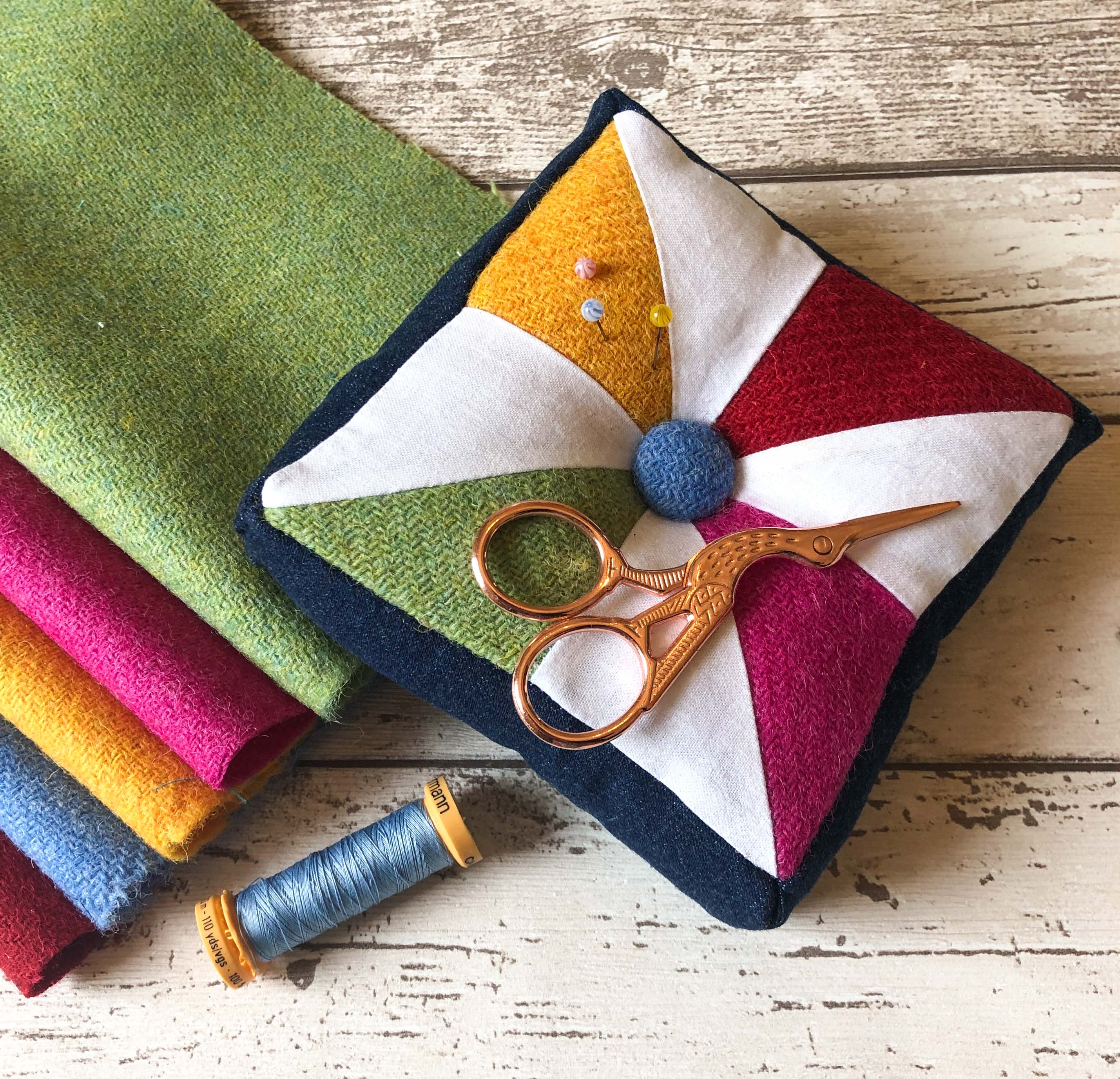
When you have lots of points meeting like in this pretty pincushion, you’ll see why that my tip no.3- to add in a lighter weight fabric makes sense. Not only does it give design contrast but it helps reduce bulk at the bulky seams. I love this smart pincushion and need to keep collecting those fabulous Cohana Glass Head pins as it’s looking a little sparse!!
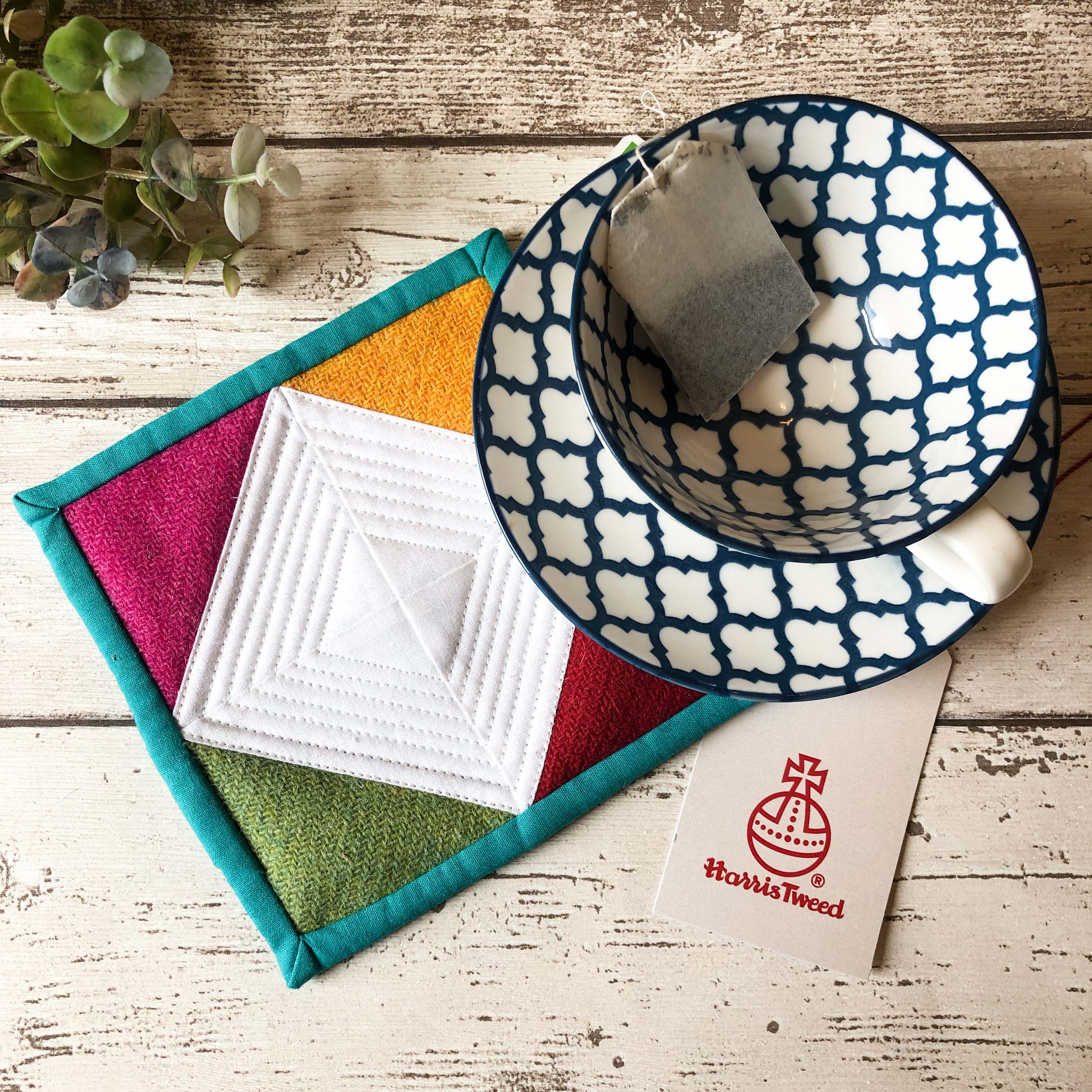
We all love a nice coaster- and this is possibly too nice for my cup of tea (because I’m likely to spill it over the coaster)! I did use some leftover binding that I’d got in my sewing basket – but it really wasn’t wide enough. As the Harris Tweed has more bulk than your average piece of cotton, definitely a 2 1/4″ – 2 1/2″ binding would have been better! You can see the famous Harris Tweed orb logo there on the tag!
I hope you enjoyed my look at this fabulous fabric and maybe you might incorporate some into your quilted projects too.
Keren x


Responses