Author: Carolyn Gibbs

I have been developing and teaching my own traditional patchwork and quilting designs for over twenty years. My speciality is developing methods to improve student's results e.g. perfect point & planning quilting designs which fit a border accurately. I also have an extensive collection of antique British quilts, and I love to share my knowledge and expertise about the fabrics, techniques and quilting designs.
Loading...

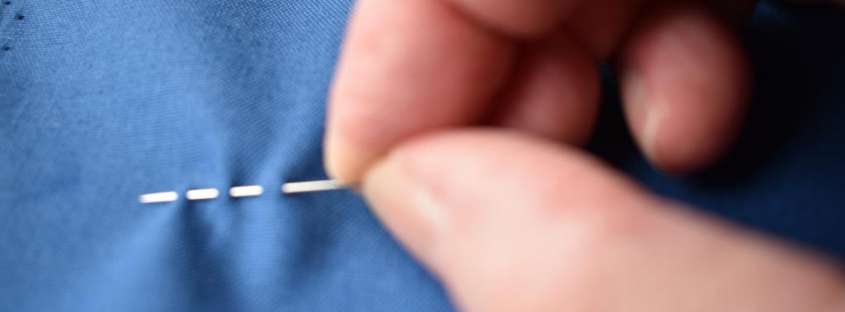
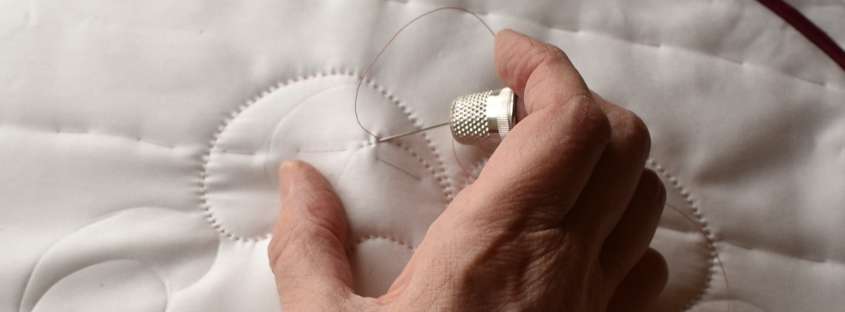
Needles The type of needle you use for hand quilting depends on which stitching technique you use. I stitch in the traditional way using the “rocking stitch”. More details about how to do this will be in the last post of this series, but you can see a short video of me stitching using this…

Loading...
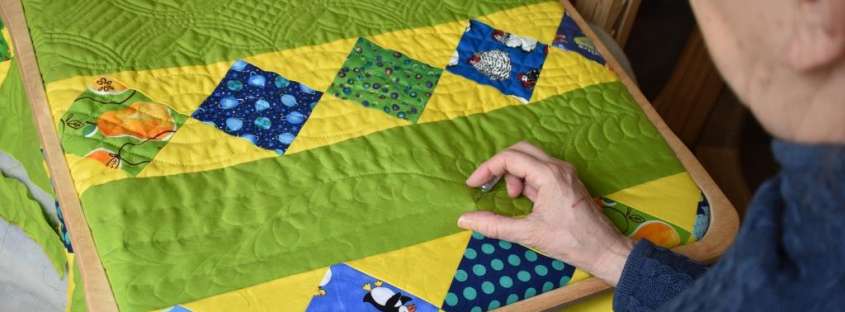
What equipment do you need to start hand quilting? Well, there are lots of different views on this, so I will share what works for me. Hoops 14″ quilting hoop, bound with tape I prefer to use a hoop to hold the part of my quilt that I am working on. The best hoop to…

Loading...

While it is possible to use all sorts of threads for hand quilting, which is the best, and why? There are two things to consider: What will the finished appearance be like? How easy will the thread be to use? Both of these things are, of course important! Most people start off thinking about the…

Loading...

How do you start hand quilting? This webpage will discuss the types of wadding (batting in the USA) that you will need. The thickness and the density of the wadding makes an enormous difference to the ease of the quilting, and also to the finished appearance. Feathered heart design using high loft wool wadding Feathered…

Loading...

Hand quilting is relaxing to do (once you have got the hang of it!), and gives beautiful results, which are different to those obtained by a sewing machine. Maybe you would like to try it, but are not sure where to start? This is the first in a series of blog posts, in which I…

Loading...

Cables are a popular choice of quilting design for borders and come in various widths and styles. Where would you start to plan a cable border for your latest quilt? Stencils are widely available, but they are often not the correct size for your borders- so unless you were incredibly organised, and designed your quilt…

Loading...

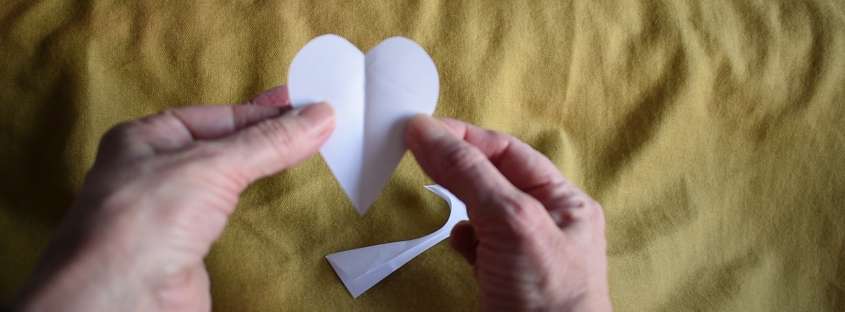
Hearts are an ever popular motif. It’s easy to cut out a template yourself in a variety of styles that you could use for applique or for quilting designs. Watch this short video, or follow the instructions below: Drawing a regular heart shape Take a piece of paper a little larger than the desired motif,…

Loading...

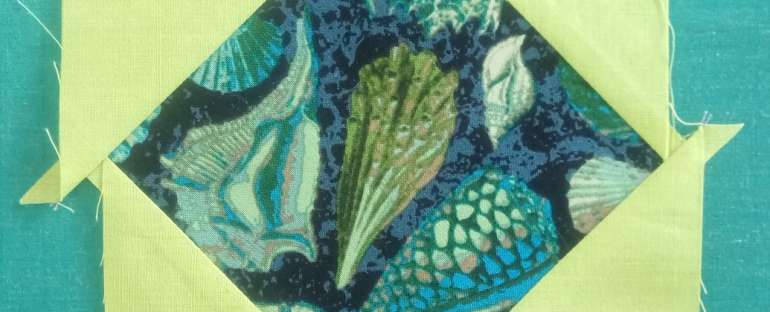
A common patchwork unit where getting a good line up can be tricky is the “Square-in-a-Square” unit. Four triangles are sewn around a central square. It should finish as shown in the photo above, with enough of the triangle fabric remaining all round to leave a quarter inch seam allowance beyond the points of the…

Loading...

“There.” Linda put down the scissors which she had used to snip the last piece of thread she had used to stitch the edge, and held up the little quilt. It really was the loveliest thing she had ever made. The golden stitches sat sweetly on the creamy surface, outlining the fans, cables and spirals,…

Loading...

Wales is one of the Regions of the UK with a particularly strong tradition of patchwork and quilting. As part of the recent British Quilt Study Group seminar, I was able to view some of the wonderful collection of Welsh quilts held at St Fagans near Cardiff. Although we saw some beautiful wholecloth quilts too,…

Loading...

Once you move on from simple squares to more interesting patchwork designs, you may run into a few problems when stitching smaller units together into a block. For example, have you ever joined a square to a Flying Geese unit, and wondered why the square is sticking out at the bottom…….? It’s tempting at this…

Loading...

English paper piecing (also known as mosaic piecing or just “EPP”) is becoming really popular at the moment. This is a very old technique which was used to make the wonderful 1718 coverlet, which you may have seen recently at the Festival of Quilts. From the Collection of the Quilters’ Guild of the British Isles;…