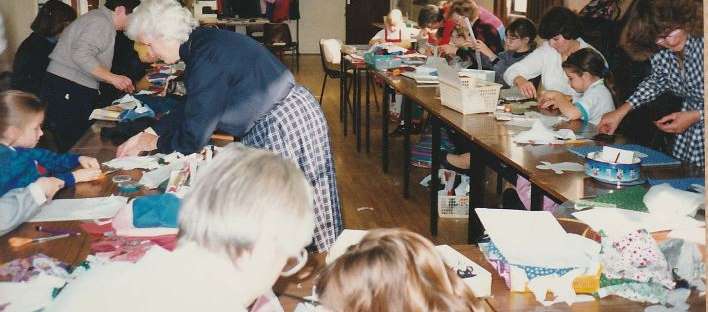
Long, long ago I was actively involved in the Quilters’ Guild (as it was then) first as a Young Quilters’ Rep for my Region, then as YQ Officer and finally as the YQ magazine editor. At the same time I also ran a little local group of Young Quilters. My Young Quilters all grew up…
Author: Chris Franses
An odd combination? Perhaps not – I find when I’m teaching that many of my students are as keen on gardening as they are about quilting. As am I. Our problems arise in the months from about April to October when we are desperate to get out into the garden or greenhouse, but we also…
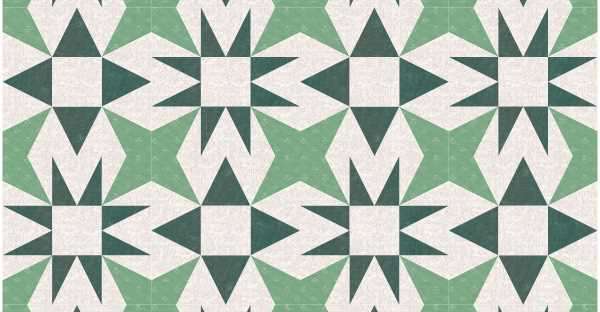
This three-triangle unit was, I think, given its name by Doreen Speckmann because the centre triangle resembles a mountain peak and the two side triangles are the spikes anchoring it to the ground. It is not the easiest of units to cut or piece and the most precise way to get those points really sharp…
How can you tell which fabrics are ‘light’, which are ‘medium’ and which ‘dark’, let alone ‘light-medium’ or ‘medium-dark’ or any of the other variations you may have come across? If you are using a monochrome range of fabrics then this may be fairly easy – in both the green Trip Around the World and…
This is another very useful unit which crops up in a number of blocks but can make some interesting designs just on its own. It can also be fun to add this unit into traditional blocks – substitute the HST units for this one, or 4-patch units and see what you end up with. There’s…
How important is it that your quilt is ‘perfect’? Do all the points and seams have to match exactly? Does your colour choice have to meet with universal approval? Should your stitch-in-the ditch stay there and never deviate? Should your quilting stitches be beautifully even and neat and accurate? Or, alternatively, why are you making…
What actually goes into writing a quilt pattern? It should be easy, shouldn’t it? Especially if your design uses traditional blocks. So why do patterns cost (sometimes) a lot of money; why aren’t they all free, or at least only pennies? Let’s have a look at writing a pattern using a traditional block from the…
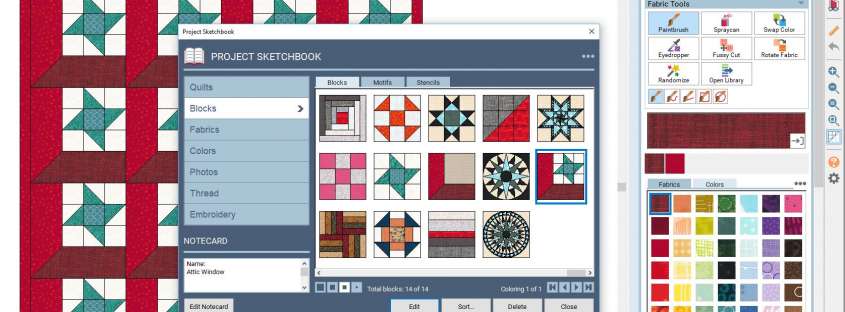
Before computers I used to design my quilts and blocks with pencil and graph paper, but I have been playing with Electric Quilt since its first incarnation and I’ve upgraded every time since so it never seems quite so expensive, although over the past twenty-plus years it probably has been. I must confess I’m not…
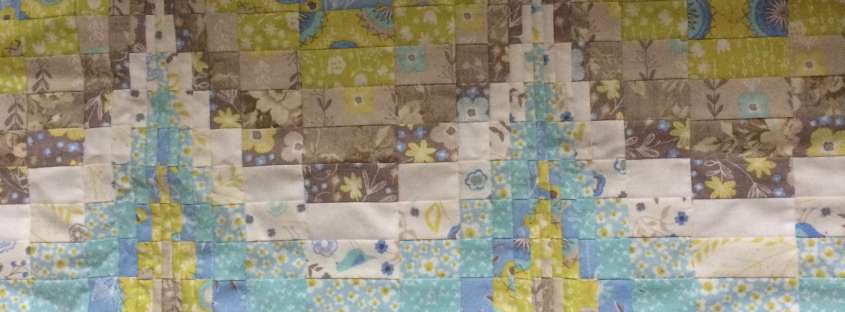
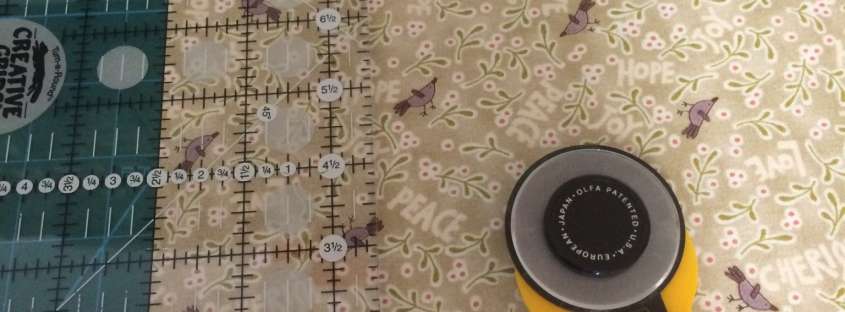
I’ve just been cutting rather a lot of strips all the same size to make a mini Bargello and I thought it might be helpful if I showed you how I manage to remember to place the ruler in the right place each time. I’ve lost count of the number of times I’ve miscut because…
In my blogs here I am trying to show the various units that make up most of the patchwork blocks we find in quilts – units such as half-square triangles (HST), quarter-square triangles (QST) and Flying Geese. Once we know how to make these units, in whatever size we choose, then making blocks – either…
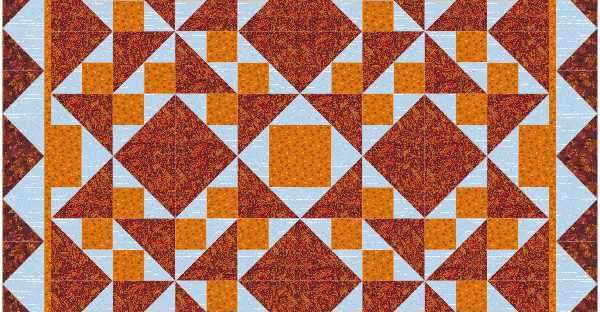
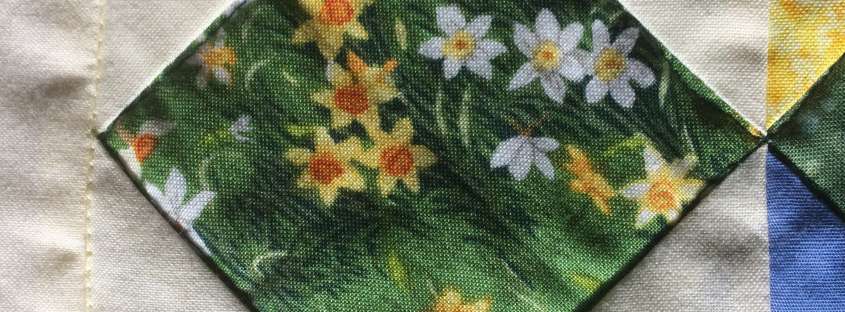
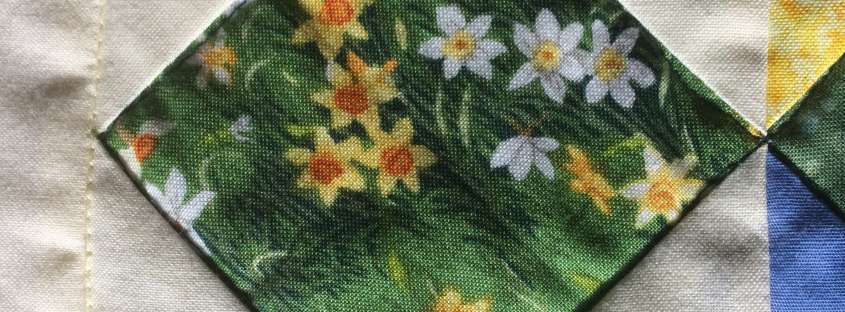
The Square in a Square (or sometimes Diamond in a Square) unit is found in a wide variety of blocks usually as corner units or as the centre. It is incredibly useful as a ‘spacer’ block between busier blocks with lots of pieces and as a border unit – either as ‘cornerstones’, where a plain…
This unit is sometimes called Diamond in a Square as it essentially a square, turned on point (hence ‘diamond’) inside another square. It is found in a wide variety of blocks, usually in the corners or the centre, and is useful as a ‘spacer’ block between busier blocks and as a border unit – either…