

After my introduction to all the beautiful fabrics available (see my first blog if you haven’t read it already), I realised this passion for quilting was beginning to seriously develop and I started to think about how to extend my knowledge. Up to this point, I’d felt quilting was quite a solitary hobby – I didn’t know anyone else out of my friends who had a similar interest so I began to look around on the internet for a workshop I might like to attend. Out of several that caught my eye, I found a 3-day workshop taught by Gail Lawther (https://gaillawther.co.uk). I’d seen some of her designs during my research and loved them, but not having any idea of how to do them, I decided to sign up for the workshop and give it a go.
When I phoned up to book, I asked about the workshop and was greeted with ‘oh you mean the retreat?’ ‘Goodness,’ I thought, ‘retreat? That sounds like some religious gathering!’ – not what I was expecting at all! I soon realised though that ‘retreat’ in quilting circles is just another way of describing a workshop which may run over a few days and that accommodation may also be available too. Anyone attending can then really immerse themselves in quilting within a small group. What an eye-opener to quilting jargon.
Having now experienced a retreat, I can see why it can be described in that way. It turned out to be such fun. I learned so many new techniques and made some new friends. In fact it was one of the other participants who mentioned to me about UKQU on Facebook and that’s what got me here today, so thank you Helen!
What did I learn? I attended for the whole 3 days and started a different project each day.
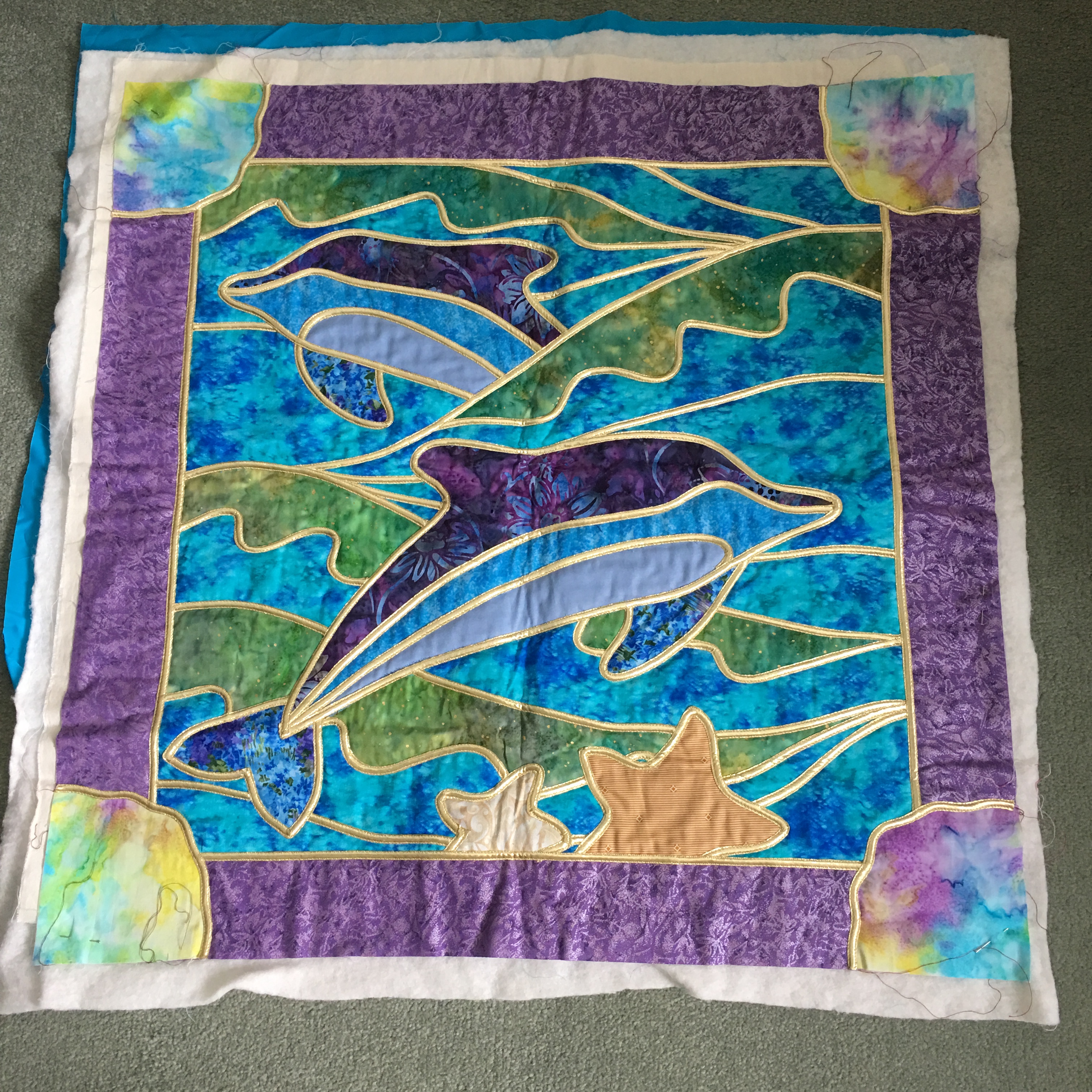
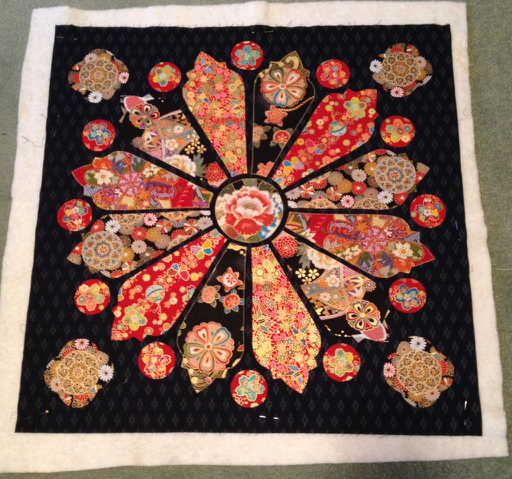
Rose Window (see more below)
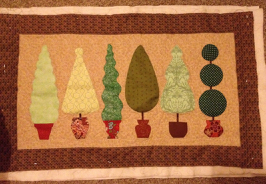
Techniques included reverse applique, stained glass window effects, using a twin needle, an early introduction to free motion quilting and lots and lots of tips. Applique particularly was something I’d hated when I was a teenager, but finding out about all the helpful aids that have now been developed, such as Bondaweb, to help keep appliques shapes in position made it all such fun.
You can see more information about these and others workshops Gail runs here: https://gaillawther.co.uk/workshops.
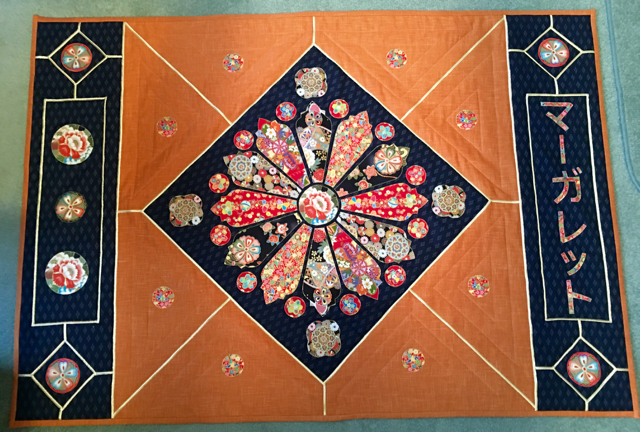
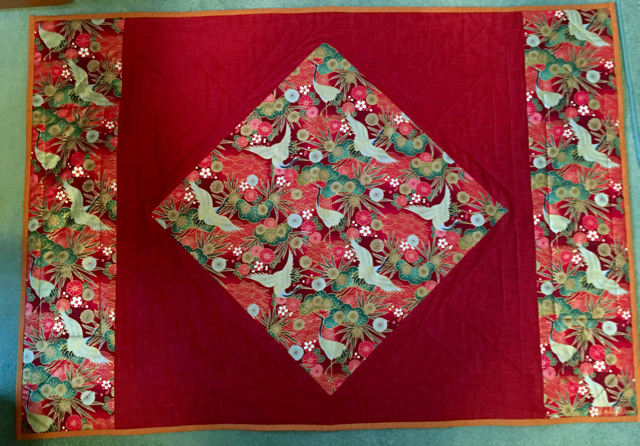
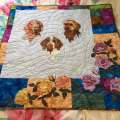
As I mentioned, the retreat only covered the introduction and techniques included in a project – but once I got home, I was able to finish them off. The ‘Rose Window’ was incorporated into a very special quilt I made for my sister’s 70th birthday. I incorporated it into a central panel and then added borders at each side. Since I was using Japanese fabric (again!), I added my sister’s name, Margaret, in Japanese down the right hand side. She was absolutely thrilled with it and making this made me realise how lovely it is to spend time making for someone else as I continually thought about my sister every time I picked it up to do a bit more work on it (she lives over 300 miles from me so I don’t see her very often).
If you want to read about the process of designing and making it in more detail, I wrote about it here – Quilt for Margaret .
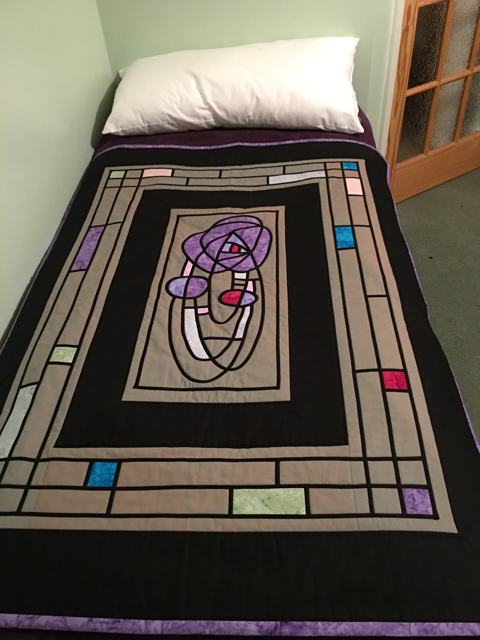
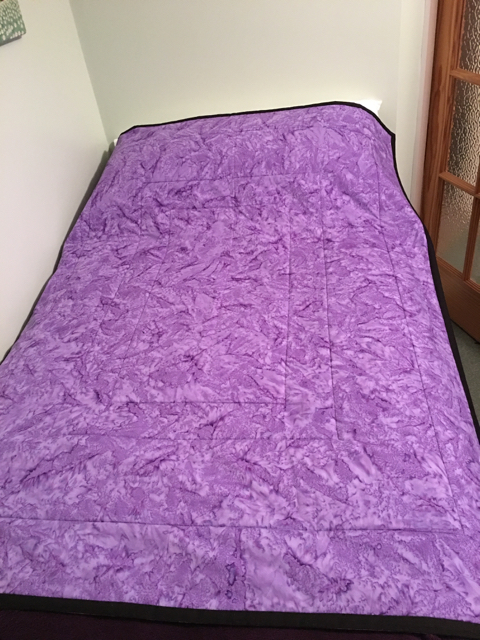
The stained glass technique used in the Dolphins also inspired the collaboration with my daughter, who lives in the US, of a quilt based on the Macintosh Rose. We spent many evenings on Skype discussing colours (even her husband chipped in) and I was able to share photos as I completed each stage. I loved making it for her and she loved receiving it and we both say that the collaboration of ideas we shared gave the quilt even more meaning.
I get SO much pleasure in making quilts, whether they are for someone special or if they are just to introduce me to a new technique, and I’ve seen so many new techniques I want to learn. No longer is quilting an isolated hobby. I’ve made new friends, joined Facebook groups and local physical groups, and I continue to learn something new every day.
I’d certainly recommend attending workshops or retreats! While they won’t often be free, (and a quick tip here – costs for the workshops often do NOT include the materials so you need to take that cost into consideration too), they are well worth it and I shall continue to take the opportunity to attend other workshops when I can.
Next month, read about my next attempts to learn more about free motion quilting.

Very interesting
Loved reading this Val.
Thanks Linda. You saw it all in the making too!
So glad you enjoyed your first retreat experience at Quilt Sandwich.