

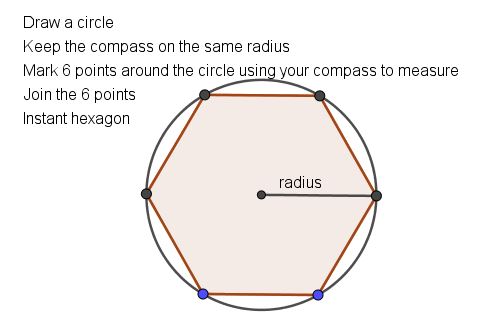
English Paper Piecing is a wonderful piecing technique which lets us piece together any odd shaped pieces. If we can draw it, we can piece it. One of the favourite and simplest shapes to draw in the past was the hexagon. This is because it is really easy to draw with a ruler and compass. Draw a circle. Keep your compass on the same radius and make 6 marks around the edge of the circle. Join the points you marked on the circle and you will have an instant regular hexagon.
Now hexagons are fabulous because not only are they easy to draw, they tesselate. One shape will completely cover a flat surface with no gaps.
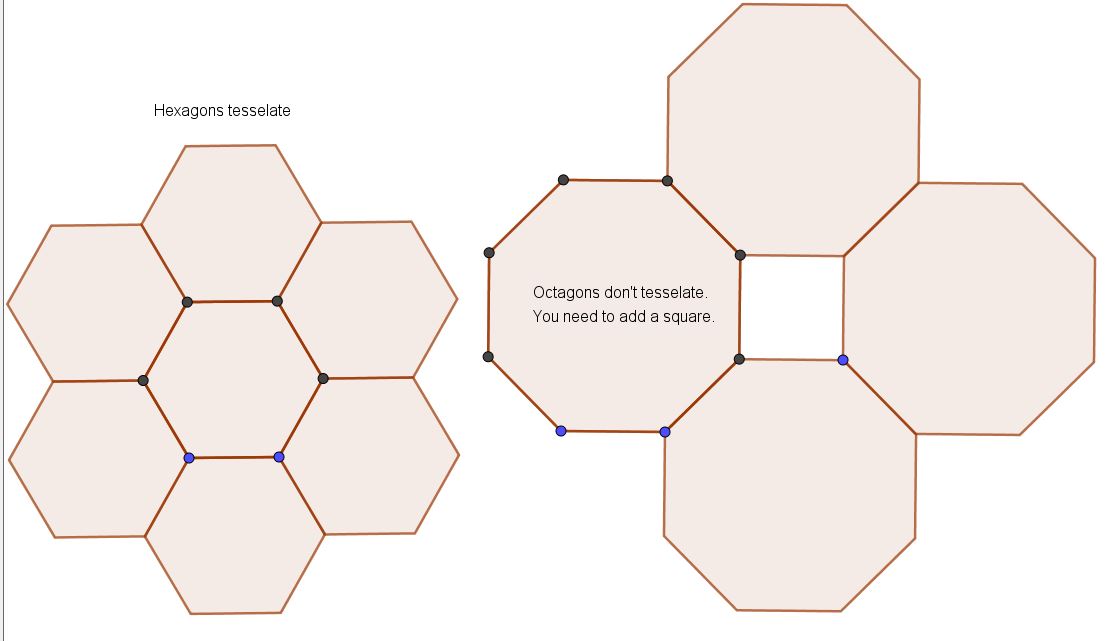
As a result we have some wonderful hexagon quilts
http://collections.vam.ac.uk/item/O144601/quilt-brayley-francis/
The coverlet kept in the V&A made by an anonymous maker featuring EPP blocks made in circles is one of my favourites. The centre panel is of King George reviewing his troops and the border blocks are appliqued scenes from daily life. The bulk of the quilt is made of these fabulous EPP blocks
http://collections.vam.ac.uk/item/O165075/bed-cover-unknown/
Luckily for us, we don’t need to use a ruler and compass to draft our blocks, we can use the computer. I love Geogebra which is a completely free geometry app. It gives us the ability to copy or design new blocks.

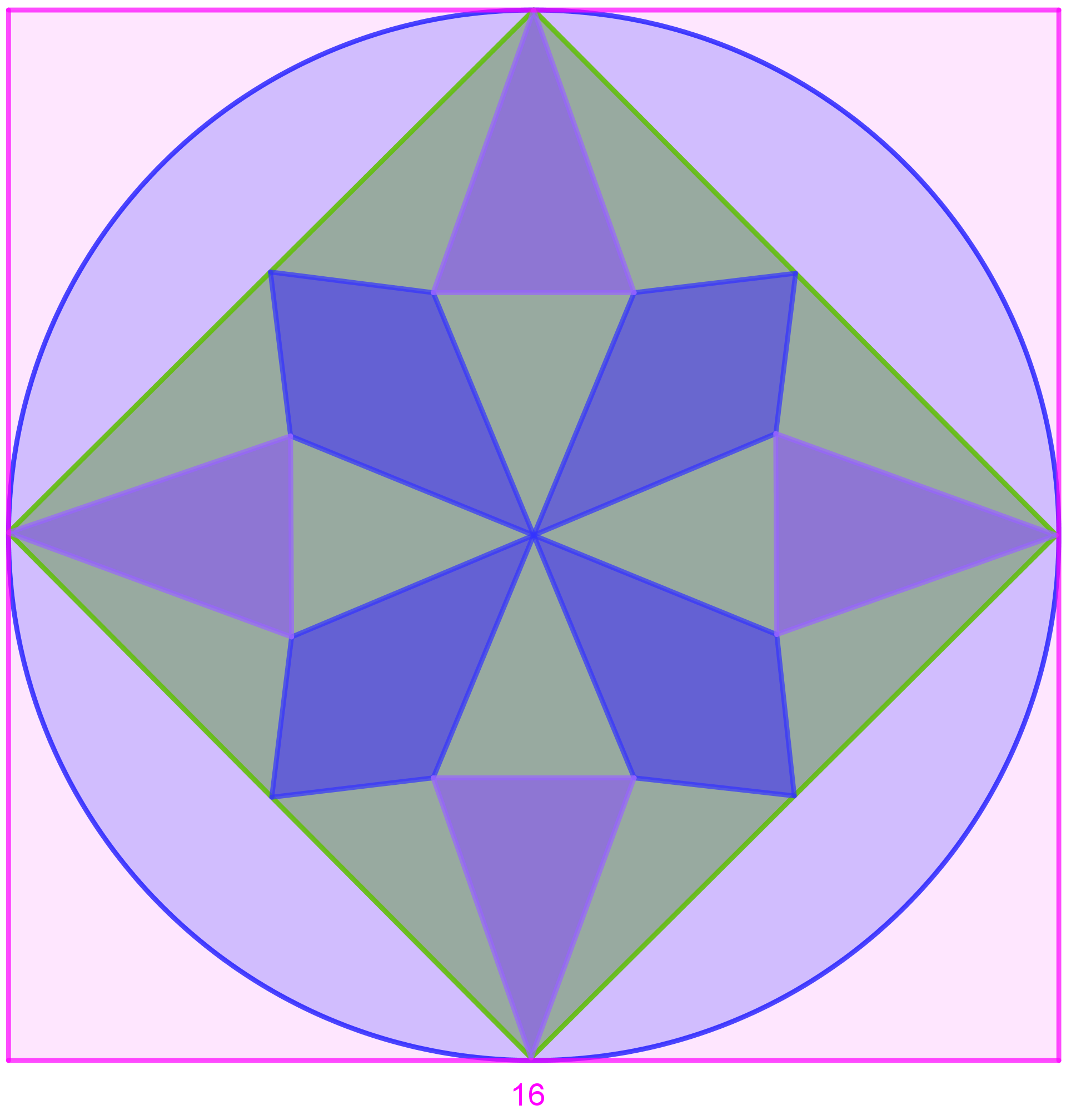
To show how quick it can be, I’ve done a video showing how a block from the King George quilt can be redone using Geogebra. OK, I speeded it up, it really took a little longer. And I have emailed the V&A. They are fine with remaking patterns based on the quilt.
https://screencast-o-matic.com/watch/cFnXiLoGSh
I’ve put a pdf of the pattern in the free downloads. It will print at 7.5 inches on A4. Hope you have fun.
https://ukqu.co.uk/shop/uncategorised/epp-template-block-1-from-the-king-george-quilt/
I will put more patterns up as I do them.

Responses