

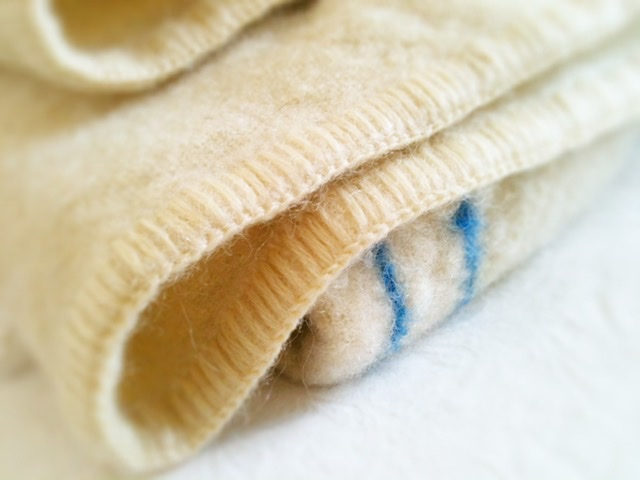
As I said in my first post in this series, In 2020 I want to explore the history of Welsh quilting and the techniques and designs that shape modern day quilts. As part of this, I bought several old wool blankets, from charity shops and eBay, to use as batting/wadding, in the same way quilters of yesteryear would also use them.
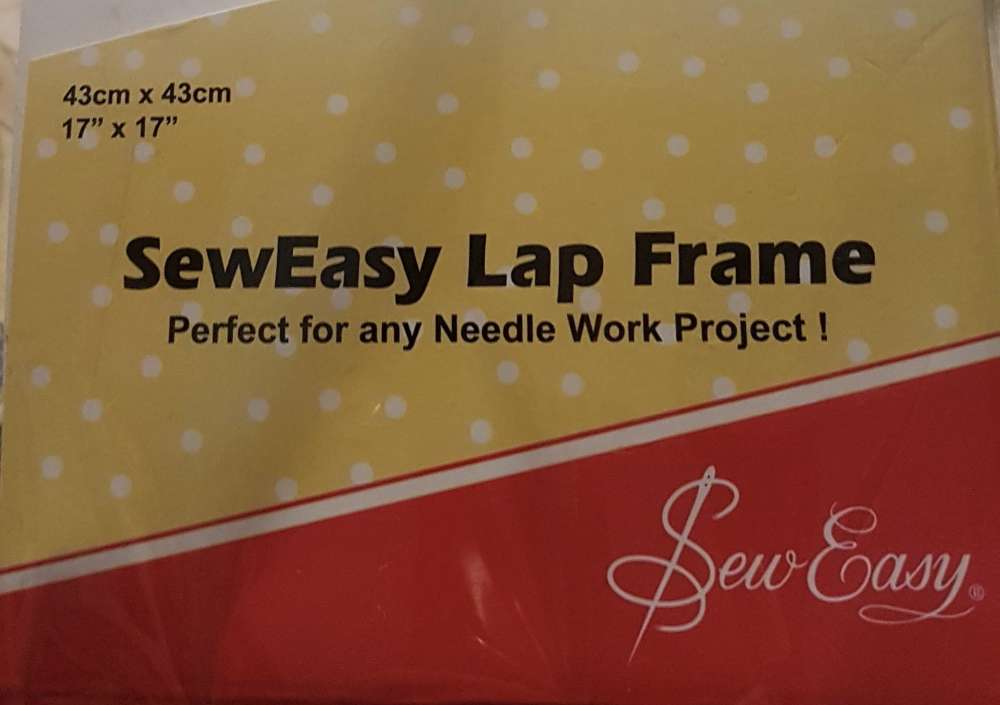
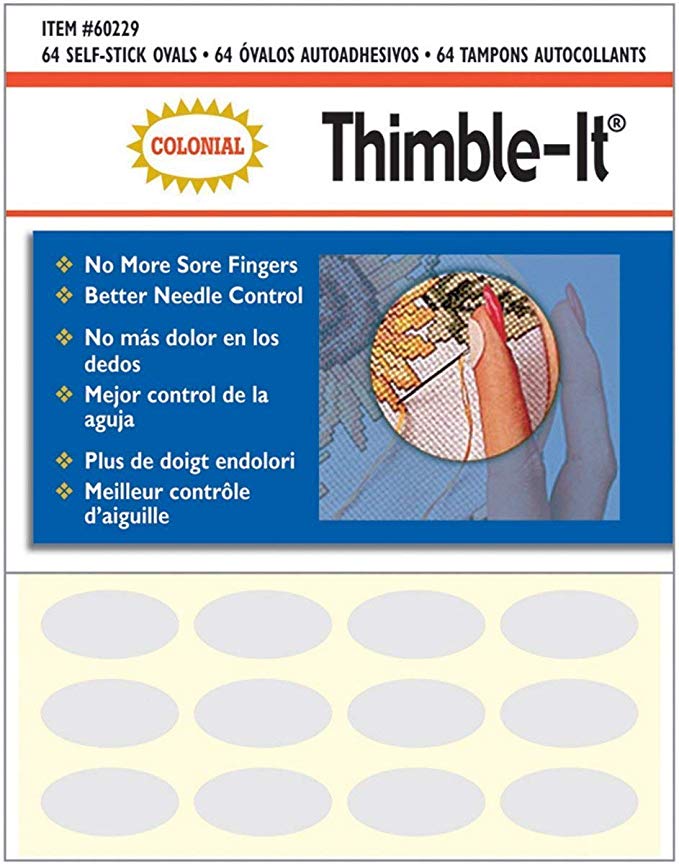
I am quite a slow sewer. Well that’s not strictly true. When I get the time to sew, I have been known to be quite nippy. However, because I work long hours and don’t always have a lot of time to sew at the weekends, getting a finished article can often take forever. I made a quilt top last year, and it has been on my to finish list for ages. I considered practicing machine quilting using my westerlee rulers on it, or sending it off to be long armed, but in the end it just sat in a bag while I decided what to do. I was fortunate to get a large number of quilting related gifts for Christmas including some awesome stick on “thimbles” and a lap quilting frame (thank you family!!!!).
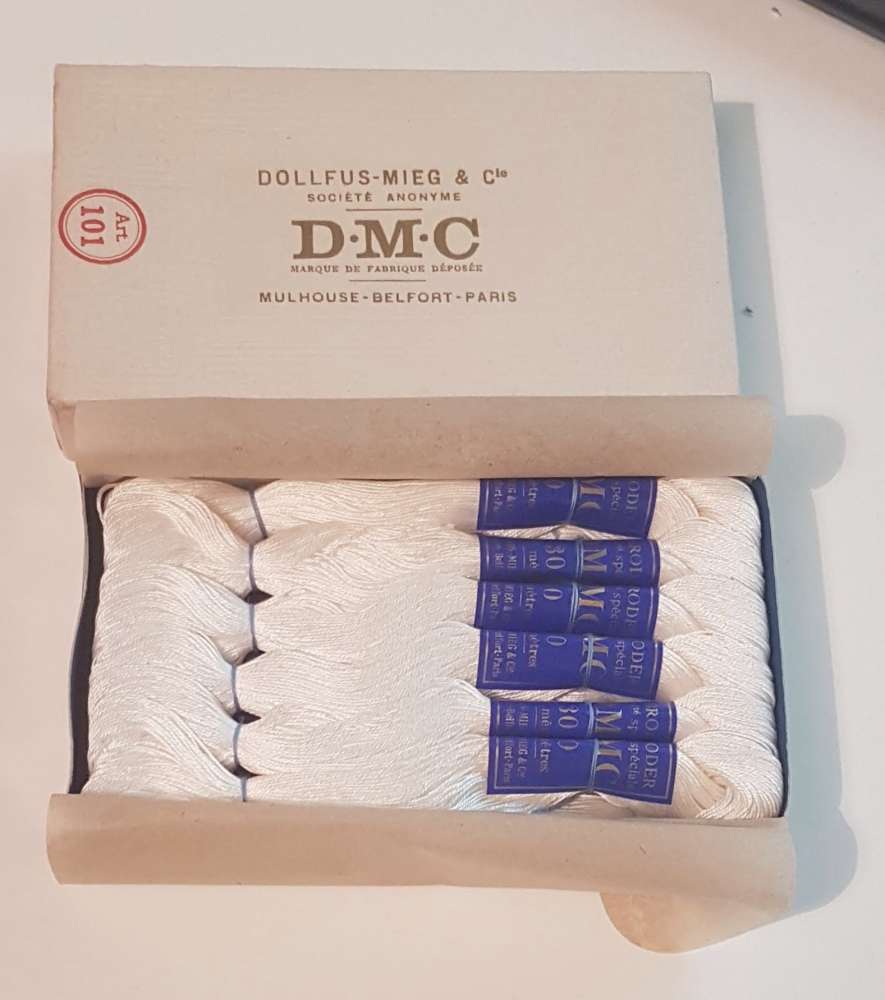
I also bought a mystery box of threads from a friend of mine who specialises in vintage curios and haberdashery. They were completely sealed so it was a bit of a gamble as to whether the thread was suitable for sewing, or just for display. Too my delight when I opened the box, there was a number of gorgeous thread in a neuter also cream shade. And what joy, it was strong enough to for hand tying.
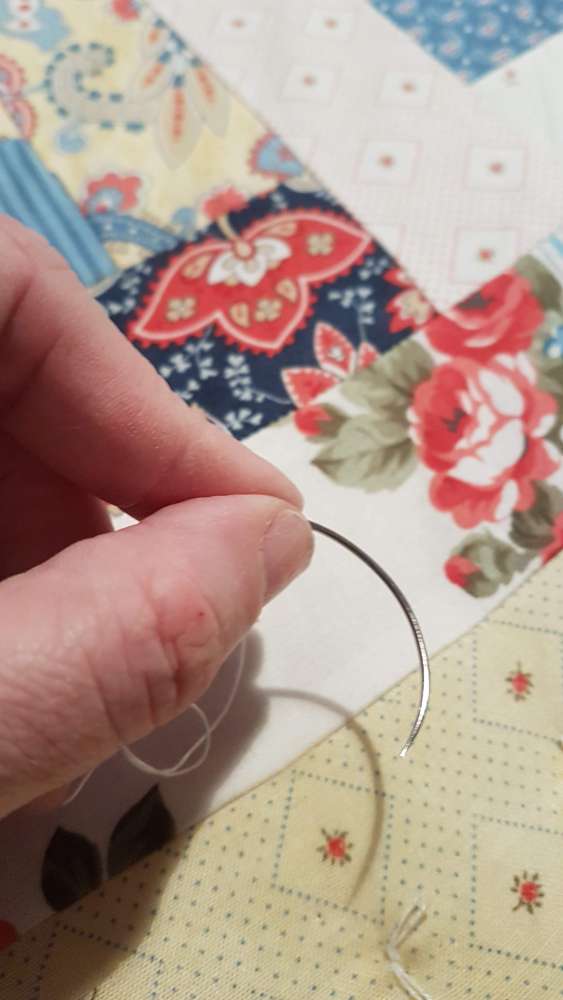
I also had two whole weeks off work over Christmas, I thought what better time to work on a blanket lined quilt. After basting the with safety pins, I secured the quilt sandwich to the frame and started the process of hand tying. The quilt pattern meant that ties every 2 – 2 1/2 inches felt right. In hindsight, this was a little close together, as the whole process took FOREVER! I started with a straight needle, but quickly found it difficult to manipulate the needle through the quilt sandwich as it was taut in the frame. I switched to a curved needle that I had bought on a whim a few months ago, and what a difference. Soon I was whizzing through it.
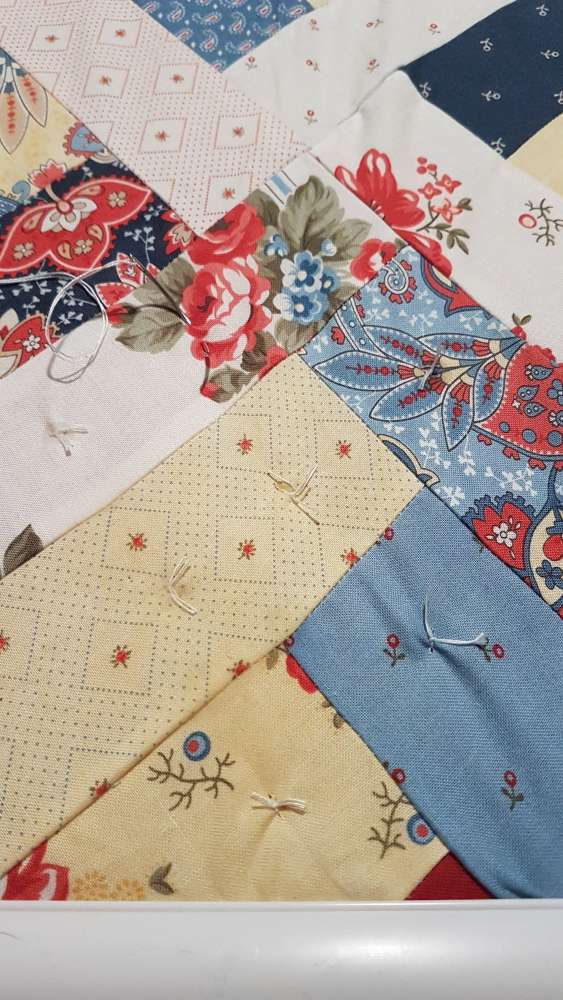
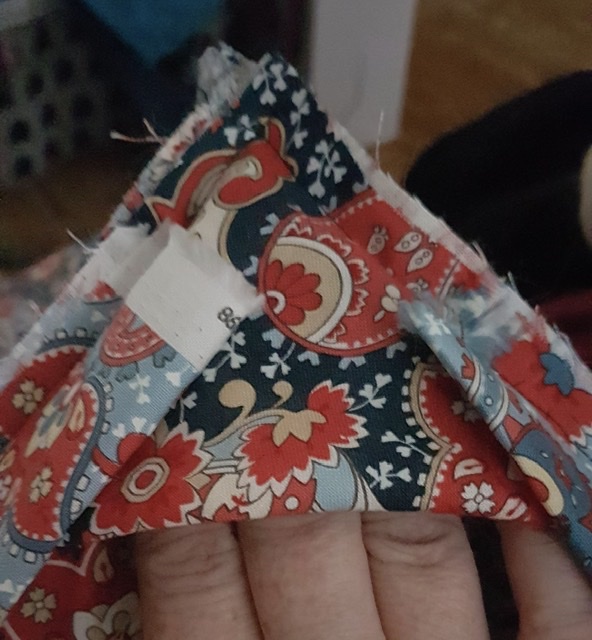
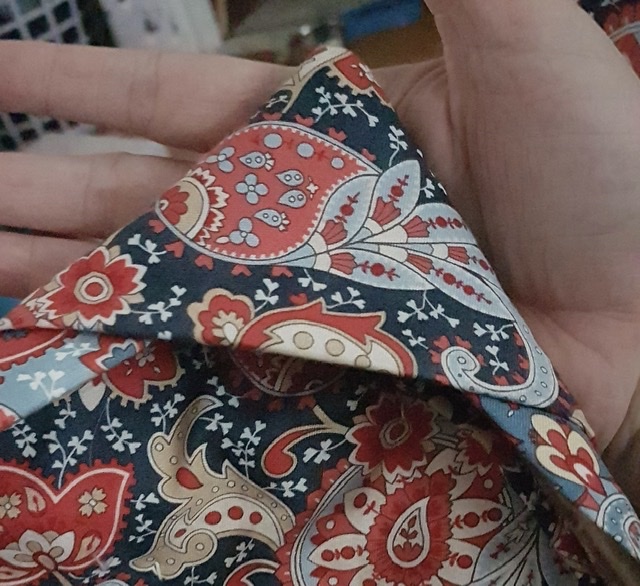
But as I said, with ties every 2 inches apart it felt like forever before I had finally finished. To bind the quit I used a technique i saw on various websites including this one. By having triangles in the corners It kept the bulk of the wool blanket to a minimum and, I think, helps to showcase the pattern as the binding is all in the back, so there is not the traditional binding that overlaps both front and back edges.
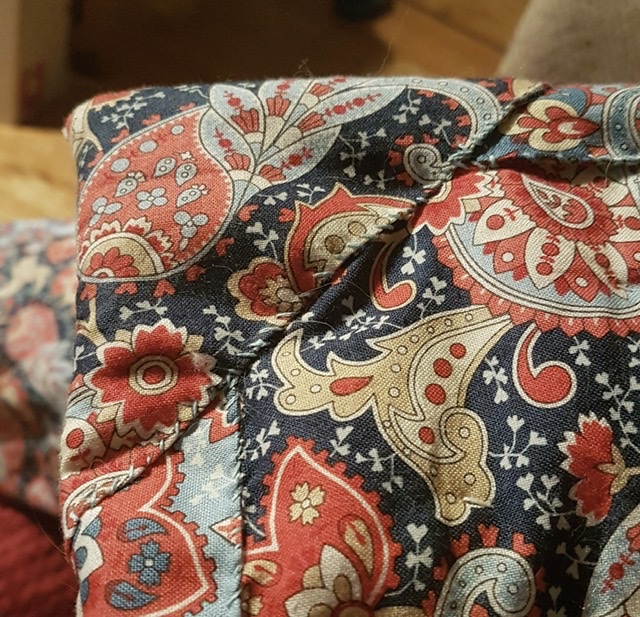
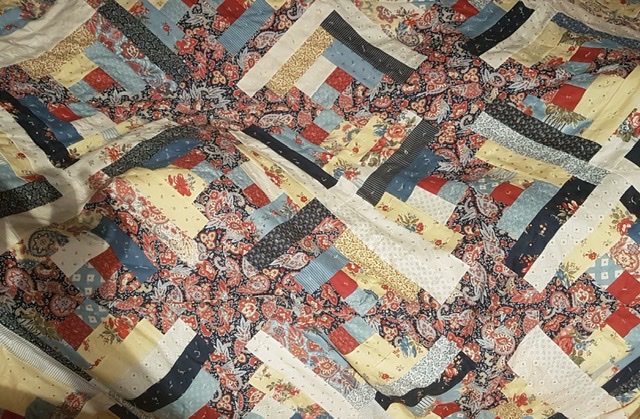
The end result is not half bad. I still do not consider myself to be an advanced quilter. But I like to think that wth every piece I make, I learn more and more, and become less afraid of trying new things. The fabric is Ann Arbor by Minick and Simpson by Moda. The pattern is a modern twist on a log cabin block. It came from a magazine (but I forget which one). It called for a plain background, but I went with a paisley background. I know its very busy, but I like the overall effect. I don’t normally like Heritage prints, but this has a modern colour palette that keeps it fresher, whist still using tradition patterns like paisley.
What do you think? Till next time happy sewing
Love Dotty xx


Responses