

I don’t hand sew if I can help it. I’ve never been very dextrous and in recent years arthritis has not been helping. However – I have quite a few books on hand quilting. This is partly because when I first started doing patchwork I thought it all had to be done by hand. I was really excited when I realised that it was possible to quilt by machine as well as do patchwork on the machine – it was seeing quilts by Pauline Burbidge that really showed me that it was possible and that it could look good too. As a teacher however I realised that I at least needed to be able to demonstrate the technique of hand quilting and to show my students a few books with ideas and possibilities (as well as perhaps better instruction) so they could take it further if they wished. All this was aided, of course, by the fact that I was introduced to p &q by Barbara Chainey who lived nearby and used to go walking her dogs at the same time and place as I did mine.
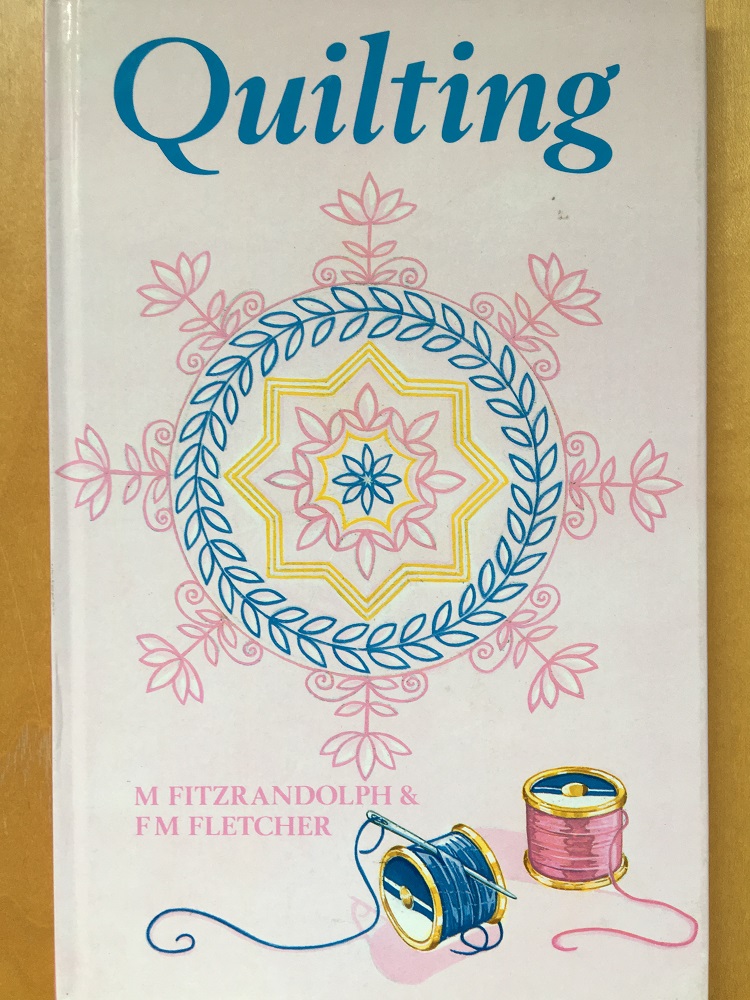
A classic book I have is Quilting (Traditional Methods and Design) by Mavis FitzRandolph and Florence M Fletcher – mine is a reprint of the 4th edition and was published in 1986. At only 48 pages it is brief and to the point. It has four black and white photos – three of traditional quilts and one of a quilted housecoat – and several line drawings illustrating traditional designs, a quilting frame, and the position of the quilter’s hands when stitching.
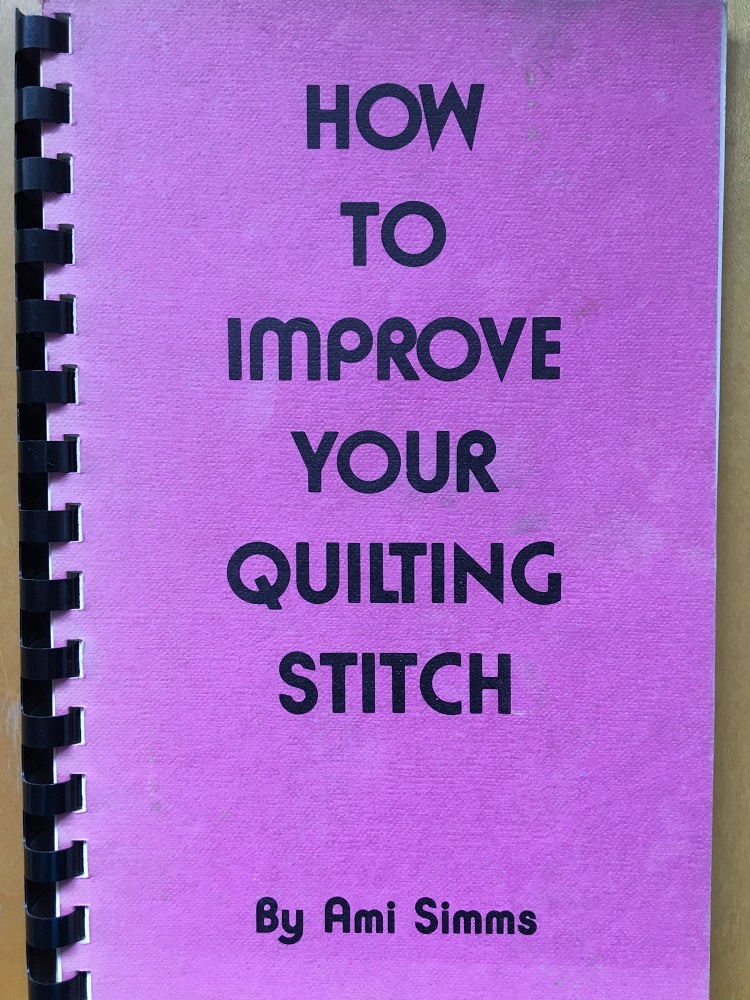
At about the same time I also bought How to Improve Your Quilting Stitch by Ami Simms which was self-published in 1986. It is typed (the days before computers!) and is also quite brief and to the point. It takes you fairly quickly through the requirements of fabric and wadding and the tools of the trade for marking, tacking, and stitching as well how to get yourself and your quilt in the right place (light, weather (?!) and your mental outlook) before making a start. The bulk of the book is taken up with explaining the quilting stitch – both stab-stitching and rocking – with lots of hand-drawn, but very clear, illustrations. I’m not sure that I improved my quilting stitch after reading the book but I did have a better idea of what I was supposed to be attempting.
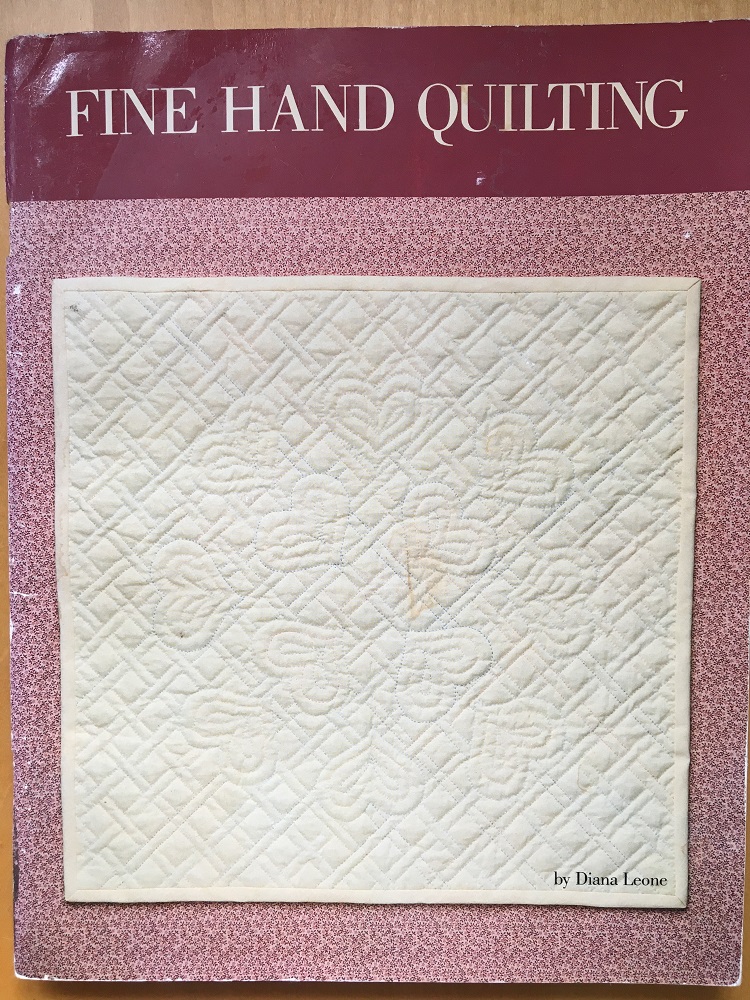
Also published in 1986 – and probably acquired at the same time as the other two – is Fine Hand Quilting by Diana Leone. Like the previous two it covers the equipment required and the basic two quilting stitches. It looks at quilting with a hoop (or frame) and without and gives a small quilt ‘exercise’ to try making. In addition to this it also covers design sources and making your own designs. It is also illustrated just in black and white but this time with a great many photos rather than diagrams. (Oops – just noticed the coffee stain on the cover – probably should have wiped that off before taking a photo, but I suspect it has been there some considerable time.)
I then acquired Quilting – Technique, Design and Application by Eirian Short and published by Batsford in paperback in 1989 – although it had been around in hardback for several editions since the early 1970s. This was much more comprehensive book than the other two and covered topics beyond basic hand-quilting such as tied quilts, shadow quilting, and ‘stuffed’ quilting; there was even a brief section on machine quilting.

My final three books are all by Barbara Chainey. The main one, for many years the ‘bible’ for hand-quilting, is The Essential Quilter which was published back in 1993. This one has lots of colour photos as well as diagrams of quilting designs. Again it covers the equipment you need, how to tack, the different types of quilting and how to achieve them as well as quilt design. It has lots of colour photos and diagrams. You might be able to find copies of this, and the other books, still available on Amazon and similar online sources.

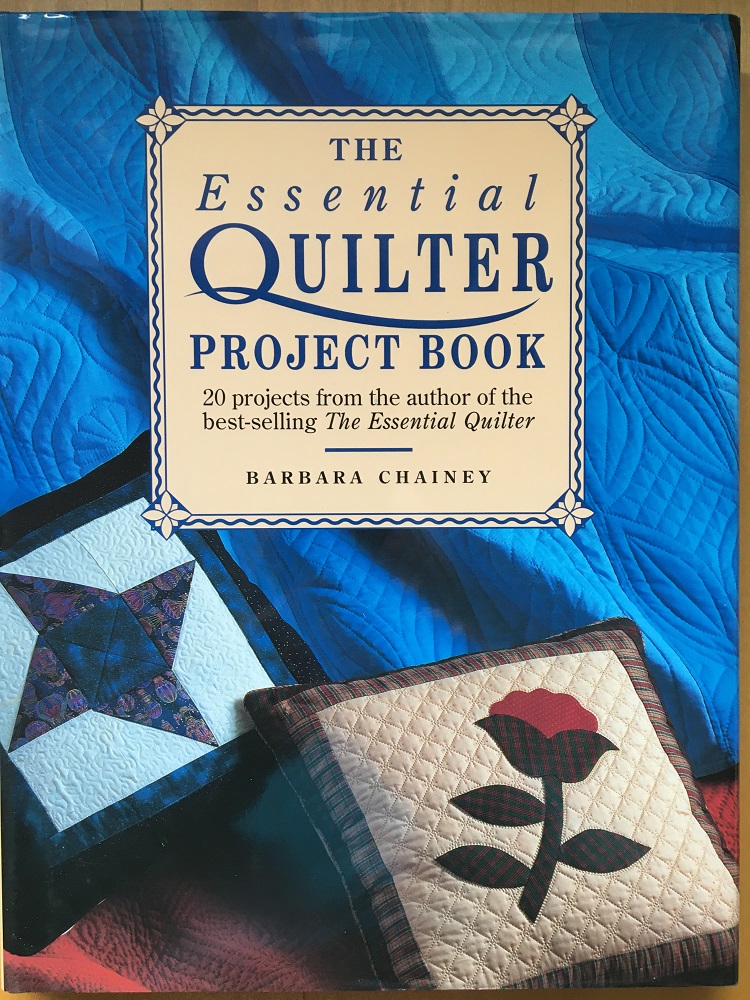
This book was followed by The Essential Quilter Project Book in 1997 after requests from readers for patterns for some of the techniques in the first book. It covers traditional wholecloth, trapunto and corded quilting, Sashiko and Kantha work as well as machine quilting. There is also a short chapter on quilting with patchwork and applique, and ideas and patterns from antique quilts. Once again it is full of colour photos and diagrams of the designs used.
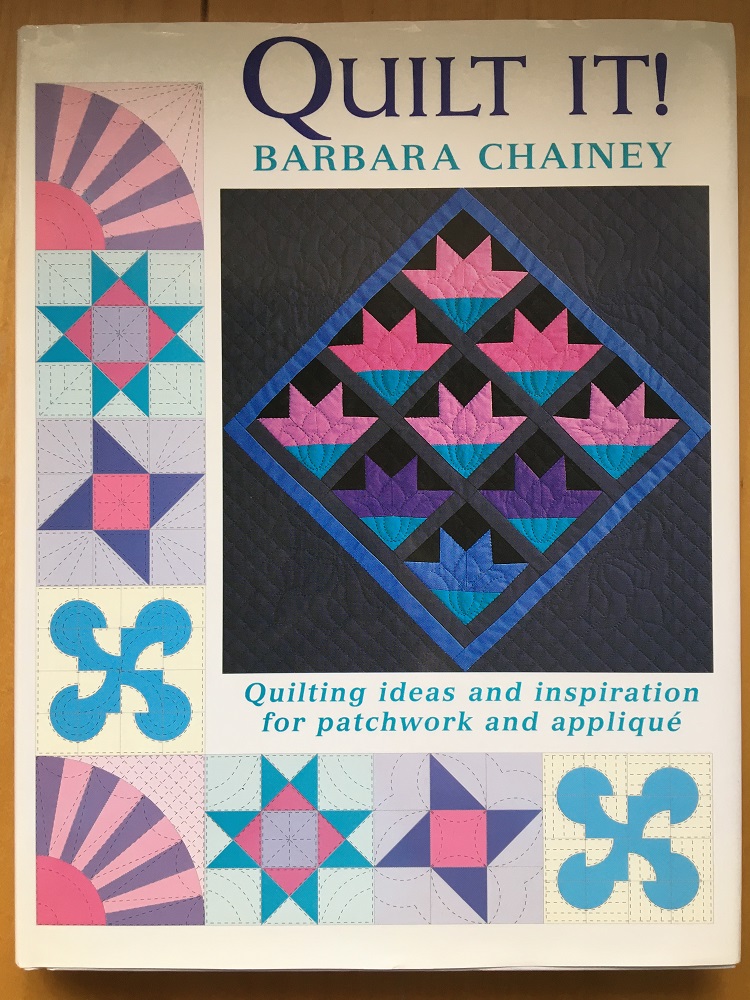
My final book by Barbara is Quilt It! which was published in 1999. This in some ways takes both books a step further by looking at various patchwork (and applique) patterns or blocks and the different quilting designs that could be stitched over them to enhance rather than detract from the patchwork. It is once again illustrated in full colour and bursting with ideas – an extremely useful book, not just for hand-quilters.
I hope this might inspire a few of you to try hand-quilting (even I’ve tried it – I have an almost finished bed-sized quilt that I’ve been adding stitches to for the past 30 years or so!) – it can be very relaxing and rewarding – just don’t look at the stitches on the back until you have been stitching for some time (years, even).

Responses