

I have very few of these as hand-quilting is something I just don’t do. My hands just don’t seem capable of holding and manipulating a needle. Its probably because I don’t ever do it – except for hemming down bindings – if I can possibly help it. It also probably stems back to schooldays when everything had to be sewn by hand and you were only allowed to use one of the three machines the school possessed once you could hand stitch to the teacher’s satisfaction. I never managed it! My mother sewed – she had City and Guilds in just about everything from dressmaking to pattern-cutting, tailoring to soft-furnishings – so I always felt that I needn’t bother. Also I was never going to live up to her standards, so better to not even try!
I did buy a couple of books early on my ‘quilting’ career – just in case I ever mastered the art of holding a needle, let alone the ‘rocking stitch’. I also bought loose sheets of designs and a couple of stencils – they are still languishing on top of the bookcase and gathering dust I fear. But I’ve blown the dust off the books (mostly) and taken some photos.
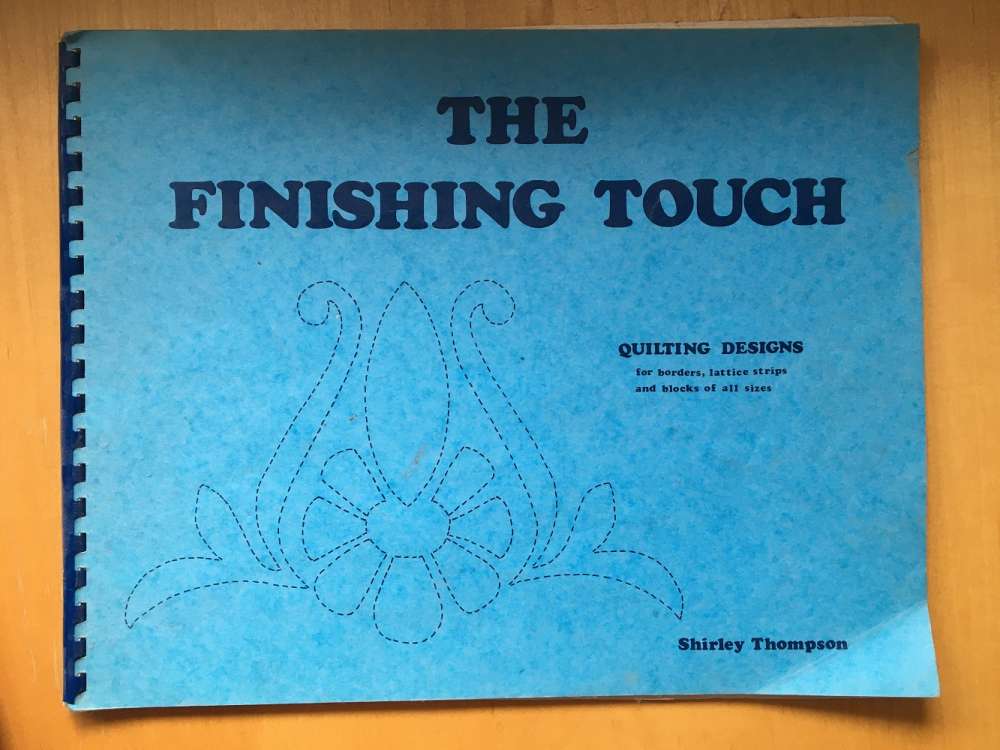
The first book I acquired was The Finishing Touch by Shirley Thompson published in 1980 by Powell Publications. It has a variety of motifs, block designs and borders all neatly drawn with dashed lines. The size is given for each one, making it easier to choose something suitable for the space you need to fill. Some of the designs have extra notes and suggestion with them as well – one such which has just caught my eye is the note about superstitions concerning running borders: “ a running border, such as cable, had to be carefully planned so it would turn the corners without a break. If the corner were broken by a flower or other motif it foretold that the quilter’s life would be cut short by disaster” However, as she points out “today’s quilters are not concerned by such fears and frequently break the corners with hearts, flowers and other designs”.
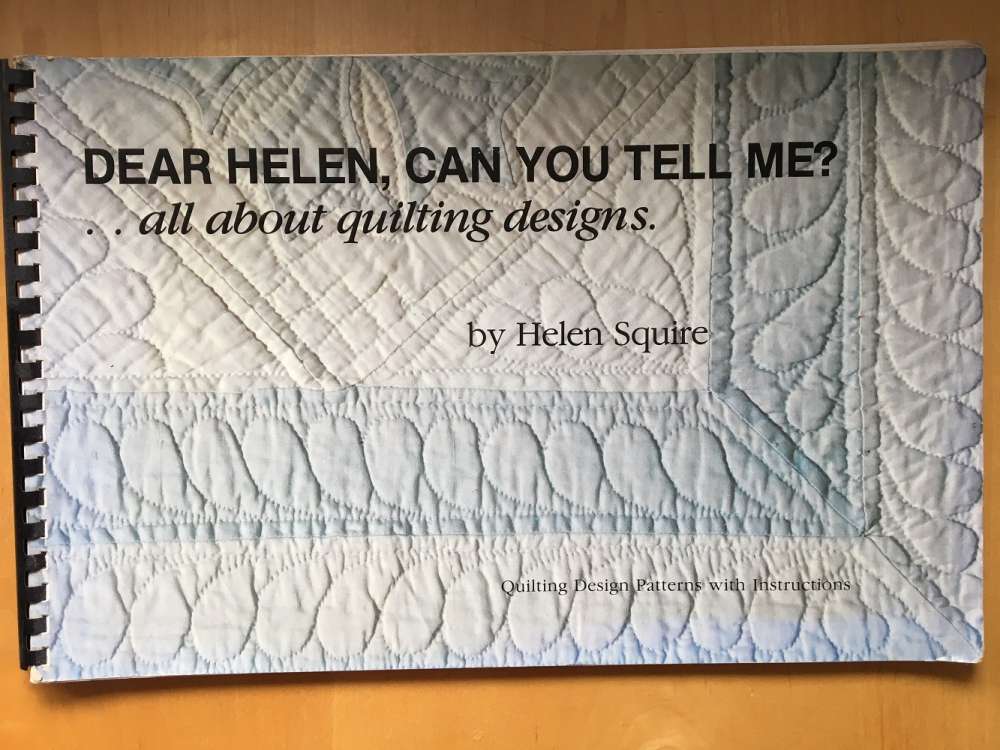
Later I bought Dear Helen, Can You Tell Me? . . . all about quilting designs by Helen Squire, published by AQS in 1987. This has a number of feather and cable designs, individual motifs of various sizes, several border designs and many suggestions for variations and embellishments of the patterns. The last few pages are square and diagonal grids of different sizes for you to cut out and use to design your own patterns to fit your quilt or to help resize the designs in the book. Plenty of advice and information is provided throughout.
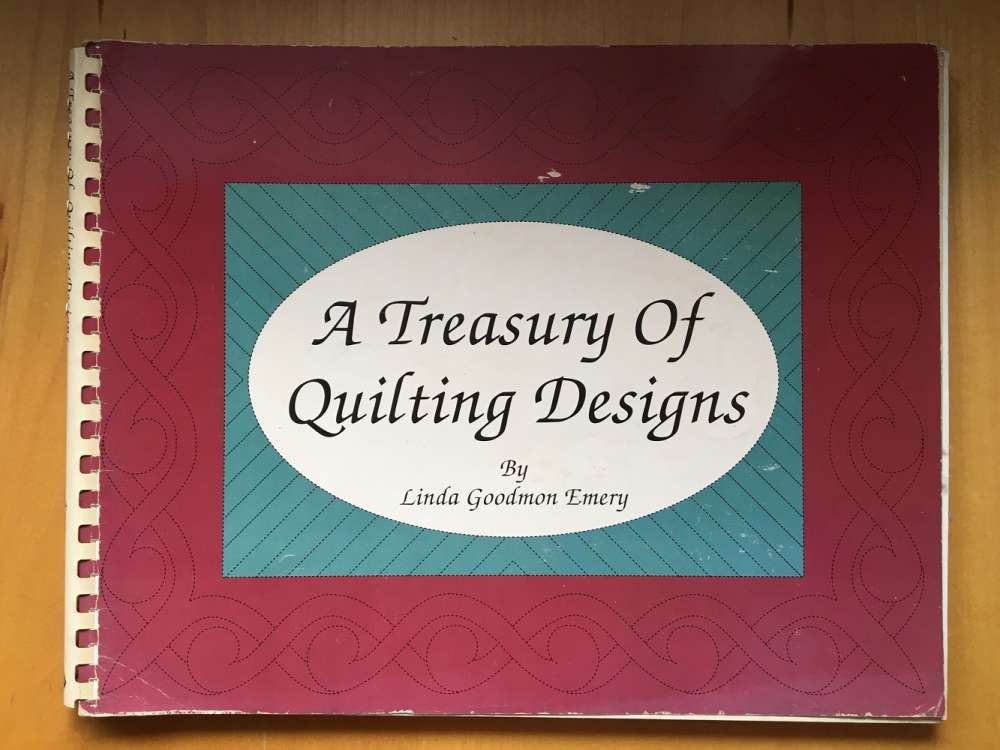
My last major purchase of hand-quilting design books was A Treasury of Quilting Designs by Linda Goodmon Emery published in 1990 by AQS. These patterns are divided into categories such as ‘Miniature’, ‘Geometric’ (mostly straight lines), ‘Traditional’ (ribbons, bows, scrolls and feathers), Masculine’ (sports, planes, trains), ‘Children’ (rattles, ice-cream cones, kites and even nappy pins) and ‘Celebrations’. Again the designs are a mixture of borders and blocks with suggestions for turning one into the other.
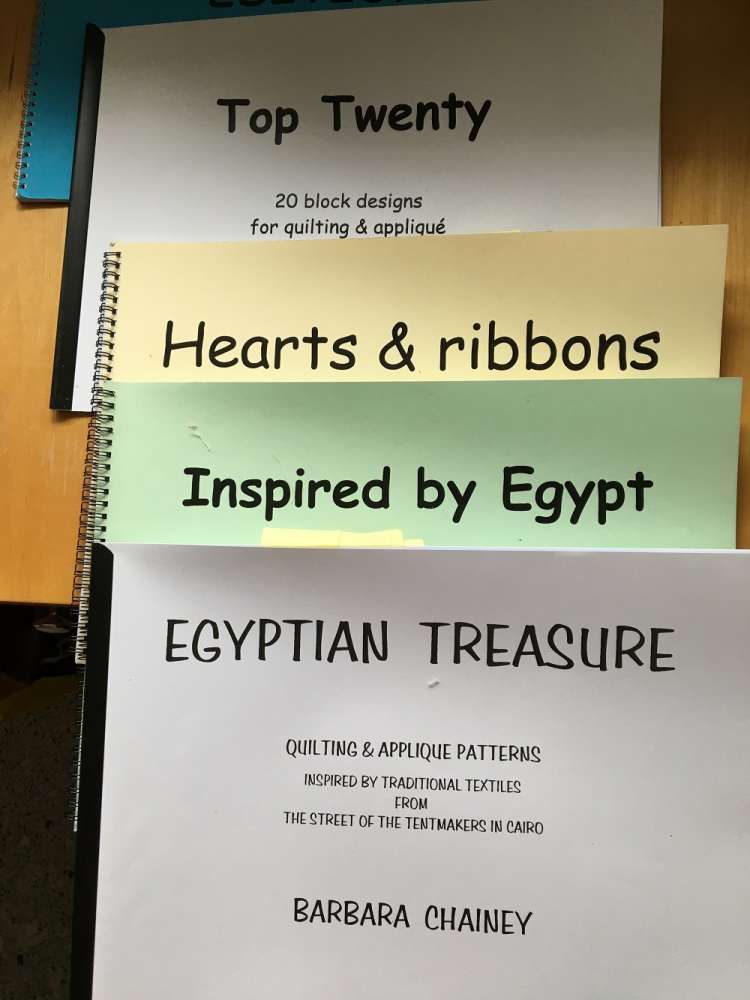
In addition to these I also have an almost complete collection of Barbara Chainey’s self-published pattern books. She and I had ‘A Plan’ several years ago but so far we haven’t managed to pull it together! I still have the books though and the pages marked for when inclination and/or inspiration strike again.
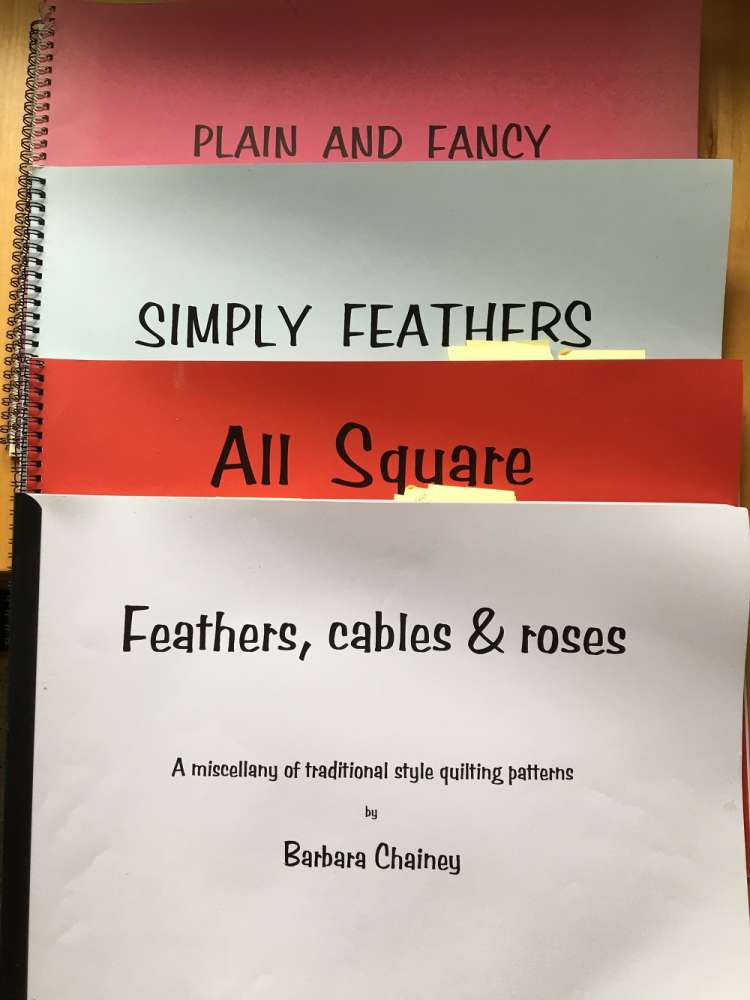
One thing you may have noticed is that all these books are what we could call ‘Landscape’ not ‘Portrait’. I’m not quite sure why that should be; perhaps it was something to do with drawing borders, but equally it could be to do with page size – these are big pages, A3 or larger, so you can get a 10 inch block full size drawn there quite easily. It does it make it difficult to keep them on the bookshelves though.

Responses