There are many reasons for needing to make templates for cutting shapes. Some shapes simply cannot be easily cut with a rotary cutter and although you can buy acrylic templates for many of these shapes it can get a bit expensive as you need a separate template for each size. Sometimes you may want to…
Author: Chris Franses
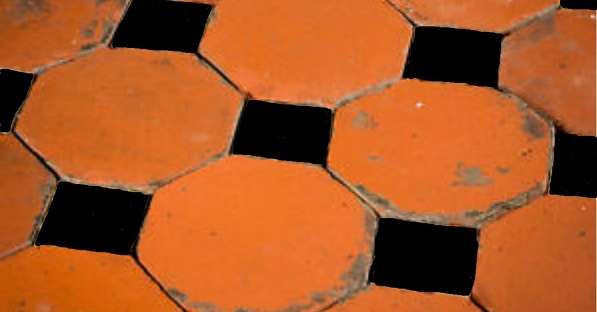
The octagon and its tessellating square was a popular design in tiled floors as well as quilts – the kitchen floor in my last (Victorian) house had such a design with terracotta octagons and black squares. In Hannah Hauxwell’s collection of quilts was a red, white and blue one made from large octagons and squares.…
Where to start?! In my last blog about re-creating a quilt I looked at the stars quilt I had made using lots of left-over bits and explained how you could deconstruct it to work out how it might have been made. I lightly tossed in words like ‘Variable Star’, ‘Sawtooth Star’ and ‘Ohio Star’ and…
Making a quilt is not just about cutting up perfectly decent fabric into tiny bits and then sewing it back together again – despite what our other half may think – there is a lot more to it. The first thing we need is either a pattern or an idea. Then we need to find…
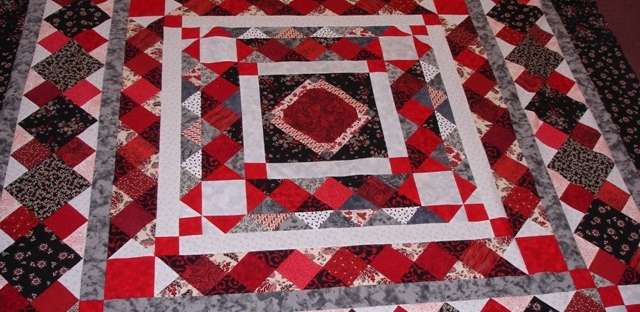
When is a frame quilt not a frame quilt? When it is a medallion quilt. In fairness the terms are interchangeable, although ‘frame’ is often used to describe British quilts made using fabric scraps and left over bits of patchwork stitched around a centre while ‘medallion’ seems to be applied to more ordered quilts with…
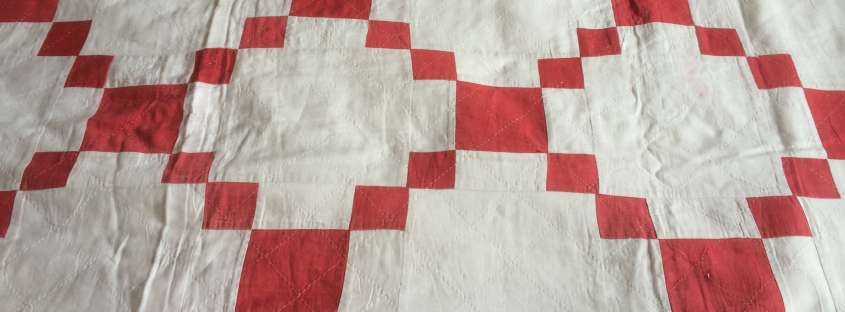
One of the quilts in the collection from Hannah Hauxwell’s house was a red and white Chain quilt. It was folded up on top of several other quilts so only a small portion of it was showing, but it looked familiar. When I hunted through my photos of old quilts I discovered that two of…
This quilt probably isn’t the easiest to write about as it was made from random scraps and left-over units – one of those designs that ‘just grew’. However, I will attempt to show how, armed with just a picture and no indication of scale, you can deconstruct it and work out how to make one…
Some of you may remember seeing a link to an auction house in your Facebook UKQU feed recently about the sale of Hannah Hauxwell’s quilts. Someone – I can’t remember who, sorry – said wouldn’t it be great to have the patterns. So . . . I went and looked. As yet the only quilt…
We’ve all been there – you see a quilt in a show, on Facebook or Instagram, on the cover of a magazine and think “I’d like to make one like that, but how has it been done?”. At a show, with the quilt in front of you, it can be easier to work out than…
Last time we looked at preparing fairly simple shapes, such as circles, leaves, and Scottie dogs, and appliqueing them onto a background. We briefly discussed using fusible web, raw edge applique and how to turn the edges under on these simple shapes so they could be stitched using a decorative stitch or an invisible stitch…
Two words that can strike terror into the heart of a dedicated patchworker. The trouble is that it is not just used to make fabric pictures – you have to applique your Dresden Plate or your set of tumbling blocks onto a background for instance, and that lovely Honey Bee block requires you to applique…
Each month we have a Technique of the Month class at The Corner Patch where I teach. My blogs this year have been largely based on these classes. This last month in class we looked at stitching curved seams by making Drunkard’s Path units and blocks. Dressmakers, used to stitching in sleeves or cuffs, usually…