Tilly took one last look around the cottage from the doorway. Almost all the possessions and furniture that she had grown up with had been sold to pay the debts which had built up during her mother’s last illness, leaving only bare floors and a cold fireplace. Picking up the bundle and the basket containing…
Author: Carolyn Gibbs
Do you like to decorate your home for Christmas? Each year we look for something different to decorate. How about making an unusual project which also has a practical use – it holds Christmas cards! This short video shows how it is used (give it a few seconds to get started – this was one…
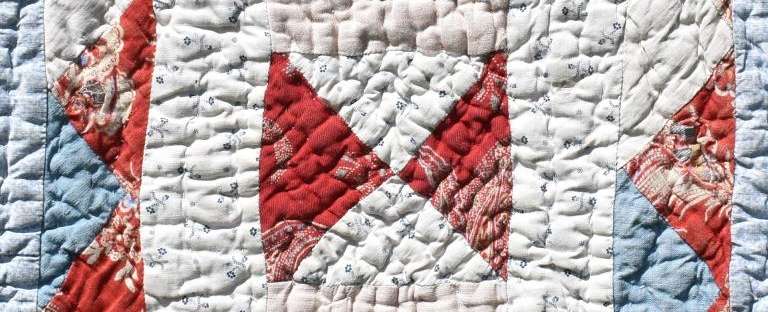
Historically, much of what we think of as “traditional patchwork” has its origins in the USA. Their “block” style is not really found in British patchwork quilts apart from a few designs such as the basket, which became popular in late Victorian times. This example comes from Cumbria. It was only with the American inspired…
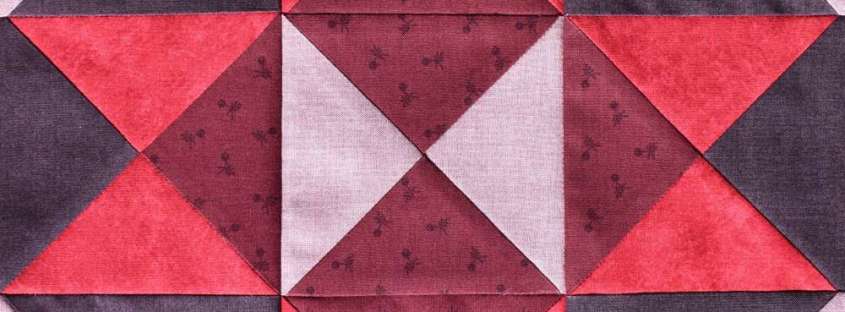
After learning how to make and use half-square triangles in the first instalment of this series, in this blogpost, we will move onwards, discovering how to make quarter square triangles. As usual, this will be illustrated by two traditional blocks: Ohio Star (an easy one well known to many of you already) and Silent Star,…
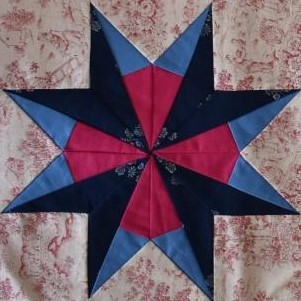
This is the first of a series of eight blogs which will teach you different techniques used in traditional American block patchwork. Each section will include full, free instructions for two Star blocks using the technique; one easy and one more difficult, so that you can practice and develop the skills. You could use these…
Which blocks work best together when making a Sampler Quilt? Some people would say that you could choose any blocks, but I think that the finished result will be more pleasing if a bit more thought goes into your decisions. (It doesn’t matter if you don’t agree with me by the way – you can…
A “Sampler Quilt” is one which has many different blocks, usually separated by sashing strips. They are very popular with those who like to experiment (or get bored easily), as you only do each block once, and can have a lot of fun trying out something new. Often, they are provided in a “Block of…
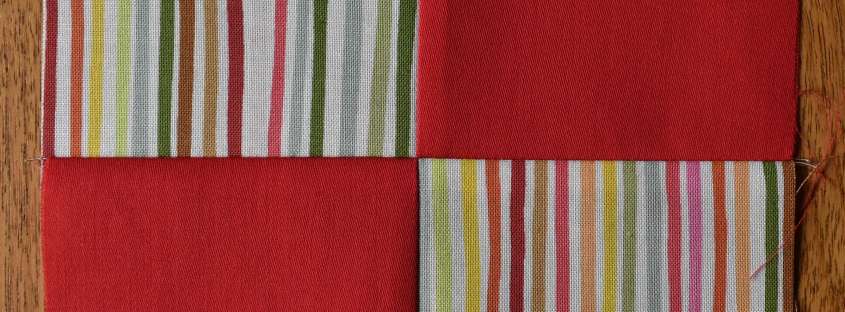
Beginners often start with stitching squares together to make their first patchwork quilt. Many experienced patchworkers know a simple trick to help get the seams lined up nicely when the squares are stitched together. You need to make sure that where the seams meet, the seam allowances are pressed in opposite directions. Can you see…
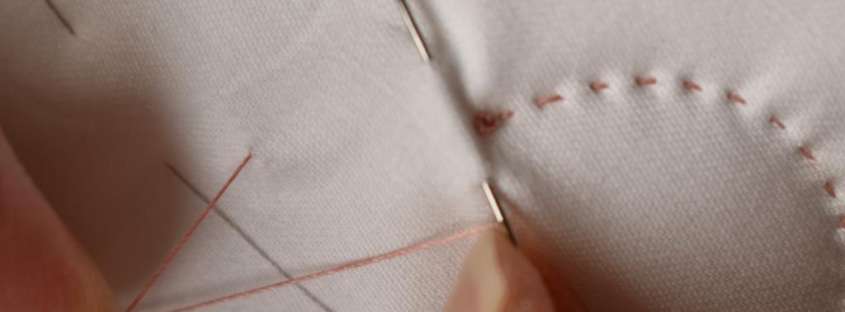
Finally, having done all the preparation for hand quilting: chosen suitable fabric, wadding & thread selected a pleasing design transferred it onto the fabric using a suitable marker layered with wadding & backing put into a hoop found a betweens needle, and a good thimble that fits we reach the actual quilting! Cut a length…
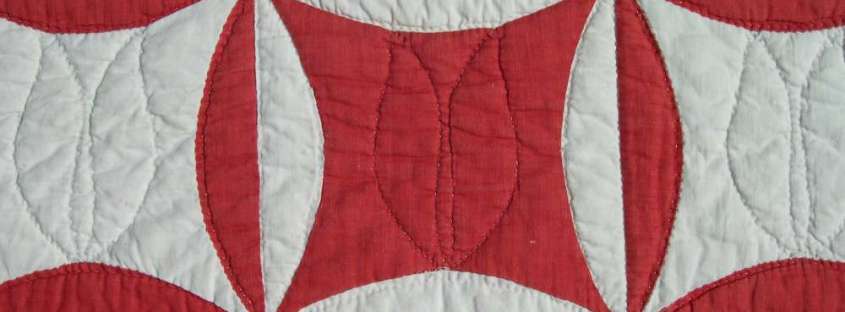
There are three main ways to copy a design onto your fabric: Tracing the design onto the fabric from a paper copy. This must be done before layering. Drawing the design through the gaps in a stencil (purchased or home-made). Can be done before or after layering. Drawing around a solid template (purchased, home-made from…
A quilt is made up of three layers – the top (which may be wholecloth, pieced or appliqued), the wadding and the backing. These three layers are held together by the decorative quilting stitches. It’s important that the layers don’t shift around during the quilting process, as this will result in puckers on either the…
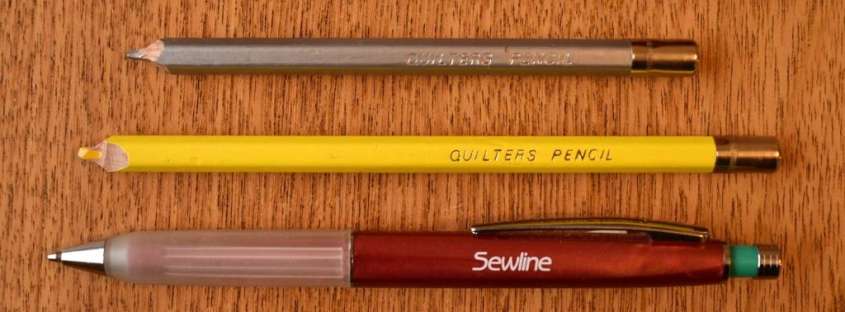
The quilting design needs to be marked onto your fabric, so that you can see where to stitch. The ideal marker is one which shows a clear line until you have quilted along it, but then completely disappears! Inevitably, this is not always simple to achieve, so it is a good idea to test out…