

To Wash or Not to Wash.. The Great Debate
Arguably, pre-washing quilting fabrics is THE great quilter’s debate. Followed by “Polycotton or Cotton Thread?” and “To Tear or to Cut?” Such topics come up regularly in our Facebook group UK Quilters United and the responses are both well represented (topics for another day Oooo!) But deciding whether or not to wash your fabrics before you use them is important to the overall look of your quilt.
Here’s the thing – cotton quilting fabric generally shrinks about 2%-3% when washed. You can check the manufacturer’s websites and they will advise the estimated shrinkage of their fabrics. Doesn’t sound like much? Well 44″ will shrink to 43″. An 80″ square quilt could lose around 2″ top and side after washing! So if you pre-wash your fabric then your finished quilt will stay the size you made it. If you don’t, it’s going to shrink, but will you actually notice the difference anyway?
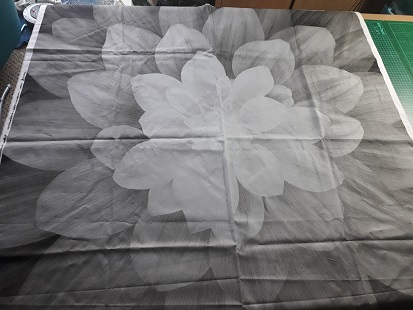
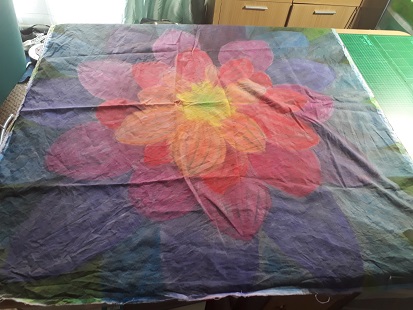
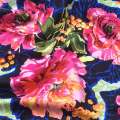
I coloured one of these grey (approx 44″ square) flower panels by Hoffman with Inktense pastels. Basically I laid the panel out on my table and wet it down, coloured it, let it dry and then repeated the process. It was not a well thought out idea, it took a whole tonne of scrubbing to get the colour that soaked through off the mats afterwards, they’re still faintly blue in places :/ I bought shower curtain plastic to put down next time. Anyway, I’m going to splice the coloured one with another grey one – results later, but they need to be the same size in order for my plan to work. And my coloured one was now an inch smaller. I’m wetting and drying the grey one now to get it to shrink the same. But it proves a point. An inch across the width of the fabric is a significant amount.
Still, that doesn’t mean you should chuck all your fabric in the wash! Firstly, it’s a pain in the butt. If you’ve always done it that’s great, carry on, but if you haven’t, how much fabric are we talking about?
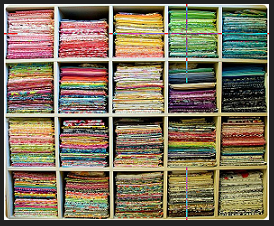
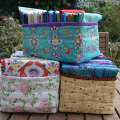
Something tells me your stash isn’t this neat. Mine certainly isn’t! And I don’t relish the idea of having to wash it all. Particularly the 6yd lengths – that’d be a fun one to wrestle with! And then you’ve got to dry it and probably you’d want to iron it before you folded it all up neatly like this, and you’ll have a whole bunch of loose thread tangled round the edges to trim off. If you do decide to wash everything, pinking the edges (zig-zag scissors) stops a lot of the fraying, but again, life might be too short for all that!
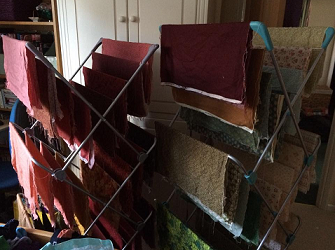
Also there’s the question of pre-cuts. Throwing a jelly roll in the washing machine is not going to work, trust me :/ Been there. You might as well just chuck it in the bin instead. Even if you put it in a washing bag. But if you mix washed yardage with un-washed pre-cuts, you’re going to end up with uneven shrinkage in your finished quilt, and that could go quite badly I suspect. So wash it all, or don’t wash any. I’ve been shrinking the grey panel by running it under the tap, squeezing it out and then hanging it in a covered heated airer. It’s taken three goes to get it to the right amount of shrinkage. Doing it that way is more plausible for your pre-cuts so if you’ve got a bucket of water and a good heat source (the sun would do) and the time….
Another thing to consider is red fabrics- why is it always the red’s that run? Some people will always pre-wash reds to guard against spoiling a finished quilt by tinting it pink. My quilting gloves are pink just from sewing some red fabric that was just awful and would rub pink on anything it touched. Colour Catchers are your friend, I recommend ALWAYS adding a few to your first quilt wash whatever colours you used. But I don’t pre-wash my red fabrics. If I’m concerned I’ll use a baby wipe or damp kitchen roll and rub it on the red fabric. If you get pink then the dye is ‘loose’ and it will stain. Either pre-wash till the water runs clear, or soak with Retayne dye fixative, or avoid it completely – occasionally you just come across a bad batch and it’s not worth the risk. A tip is to sew small squares of each fabric to a white piece. Put it in the wash and you’ll see any colour run.
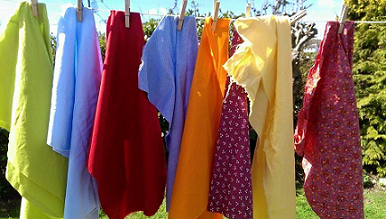
Next is the fact that your fabric straight off the bolt is nice and crisp – easier to cut and sew, won’t ‘shift’ so much during sewing… you can always use starch of course, but brand spanking new fabric is really nice to quilt with, we’re talking about precision cutting and sewing so that crispness is a bonus. On the other hand it’s full of chemicals, used to strip the threads of it’s colour, then over dyed… maybe you don’t like the idea of the chemicals, you could even be allergic, you’d rather get rid of it before you start. Chemicals are used in the production and supply process, amongst other reasons to protect against pests etc. Not to mention ‘fillers’ and finish enhancers. Ragtrade seamstresses typically wear masks and gloves to protect them from the dust while they sew.
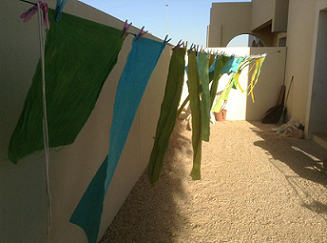
Then you’ve got to consider pre-washing your batting too, if you’re washing all that fabric then you should do the batting as well. If you pre-wash i.e. pre-shrink all of your fabric, and you pre-wash/shrink your batting too, your finished quilts are going to come out of the wash looking the same as they did when you finished making them. Nice and smooth. If you don’t pre-wash everything, your washed quilts will get that crinkly, loved-in look. Which lots of people like! Of course some people don’t wash their quilts at all (My OCD can NOT deal with that.) And if you’re making a competition quilt or a wall hanging, then it’s unlikely to be washed anyway, or not chucked in the washing machine at any rate.
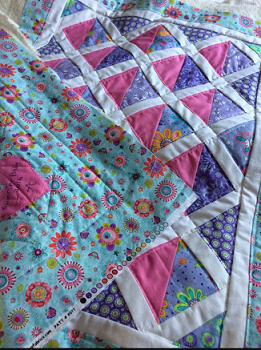
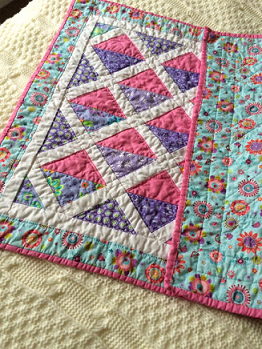
Last but not least, competition quilts get ‘blocked’ The quilted but unbound quilt is wetted either by washing in the machine or by soaking in the tub. Water is squeezed out and then the quilt is pinned out square to dry. This way a small amount of shrinkage occurs but you are using it to tame the quilt – to help it lay flatter, to square it up and remove any ‘wavyness’ but without letting that crinkling happen. The quilt is bound once it’s dried and trimmed..
It’s fair to say, most people don’t pre-wash. The ones that do generally either always have or prefer the smoother post-wash finish. And it’s entirely up to you, no one should be moaning at you for your washing decisions! But it’s a tale of two camps, and everyone has their own opinion. It’s pretty obvious which camp I’m in, but there’s more than a couple of washed fabrics lurking in my stash and I do pre-wash fabric I use to make bags, because I wash EVERYTHING at some point, including my bags, even the leather ones. So it keeps the bags looking more like the day they were made. I’m going to tell you a non-secret, I wash everything at 60 degrees. (My OCD demands it, please don’t berate me for it.) Including my quilts. And they look just fine, albeit a tad smaller than when I made them! I imagine they’ll fade quicker than most over the years but I’m fine with that, I make them to use not to show. As opposed to the bags which are on show – or at least seen in public preferably without looking crinkly.
So there you have it, I think I’ve covered everything relevant – please let me know below if I missed any salient points! And no arguing! 😉
Title picture by Lyn Butler, Bloggeratti.


Well put together Juliet. I would add that the cost of searching the fabrics after washing can prove to be expensive. My biggest difficulty is pressuring (ironing) the creases out after washing. I thought my iron was just for pressing my seams open