

I chose this iconic building for my blog because its chequered history is symbolic of the city it represents, a city I lived in, York. In its time it has been the Exchequer, a prison, a Mint, a refuge (not for long tragically) and is named after a Constable of the city, Henry Clifford. His arms adorn the entrance. All that we now see, is what was left of the castle after the building of a new prison and courts.High on a mound, this motte-and-bailey castle has seen Romans Saxons, Danes, Normans and other visitors and immigrants to York over the last millennia. Romans inhabited the city, built the walls, and buried their dead there.
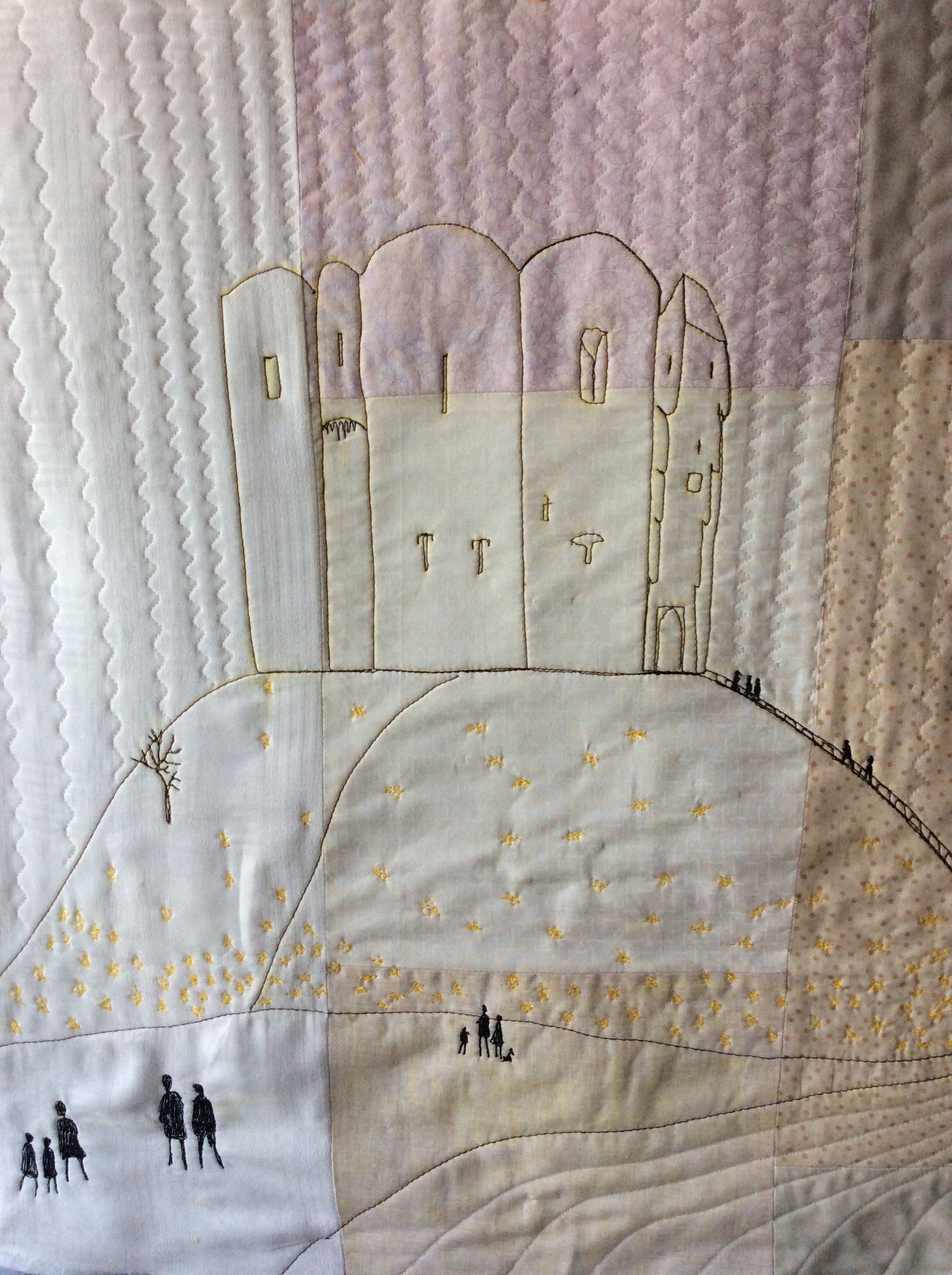
I used a painting by L S Lowry from York Art Gallery as my basic inspiration, rather than a modern photo.The patchworked scraps suggest the many changes the city has seen in its long history. I chose sepia stitching to reflect the age of the building, and the memories it provokes. Simple zigzag quilting holds the sky together.The Danes attacked and took the city, Jorvik, in 866 and a year later Ivar the Boneless – yes, that one – captured and killed the Northumbrian King, Aelle, in a particularly unpleasant and cruel manner as revenge for the death of Ragnar. His brother divided the area into three Ridings, no more than a day’s ride from the city. Many of us remember the old North, East and West Ridings. These divisions lasted nearly a thousand years!
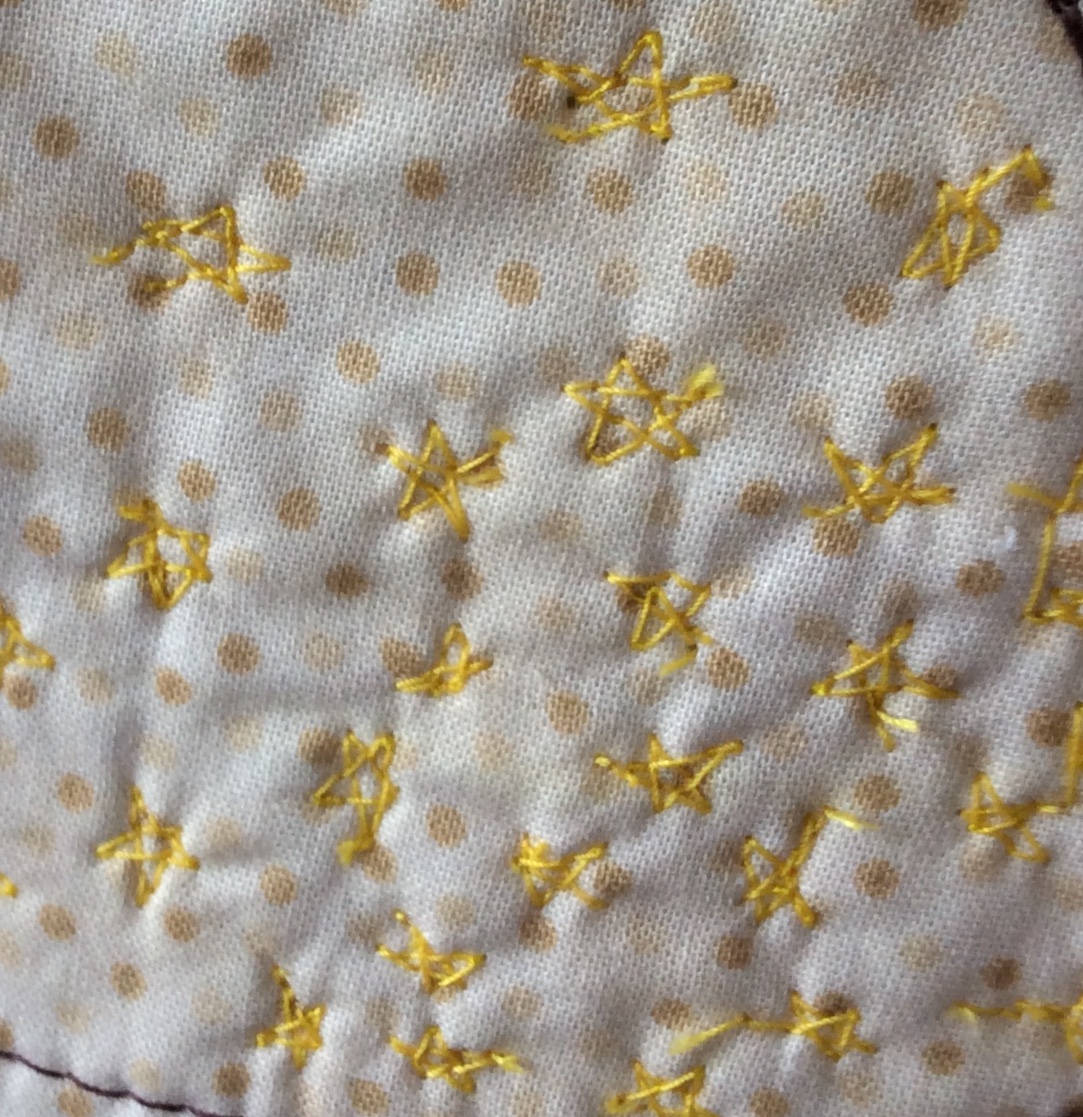
William the Conqueror, the Norman king, built the first tower after a rebellion in 1068, though the stone tower – essentially the tower we see today, did not come until 1250, though it was of course functional and roofed. Trouble again!The burning of the tower in 1190 along with the massacre/suicide of the Jews during a pogrom after an inaccurate rumour reminds us of the anti-semitism rife in England in the days when Jews were the only people allowed to lend money. People owed money and Crusades propaganda didn’t really differentiate between Muslims and Jews. They fled to the tower, and were given protective custody but when they saw the mob threatening them with death, many chose to kill themselves. Those who didn’t, were murdered or burned to death. It seems news was inaccurate even then!The daffodils on the mound today are their memorial, of a time when York turned on some of its own citizens. I have shown them in free motion embroidery.
During the Civil War, Queen Henrietta Maria successfully defended the tower from the Roundheads, when the city was under siege, not for the first time. York has indeed seen more warfare than most places.Now, it stands high enough to see the North York Moors from the roof. I wonder what it must have looked like to all those travelling through the Galtres Forest, along the Great North Road, or along the Ouse when it was the highest thing in the area? Many of York’s churches, including the Minster, are tall, but they have shorter histories. It has thousands of visitors every year, though I never made the trek up those steps in all the years I lived there! Next time, maybe….
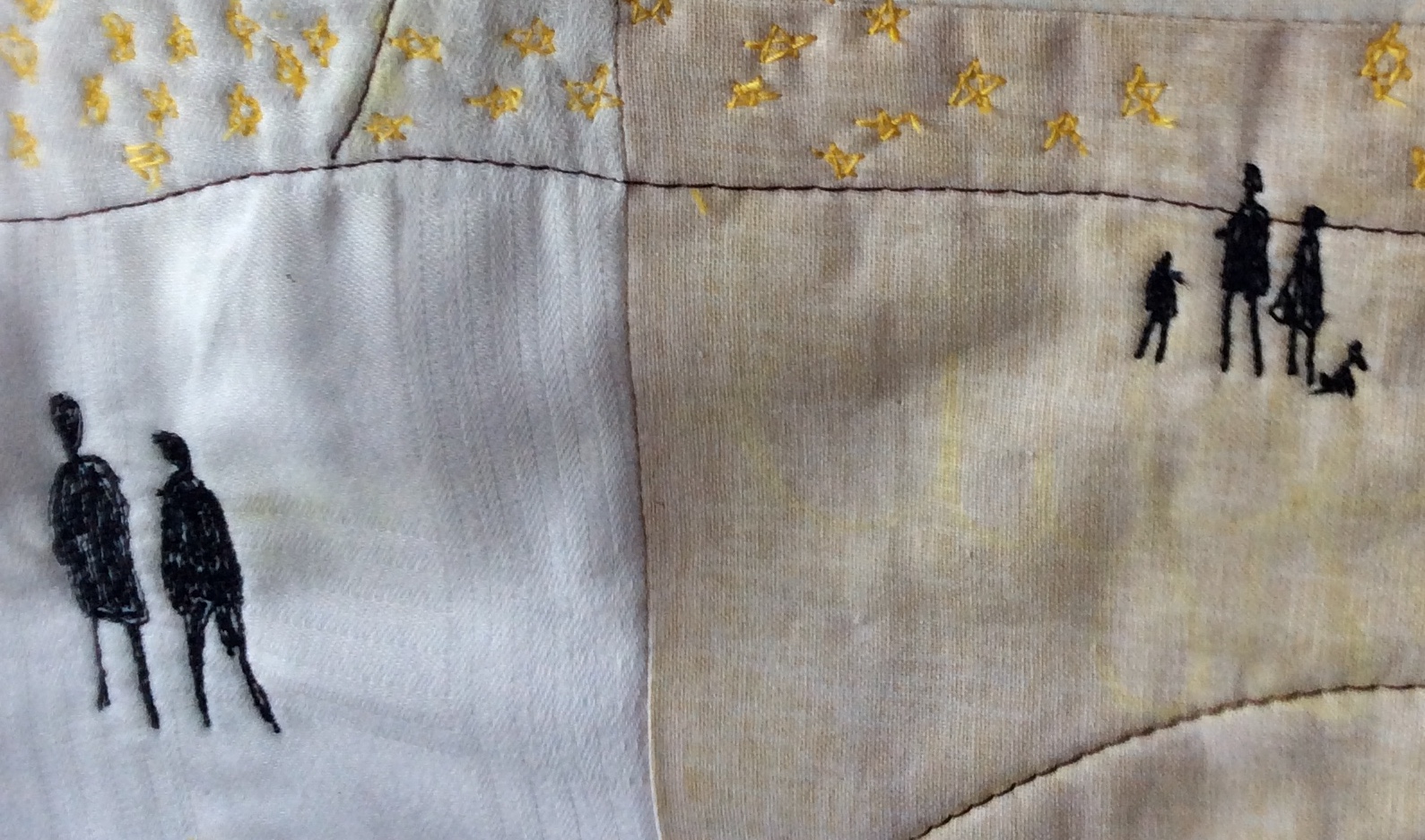
The Lowry-esque figures represent the shadows of those very varied races and characters who have made their mark on this tiny, iconic city. A fire did the most damage at the end of the seventeenth century, and it has not been as important ever since. Much of the castle was destroyed, and only the keep remains high above what would have been a moat. One of my saddest enduring memories is the little cholera cemetery, just outside the walls and driven past every day by thousands. A city with two rivers, which floods, could not always be healthy for the poor who lived there. 185 people died. Victorian England was not a happy place for many. I once read the death-roll for Davygate-one small street- in a history. So many children died, so fast in the cramped, unsanitary crowding of the houses.
My most enduring memory of this “must-see” landmark is one of the fabulous Bonfire Night displays that one was held there; (since moved to the Knavesmire). Our kids got to share a wonderful view with a crowd of others from the top of an adjacent building where our friend worked. We stood in the thousands-strong throng at the base: I have never stood in such a vast, happy, friendly, excited crowd, or heard such a chorus of “oohs” and aahhs” at the fireworks! It took hours to work our way through what is essentially quite a small city to get home. We would stop at Betty’s on the way, though the queues for the restaurant were too long to dine. Back in those days, the Fire Brigade, situated just about at my viewpoint above, would move out all the tenders on what was often the busiest day of the year! Woe betide anyone dialling 999 for “fire!” if they had not done so!
Today, York still sees many thousands of visitors to a timeless, beautiful and compact city. Cleaner air – now cars are banished from the city – has made it much more pleasant for people with breathing issues, as the tourists never stop at any season. I remember bad asthma attacks on hot summer nights when pollution was at its highest; and I lived on the outskirts! But it is welcoming and colourful and one visit is never enough. I lived in York for seven happy years and if it weren’t that I love the sunny skies and rolling hills of Somerset, I would live there again. Every street has a treasure, every time you look up, you see something special, snickleways lead to little gems of buildings, and the past walks hand in hand with the present.
One visit is never enough.




Responses